America’s Financial Influence in the Global MarketIntroduction
The United States of America holds a dominant position in the global economy, shaping the movement of capital, trade, and investment flows worldwide. Since the end of World War II, the U.S. has been the backbone of the international financial system, influencing global markets through its currency, policies, institutions, and corporations. From Wall Street’s leadership in global finance to the U.S. dollar’s role as the world’s reserve currency, America’s financial influence touches every corner of the global economy. This dominance, however, is not without challenges—it faces competition from emerging economies, evolving geopolitical dynamics, and changing monetary systems.
Historical Roots of U.S. Financial Dominance
America’s financial supremacy was not built overnight. The foundation was laid after World War II, when the U.S. emerged as the strongest economy. The Bretton Woods Agreement of 1944 established a new international financial system centered around the U.S. dollar, which was pegged to gold at $35 per ounce. Other currencies were tied to the dollar, effectively making it the world’s reference currency.
This system gave the U.S. enormous power over global finance. Institutions like the International Monetary Fund (IMF) and the World Bank, both headquartered in Washington D.C., were established under American leadership. The U.S. dollar became not only the medium of trade but also the standard for reserves, loans, and pricing of commodities such as oil and gold.
Even after the collapse of the Bretton Woods system in 1971, when President Richard Nixon ended the gold standard, the dollar retained its dominance due to America’s large economy, political stability, and deep capital markets. Since then, global trade and finance have revolved around U.S. financial instruments and policies.
The U.S. Dollar: The Core of Global Finance
The U.S. dollar is the single most important instrument of American financial influence. It serves as the global reserve currency, held by central banks worldwide to stabilize their own currencies and facilitate international trade. Around 60% of global foreign exchange reserves are denominated in dollars, and nearly 90% of foreign exchange transactions involve the dollar on one side.
This dominance provides the U.S. with “exorbitant privilege,” a term coined by French Finance Minister Valéry Giscard d’Estaing. It allows America to borrow cheaply from the rest of the world because global investors view U.S. Treasury securities as the safest assets available. This means the U.S. can run large trade deficits without facing immediate financial crises.
Moreover, commodities such as oil, gold, and wheat are priced in dollars, forcing countries to maintain dollar reserves for trade. This mechanism strengthens demand for the currency and, by extension, America’s global influence. The “petrodollar system,” established in the 1970s with Saudi Arabia and other OPEC countries, reinforced this dynamic by ensuring that oil transactions were conducted in U.S. dollars.
Wall Street and the Power of Financial Markets
America’s financial power is concentrated in Wall Street, the heart of the global capital market. The New York Stock Exchange (NYSE) and NASDAQ are the two largest stock exchanges in the world, accounting for more than half of global equity market capitalization. U.S. investment banks such as Goldman Sachs, JPMorgan Chase, and Morgan Stanley play key roles in global mergers, acquisitions, and financial advisory services.
American asset managers like BlackRock, Vanguard, and Fidelity collectively manage trillions of dollars in global investments. These institutions influence corporate governance, environmental standards, and financial practices across borders. Their investment decisions can shift the direction of global markets and affect national economies.
The depth and liquidity of U.S. capital markets make them attractive to investors worldwide. Foreign governments, corporations, and individuals invest heavily in U.S. assets because of their transparency, reliability, and high returns. This constant inflow of global capital strengthens the dollar and allows the U.S. to finance its federal debt efficiently.
U.S. Monetary Policy and Its Global Impact
Another powerful instrument of America’s financial influence is the U.S. Federal Reserve (the Fed). Its decisions on interest rates, quantitative easing, and liquidity injections directly affect global markets. When the Fed raises rates, global capital tends to flow into the U.S., strengthening the dollar and pressuring emerging markets. Conversely, when it lowers rates, liquidity floods into global markets, boosting investments in riskier assets worldwide.
For instance, during the 2008 financial crisis, the Fed’s policies of near-zero interest rates and quantitative easing stabilized the U.S. economy but also influenced global liquidity and asset prices. Similarly, during the COVID-19 pandemic, the Fed’s massive stimulus programs provided relief not only to the U.S. economy but also to global markets, which depend heavily on dollar funding.
This global spillover effect of U.S. monetary policy highlights how dependent the world remains on the American financial system. Central banks across Asia, Europe, and Latin America closely monitor the Fed’s moves because they directly influence exchange rates, capital flows, and inflation in their own economies.
Global Institutions Under U.S. Influence
The U.S. exerts significant control over global financial institutions. It remains the largest shareholder in the International Monetary Fund (IMF) and the World Bank, giving it substantial voting power. These institutions often follow policy directions aligned with U.S. economic philosophy—promoting free markets, privatization, and fiscal discipline.
Through its influence, the U.S. has been able to shape global development and crisis management. For example, during the Asian Financial Crisis of 1997, IMF rescue packages reflected Washington’s preferences for structural reforms and market liberalization. While some countries viewed this as necessary stabilization, others criticized it as U.S.-driven economic control.
Moreover, the U.S. Department of Treasury and Office of Foreign Assets Control (OFAC) play powerful roles in imposing financial sanctions. By cutting off countries or individuals from the U.S. financial system and SWIFT network, the U.S. can exert non-military pressure on adversaries like Iran, Russia, or North Korea. This ability to use finance as a foreign policy weapon demonstrates the reach of America’s economic influence.
Technological and Corporate Financial Power
America’s dominance is also reflected through its multinational corporations and technology giants that command enormous financial power. Companies such as Apple, Microsoft, Amazon, Google, and Meta hold massive global market shares and influence digital commerce, cloud infrastructure, and financial technology.
The rise of FinTech and digital payment systems such as PayPal, Visa, and Mastercard—headquartered in the U.S.—further extends America’s financial reach. These platforms are integrated into global payment networks, giving the U.S. indirect control over financial transactions worldwide.
Moreover, American financial innovation—from derivatives trading to venture capital financing—sets the standards for global markets. Silicon Valley’s venture ecosystem funds startups globally, while U.S. investment laws and regulations shape how international firms list or raise capital.
Soft Power Through Finance and Economics
Beyond hard economic power, the U.S. exerts soft financial influence through education, culture, and ideas. American universities such as Harvard, MIT, and Stanford train thousands of global leaders in finance, economics, and business. These individuals often return to their home countries carrying U.S. economic principles—reinforcing the American model of capitalism and market-driven growth.
The dominance of the English language in finance, and the widespread use of U.S. accounting standards (GAAP) and credit rating systems (Moody’s, S&P, Fitch), reflect the deep-rooted soft power of American financial culture. These systems define global creditworthiness and influence borrowing costs for countries and corporations.
Challenges to U.S. Financial Dominance
Despite its enormous influence, America’s financial supremacy faces growing challenges. The rise of China as an economic powerhouse has led to efforts to internationalize the Chinese yuan (renminbi) and develop alternatives to the dollar-dominated system. Initiatives such as the Belt and Road Initiative (BRI) and Asian Infrastructure Investment Bank (AIIB) aim to provide financial independence for developing nations.
The European Union also promotes the euro as a stable reserve currency, while emerging economies explore digital currencies and Central Bank Digital Currencies (CBDCs) to bypass dollar-based trade systems. Additionally, geopolitical tensions—such as U.S. sanctions on Russia—have encouraged countries to diversify away from the dollar to protect their economies.
Another internal challenge is America’s rising national debt, which exceeds $35 trillion. Persistent fiscal deficits raise questions about long-term sustainability and global confidence in U.S. financial management. Yet, paradoxically, in times of crisis, investors still turn to the dollar as a safe haven, reaffirming its central role.
Global Repercussions of U.S. Financial Crises
The interconnected nature of the global economy means that financial shocks in the U.S. ripple worldwide. The 2008 Global Financial Crisis, triggered by the collapse of Lehman Brothers, exposed how deeply global markets were tied to U.S. mortgage and banking systems. Similarly, shifts in U.S. interest rates or policies can cause volatility in emerging markets, leading to currency devaluation and capital flight.
However, the same interconnectedness allows the U.S. to lead recovery efforts. American stimulus programs, capital market resilience, and innovation often guide the global economy out of downturns. The COVID-19 pandemic again demonstrated this dynamic—while the U.S. initially suffered economic contraction, its rapid fiscal response and vaccine rollout helped stabilize global trade and investment confidence.
The Future of U.S. Financial Influence
Looking ahead, America’s financial leadership will likely remain strong but evolve in response to digitalization and multipolar competition. The emergence of digital assets, cryptocurrencies, and CBDCs could reshape how money flows internationally. The U.S. government and Federal Reserve are exploring digital dollar initiatives to maintain dominance in a changing financial landscape.
Moreover, sustainability and climate finance are becoming central to global policy. The U.S., through its financial institutions and corporations, is increasingly promoting ESG (Environmental, Social, and Governance) standards, which influence investment decisions globally.
While challenges from China, the EU, and decentralized finance systems may dilute its influence over time, the depth of America’s capital markets, the trust in its institutions, and the global dependence on the dollar ensure that the U.S. will remain a central pillar of global finance for decades.
Conclusion
America’s financial influence in the global market is the result of decades of economic strength, institutional leadership, and monetary power. From the U.S. dollar’s role as the global reserve currency to Wall Street’s leadership in finance and technology, the American system remains deeply embedded in the global economy. However, this dominance also carries responsibilities—to maintain stability, fairness, and innovation in a rapidly changing world.
Even as new players emerge and the global financial system becomes more multipolar, the United States remains the heartbeat of global finance. Its currency, markets, and policies continue to shape the world’s economic destiny—demonstrating that, in the modern age, financial power is as influential as military might.
America
AUD/USD Longer term OutlookHey Guys,
This is a follow up the the Short Term outlook I posted to show you the bigger picture of what happening. If you haven't checked out that short term thesis I suggest you do to understand why i think in the near term why there will be a decline possibly down to .50.
As I'm sure most people are aware there is abit of fear on the longer term of the debasement of the USD, as we have massive debts and deficits which are highly unlikely to get any better soon. This is ultimately lead to its decline relative to other assets think current rise in GOLD. If we have a recession from slower growth from tariffs, regional banks and private credit going bad and the consumer becoming too squeezed then this budget with get much worse as they will try and stimulate the economy to ease some of these pressure. But as a consequence this will lead to inflation and more debasement just like the 60s - 80s period. Each time they try and rein in inflation growth will slow so they will simulate resulting in the cycle continuing.
Now if the "debasement" continues this doesn't mean the USD will die get replace but it does mean other assets and currencies that aren't having this systemic problem will rise relative to the dollar again just like the 1960s-1980s. Australia has had long running fiscal conservative budgets and most definitely no debasing its currency. Our debt to Nominal GDP peak during covid and unlike most other economies has decreased since. Although we are projected to runn a deficit of A$10 billion our growth will more then out weigh this and this is such a small fraction to out A$1.752 trillion economy is a non factor really.
looking at some technicals on the charts we can see we have been in a falling wedge since the last "debasement" of the USD happened after the GFC. This will breakout sometime over the next two years as its running out of room. we have gaining strength on the RSI creating a divergence on the monthly also point to a breakout to the upside. we have clear outlined targets to hit on the way up and looking back again at previous debasement events by 2011 we were at $1.10 and by the 1975 we were at $1.49 so a return to these levels isn't without precedence.
I have shown with the green line the general direction of where i think it will be please dont take that as an exact model. This will take years to fully play out but if you understand even the most basic supply and demand , technical analyst and fundamental problem America is facing then it should keep you true.
Please check out the shorter outlook to gain a full picture and do you own research
here are some links to data used
www.ceicdata.com
data.worldbank.org
American Financial Pulse: U.S. Markets Shape the Global Economy1. The Rise of U.S. Financial Dominance
After World War II, the world needed stability — and the United States provided it. The Bretton Woods Agreement (1944) established the U.S. dollar as the central pillar of the international monetary system. With the world’s gold reserves concentrated in America, other countries pegged their currencies to the dollar.
Even after the gold standard ended in 1971, the dollar’s dominance remained intact. U.S. financial markets grew deeper, more liquid, and more sophisticated than any other. Investors from around the world began to see U.S. Treasury securities as the safest asset, and corporations preferred raising funds through American capital markets.
By the 21st century, Wall Street had become the nerve center of global finance, home to some of the largest and most influential institutions — Goldman Sachs, JPMorgan Chase, Morgan Stanley, Citigroup, and others.
2. Wall Street: The Barometer of Global Sentiment
When the New York Stock Exchange (NYSE) or NASDAQ moves, the world pays attention. Wall Street’s performance often sets the tone for markets across Asia and Europe.
Bullish sentiment in the U.S. can lift markets worldwide, signaling economic optimism and boosting commodity prices.
Bearish or volatile trends, on the other hand, can spark global risk aversion, leading to sell-offs in emerging markets.
For instance:
The 2008 Global Financial Crisis, which started with the collapse of U.S. housing markets, triggered the worst worldwide recession since the Great Depression.
The tech boom of the 2010s, driven by Silicon Valley giants like Apple, Microsoft, and Amazon, created wealth and innovation ecosystems that influenced startups and stock markets globally.
In short, Wall Street isn’t just America’s financial hub — it’s the world’s emotional pulse of risk and reward.
3. The U.S. Dollar: The Global Reserve Currency
The U.S. dollar is the king of currencies — a symbol of trust, strength, and stability. Around 60% of global foreign exchange reserves are held in dollars, and most international trade and commodities (like oil and gold) are priced in USD.
This dominance gives the U.S. a unique “exorbitant privilege” — the ability to borrow cheaply, attract global capital, and wield financial sanctions effectively.
When the Federal Reserve raises or cuts interest rates, it doesn’t just affect the U.S. — it reshapes capital flows globally. A stronger dollar often leads to:
Capital outflows from emerging markets,
Currency depreciation in developing economies, and
Higher import costs for countries that rely on dollar-denominated trade.
Conversely, a weaker dollar can boost global liquidity and commodity prices, supporting international growth.
4. The Federal Reserve: The World’s Central Bank
The Federal Reserve (Fed) is not just America’s central bank — it’s the de facto central bank of the world.
Its policies on interest rates, inflation control, and money supply influence nearly every financial market globally. When the Fed tightens or loosens monetary policy, it sets off a chain reaction:
Bond yields shift across continents.
Exchange rates fluctuate.
Stock markets either rally or crash.
Take 2022–2023, for example: the Fed’s aggressive rate hikes to fight inflation caused global investors to flock to the dollar, leading to currency depreciation in Europe, India, and Japan. Developing nations faced capital outflows and rising borrowing costs, proving once again how America’s monetary policy reverberates worldwide.
5. U.S. Tech Giants and Their Global Economic Influence
Beyond monetary policy, corporate America also drives global trends. Tech companies such as Apple, Microsoft, Amazon, Google, Meta, and Tesla not only dominate U.S. indices like the NASDAQ but also shape global consumer behavior, innovation cycles, and investment trends.
Their market capitalization exceeds the GDP of many countries.
Global funds benchmark their performance against these companies.
Even non-U.S. economies depend on their supply chains and technologies.
For instance, Apple’s supply chain decisions in China or India influence local employment, manufacturing, and even government policy. Similarly, Tesla’s electric revolution has pushed automakers worldwide to accelerate their shift toward EVs.
These corporations make the American economy a key driver of global innovation and productivity.
6. The U.S. Bond Market: The Global Safe Haven
The U.S. Treasury market, valued at over $27 trillion, is the most liquid and trusted debt market in the world.
In times of global uncertainty — wars, pandemics, recessions — investors rush to buy U.S. bonds, driving up their prices and lowering yields. This phenomenon is known as a “flight to safety.”
For example:
During the COVID-19 pandemic, despite global chaos, demand for U.S. bonds surged.
Even amid geopolitical tensions like the Russia-Ukraine conflict, U.S. Treasuries remained the go-to safe asset.
This trust reinforces the U.S. government’s financial supremacy, allowing it to borrow at low rates and sustain high fiscal spending without immediate repercussions.
7. American Trade and Global Supply Chains
America’s financial strength isn’t just about Wall Street — it’s also about trade and consumer power. The U.S. is one of the largest importers and consumers in the world.
When American demand rises, exporters from China, India, Germany, and others benefit. When it slows, global trade suffers.
For instance:
The 2020–21 pandemic recovery in the U.S. boosted demand for goods, lifting export economies.
But slowing U.S. consumer spending in 2023–24 led to reduced factory orders worldwide.
Thus, the American consumer acts as the ultimate engine of global trade — their spending decisions echo through factories, ports, and currencies around the world.
8. U.S. Sanctions and Financial Power as a Tool of Diplomacy
One of the most significant, yet often overlooked, aspects of America’s financial influence is its ability to use economic sanctions as a form of global control.
Because the U.S. dollar dominates international transactions, most global banks and businesses rely on access to U.S. financial systems like SWIFT. When the U.S. imposes sanctions on countries like Iran, Russia, or Venezuela, it effectively isolates them from global finance.
This demonstrates the geo-financial power of America — the ability to influence political outcomes through control of money flow, rather than military force.
9. U.S. Market Crises and Global Shockwaves
History shows that financial turbulence in America often triggers worldwide crises:
1929: The Wall Street crash led to the Great Depression, spreading poverty and unemployment globally.
1987: Black Monday caused global stock market collapses within hours.
2008: The subprime mortgage meltdown triggered a global recession.
2020: The COVID-induced crash saw trillions wiped out globally within weeks.
Each time, recovery depended heavily on U.S. fiscal stimulus and Federal Reserve actions — highlighting both the risks and the resilience of America’s central role.
10. America’s Role in Emerging Market Dynamics
Emerging economies — such as India, Brazil, South Africa, and Indonesia — often experience boom-bust cycles tied to U.S. financial trends.
When U.S. interest rates are low, investors chase higher returns in emerging markets, driving asset prices up. But when the Fed tightens policy, capital retreats to the U.S., leaving these economies vulnerable to currency depreciation and inflation.
This cyclical dependency shows how America’s financial health acts as both an opportunity and a threat for developing nations.
11. The Future: Can the World De-Americanize Finance?
In recent years, there’s been growing talk of “de-dollarization” — the effort by countries like China, Russia, and members of BRICS to reduce dependence on the U.S. dollar.
While alternative payment systems and local-currency trade agreements are emerging, the U.S. still holds structural advantages:
Deep and transparent financial markets,
Strong legal systems,
Global investor trust, and
A culture of innovation.
Even as digital currencies and blockchain-based settlements evolve, the U.S. remains a central force in shaping the future of finance — through regulation, technological leadership, and institutional power.
12. Conclusion: The Unshakable Financial Pillar
America’s financial influence over the global market is a blend of trust, size, innovation, and history. Its currency drives trade, its markets dictate sentiment, and its policies shape growth trajectories worldwide.
From Wall Street traders to policymakers in Asia, from African commodity exporters to European bankers — all keep an eye on what happens in the United States.
While global diversification and regional powers continue to grow, the American financial system remains the spine of international economics. Its rhythm — whether fast or slow — continues to set the pace for the global financial symphony.
$USGDPQQ -U.S GDP Growth Rate Revised Sharply Higher (Q2/2025)ECONOMICS:USGDPQQ
Q2/2025
source: U.S. Bureau of Economic Analysis
- The US economy expanded an annualized 3.8% in Q2 2025,
much higher than 3.3% seen in the second estimate, and marking the strongest performance since Q3 2023.
The upward revision was driven mainly by stronger consumer spending.
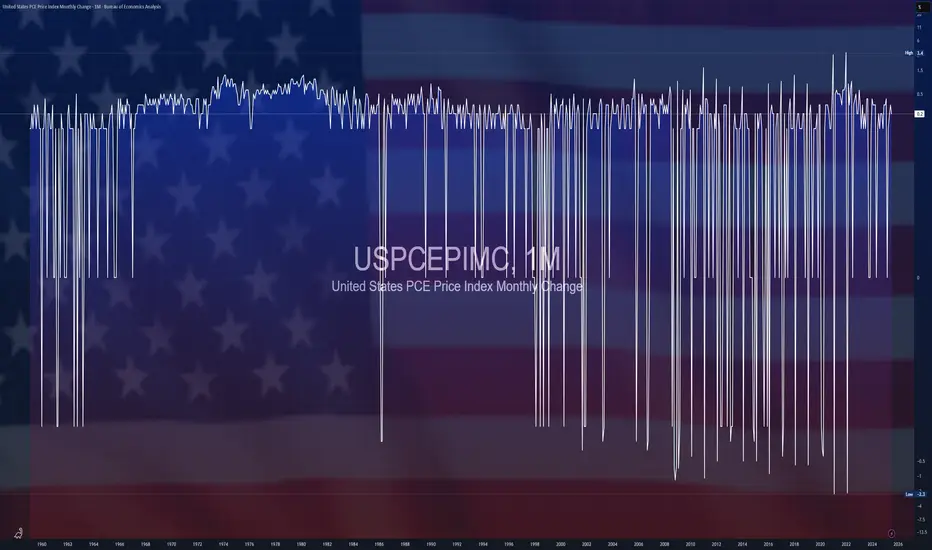
$USPCEPIMC -U.S Producer Prices Rise Slightly (July/2025)ECONOMICS:USPCEPIMC
July/2025
source: U.S. Bureau of Economic Analysis
- The core PCE price index in the US,
which excludes volatile and energy prices and is Federal Reserve's chosen gauge of underlying inflation in the US economy, went up 0.3% from the previous month in July of 2025.
It was the same as in June, in line with market expectations.
From the previous year, the index rose by 2.9%, the highest in five months.
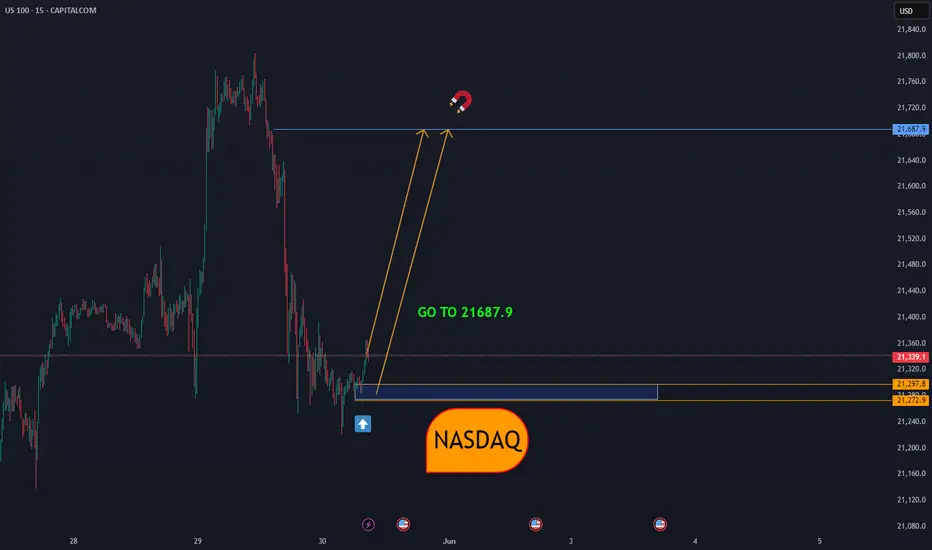
NASDAQ price dropAfter the Nasdaq price reaches around 23642.2, a historic drop will occur and the target is to drop to 16308.
Whatever happens at the highest price, the final destination is towards 16308.
I have identified the price levels in the middle of this expected drop that can cause the price to correct.
IG:NASDAQ
The Illusion of Value: How the U.S. Market Became a Fantasy EconThe Illusion of Value: How the U.S. Market Became a Fantasy Economy
For decades, the American economy has been celebrated as the epicenter of innovation, wealth creation, and corporate success. But beneath the surface, an unsettling reality has emerged: The U.S. financial markets are increasingly driven by speculation, hype, and a distorted sense of value.
"Buy Now, Pay Later"—A Culture of Delusion
One of the most glaring symptoms of this detachment from reality is the widespread adoption of "Buy Now, Pay Later" (BNPL) services. A staggering number of American consumers have embraced debt-financed spending as a normal part of life. Credit cards are no longer the primary vehicle for financial mismanagement—BNPL systems have convinced people they can afford luxuries they fundamentally cannot.
This mentality, in turn, feeds into the stock market’s obsession with future promises over actual output. Investors have become infatuated with narratives rather than numbers, driving valuations to unrealistic highs for companies that either underdeliver or simply do nothing at all.
The MicroStrategy Paradox: Borrowing Money to Buy Bitcoin
Take MicroStrategy, for example—a company whose sole business model seems to be leveraging borrowed capital to buy Bitcoin. By traditional metrics, MicroStrategy offers no tangible product, no innovative service, no groundbreaking technology—just speculative accumulation. Yet, thanks to Bitcoin hype, its stock price is valued as if it’s a revolutionary player in the corporate world.
This irrational valuation mirrors the broader issue with American markets: Companies are being rewarded not for what they actually do, but for the financial games they play.
The Myth of Overvalued Titans: Tesla & Meta
Tesla and Meta serve as the poster children of speculative overvaluation.
- Tesla: Once hailed as an automotive disruptor, Tesla’s stock price often reflects what Elon Musk promises rather than what Tesla delivers. From self-driving software that never fully materialized to mass production goals that fell flat, Tesla’s ability to sustain its valuation relies more on Musk’s cult-like following than automotive success. Meanwhile, the gutting of regulatory oversight has allowed Tesla to push unfinished, potentially hazardous products into the market.
- Meta: Meta’s valuation has ballooned largely on the promise of virtual reality dominance. Yet, billions poured into the Metaverse have yielded little beyond overpriced VR headsets and gimmicky social spaces.
Elon Musk: The Master of Market Manipulation
Elon Musk’s influence on financial markets cannot be overstated. Through cryptic tweets, grand promises, and regulatory maneuvering, Musk has become a force powerful enough to shift markets with mere words. Whether it’s pumping Dogecoin, slashing Tesla’s safety oversight, or influencing government policy for personal gain, Musk operates in a reality where market value is dictated by his persona rather than corporate fundamentals.
The Rise of True Value Markets
While the U.S. economy indulges in financial fantasy, other global markets have started to present compelling opportunities:
- Europe: A more realistic, fundamentals-based approach to valuation is emerging. Traditional industries remain resilient, and companies must show actual profitability to attract investment.
- China: Despite regulatory challenges, China’s focus on industrial production, technological advancement, and infrastructure development gives its economy a sense of tangible progress.
- UK & Australia: Unlike the speculative U.S. markets, these economies remain grounded in earnings, productivity, and rational valuations.
Conclusion
The American financial landscape has become a speculative playground detached from reality. Companies are valued not for what they produce, but for what they promise, what they borrow, and what narratives they spin. Figures like Musk exploit market sentiment, while deregulation enables corporations to operate recklessly. As Europe, China, the UK, and Australia foster economies built on real value, the U.S. is at risk of crashing under the weight of its illusions.
SP:SPX TVC:DXY INDEX:BTCUSD TVC:GOLD NASDAQ:MSTR NASDAQ:TSLA NYSE:BLK NASDAQ:META XETR:DAX FTSE:UKX TVC:HSI SET:SQ NASDAQ:PYPL NASDAQ:AFRM NASDAQ:AAPL NASDAQ:AMZN NASDAQ:NVDA NASDAQ:COIN NASDAQ:HOOD
What’s America's Real Goal in a Possible India–Pakistan War?We are nearing the end of the petro-dollar era. The power balance of the new world order will be defined not by oil, but by the strategic resources essential for AI, electric vehicles, and cutting-edge technology.
Throughout the 20th century, the U.S. maintained its global dominance by controlling access to oil. From the Middle East to Latin America and Africa, wherever oil was found, the U.S. was there.
But today, the focus has shifted to rare earth elements, lithium, copper, and other strategic minerals.
Trump’s 2025 move to buy Greenland wasn’t a diplomatic joke—it was a signal. Behind-the-scenes deals in Ukraine for rare earth deposits tell the same story: whoever controls these "white gold" assets will lead the tech-driven world.
Now enters Pakistan, with mineral-rich lands spanning over 600,000 km², nearly three times the size of the UK. Experts estimate its underground reserves to be worth $8 trillion.
In Balochistan's Rekodik field alone, there are 12 million tons of copper and 20 million ounces of gold, with a copper purity of 0.53%, well above global standards. In the north, newly discovered lithium reserves could be a game-changer for the EV revolution.
This is no longer just about resources—this is about deciding the future balance of global power.
Driven Brands Holdings: Dominating North America's Auto ServicesKey arguments in support of the idea.
A potential rise in U.S. car prices may positively impact the company’s sales.
DRVN is expanding its footprint in the essential automotive services market, simultaneously reducing its car wash segment with more cyclical sales.
Investment Thesis
Driven Brands Holdings Inc. (DRVN) is the largest automotive services company in North America, operating an increasing network of approximately 5,200 franchise, independently owned businesses operated by the company across 49 U.S. states and 13 other countries. The company has a footprint in all major automotive service areas, catering to both retail and commercial customers. Its main business segments include car maintenance and repair, express car wash, bodywork and paint services.
U.S. car import tariffs, introduced in March, support the trend of an increasing average age of cars on U.S. roads and may lead to higher car prices. These factors may contribute positively to DRVN’s revenue growth. On April 3, a 25% tariff on cars imported to the U.S. will take effect, and by May 3, equivalent tariffs on automotive components will be implemented. These tariffs may disrupt automakers’ production processes due to a reconfiguration of production chains. Only half of the 16 million new cars sold annually in the U.S. are produced domestically, while other autos could be subject to these tariffs. Production disruptions may result in price increases for both new and used cars. Many consumers may delay purchasing new cars, opting instead to spend more on maintaining their current vehicles. The new factors support the general long-term trend to an increasing average age of cars on U.S. roads. In 2000, the average vehicle age in the U.S. was 8.9 years; it has now grown to 12.6 years and continues to rise annually. Despite this, the total number of vehicles on U.S. roads is also steadily increasing at an average annual rate of about 1% over the past two decades. Combined with the new tariffs, the overall growth of the automotive aftermarket is likely to boost DRVN’s revenue in the upcoming years.
Driven Brands continues successfully shifting its focus to essential automotive services. After 2023, the company began reducing its ownership of standalone car washes while expanding its Take 5 Oil Change locations. Take 5 Oil Change provides rapid oil change services within 10 minutes, allowing drivers to remain in their cars. In March, reports have indicated that Driven Brands plans to sell its Take 5 Car Wash chain. We suppose this deal will accelerate the expansion of the Take 5 Oil Change segment and enable the company to allocate some proceeds toward debt reduction, potentially decreasing debt service expenses by up to 20%.
The valuation of DRVN stock, compared to its peers, shows potential for growth. DRVN’s valuation corresponds to 14 projected earnings for 2025, aligning with the average valuation among U.S. car dealers. Nonetheless, DRVN’s potential for revenue growth in the coming years is anticipated to surpass that of its peers. In the last three quarters alone, the Take 5 segment has demonstrated a sequential revenue increase of 10%, accounting for about 60% of the company’s total sales.
We suppose that Driven Brands Holdings Inc. (DRVN) shares may exhibit positive momentum in the near term.
The target price for DRVN shares over a two-month horizon is $19.90, with a “Buy” rating. We suggest setting a stop-loss at $15.50.
Geopolitical Analysis and Impacts on Currency Markets
Hello, my name is Andrea Russo and today I want to talk to you about how recent geopolitical news is impacting the Forex market, analyzing the main currency pairs and providing a detailed technical picture.
Current Geopolitical Context
This week, the geopolitical landscape has been characterized by a series of significant events. Among them, tensions between the United States and Russia have dominated the scene, with a phone call between Donald Trump and Vladimir Putin that has opened up the possibility of a negotiation in Ukraine. However, the situation on the ground remains critical, with Russian forces advancing in several Ukrainian regions2. Furthermore, uncertainty over gas supplies in Europe has led to significant volatility in energy markets, with the price of gas falling by 3%.
Impacts on the Forex Market
Geopolitical tensions have had a direct impact on the Forex market, influencing volatility and capital flows. For example:
EUR/USD: The pair has been showing a bearish trend, influenced by economic uncertainty in Europe and the strength of the dollar as a safe haven.
USD/JPY: The dollar has gained ground against the yen, thanks to the perception of economic stability in the United States.
GBP/USD: The British pound has been under pressure due to concerns about economic growth in the United Kingdom.
Technical Analysis
A technical analysis of the major currency pairs reveals the following trends:
EUR/USD: Technical indicators suggest a "sell" position, with key support at 1.0832 and resistance at 1.0862.
USD/JPY: The pair is showing "buy" signals, with an uptrend supported by resistance at 148.09.
GBP/USD: Indicators are mixed, with resistance at 1.2944 and support at 1.2920.
Conclusion
Geopolitical dynamics continue to play a crucial role in determining the movements of the Forex market. Investors should carefully monitor global developments and use technical tools to make informed decisions. The current volatility offers opportunities, but also requires careful risk management.
I hope this analysis has been useful to you in better understanding the connections between geopolitics and Forex. Stay tuned for more updates!
$USIRYY - U.S Inflation Rate Slows More Than ExpectedECONOMICS:USIRYY 2.8% YoY
(February/2025)
source: U.S. Bureau of Labor Statistics
- The annual inflation rate in the US eased to 2.8% in February below 3% in January and market expectations of 2.9%.
On a monthly basis, the CPI rose by 0.2%, slowing from 0.5% rise in January and below market expectations of 0.3%.
Core CPI also rose 0.2% on the month and was at 3.1% on a 12-month basis, both below consensus.
EURUSD - PoVThe EUR/USD exchange rate is influenced by several economic and political factors, suggesting that the euro may continue to weaken in the coming weeks. On one side, the United States is implementing expansive fiscal policies that could strengthen the dollar, such as economic stimulus and increased public spending. These factors, along with potential protectionist measures like tariffs on Europe, could further weaken the euro by reducing the competitiveness of European exports. Additionally, the **Federal Reserve's** monetary policy, which has raised interest rates to combat inflation, makes the dollar more attractive to investors, increasing demand for the U.S. currency. The United States' energy independence, due to increased domestic production of gas and oil, has also reduced its reliance on imports, which further strengthens the dollar compared to the euro.
On the other hand, the Eurozone is facing a series of economic and political challenges that are putting pressure on the single currency. High inflation is eroding purchasing power across the Eurozone, and despite the European Central Bank (ECB) raising interest rates to combat it, economic growth remains slow. This divergence from the United States, where growth has been more dynamic, amplifies the euro's weakness. Moreover, the ongoing energy crisis in Europe, worsened by the war in Ukraine and reduced gas supplies from Russia, has increased costs and slowed the competitiveness of European businesses. In this context, political uncertainties in some Eurozone countries and the ECB’s less aggressive economic management compared to the Fed further contribute to the euro's weakness.
Therefore, the strengthening of the dollar, driven by U.S. policies and growing energy independence, and the structural weakness of the Eurozone, are likely to continue pushing the EUR/USD lower in the coming weeks.
Nasdaq on the fence for UP- But with a plan for up or downsideI honestly can't give a definitive analysis on this one.
On the one hand we have a previous uptrend, and now consolidation following a Box formation confirming the sideways range.
So if we break up we will head to a target of 23,440
On the other hand (with the US going awry with their radical bills being passed) if the M Formation plays out, there is a likelyhood of the price crash down to 18,850.
The technicals are pointing on the UP so I am 70% Bullish and 30% bearish.
I would imagine the first analysis seems more promising to 23,440.
$USINTR -U.S Interest Rates ECONOMICS:USINTR
(January 2025)
source: Federal Reserve
-The Fed kept the funds rate steady at the 4.25%-4.5% range as expected, pausing its rate-cutting cycle after three consecutive reductions in 2024.
The Fed showed more optimism about the labor market and noted that inflation remains somewhat elevated, removing the reference to ongoing progress toward the 2% target.
The Fed also said the economic outlook is uncertain, and is attentive to the risks to both sides of its dual mandate.
Is the American Coin Memecoin $USA Prime for a 1000% Surge?The Solana-based memecoin NYSE:USA , a parody token with no direct affiliation to the United States, has captured the attention of the crypto world. With a current market cap of $88 million, this coin surged to prominence, recording a staggering 1300% increase during the week the official Trump and Melania coins were launched. However, this meteoric rise was followed by an 81% retracement, leaving investors wondering about its future potential.
Recent Market Trends and Technical Indicators
Since former President Donald Trump’s inauguration last night, NYSE:USA has seen a sharp decline, dropping 55% in the past 24 hours. Despite this downturn, there are signs of a potential trend reversal. The daily candlestick pattern indicates the formation of a new candle, suggesting a possible surge of 252% in the short term and a 1000% increase in the long term, provided the broader crypto market stabilizes.
Key Technical Levels to Watch
- Support Level: $0.00000194, aligning with the one-month low. A breakdown below this level could trigger catastrophic losses for $USA.
- Resistance Level: $0.000019755, coinciding with the 38.2% Fibonacci retracement level. A breakout above this point could set the stage for a long-term 1000% rally.
- RSI: At 66, the Relative Strength Index suggests that NYSE:USA is holding strong against bearish pressures, leaving room for further upward momentum.
Fundamental Insights
NYSE:USA ’s unique positioning as a parody token and its community-driven nature have been instrumental in its popularity. Its association with significant events, such as the Trump and Melania coin launches, underscores its speculative appeal. However, the token’s lack of intrinsic value and high volatility remain critical risks.
Market Activity and Liquidity
NYSE:USA tokens are available on decentralized exchanges, with Orca being the most popular platform. The trading pair DEFAI/USA on Orca recorded a 24-hour trading volume of $93,766.70. Other options include Meteora and Raydium (CLMM).
Trading Volume
The 24-hour trading volume of NYSE:USA is $18,866,936, marking a 93.90% decrease from the previous day. This significant drop highlights a decline in market activity.
Historical Price Performance
- All-Time High: $0.00002545, recorded on January 19, 2025. The current price is 70.12% lower.
- All-Time Low: $0.0000002267, recorded on August 21, 2024. The current price is 3,254.68% higher.
Outlook for NYSE:USA
The future of NYSE:USA hinges on its ability to capitalize on market momentum and maintain investor interest. While the current technical indicators and market dynamics suggest a potential for significant gains, the token’s high volatility and reliance on speculative trends present substantial risks.
Conclusion
NYSE:USA represents a unique blend of humor, speculation, and community engagement in the crypto space. Its recent performance and technical indicators suggest potential for a strong rebound, but investors should exercise caution, keeping an eye on key support and resistance levels. As always, conducting thorough research and considering market conditions are essential before making investment decisions.