Forex market
NZDUSD Will Go Down From Resistance! Short!
Take a look at our analysis for NZDUSD.
Time Frame: 9h
Current Trend: Bearish
Sentiment: Overbought (based on 7-period RSI)
Forecast: Bearish
The market is testing a major horizontal structure 0.582.
Taking into consideration the structure & trend analysis, I believe that the market will reach 0.578 level soon.
P.S
Overbought describes a period of time where there has been a significant and consistent upward move in price over a period of time without much pullback.
Like and subscribe and comment my ideas if you enjoy them!
GBP/USD BEARISH BIAS RIGHT NOW| SHORT
Hello, Friends!
We are going short on the GBP/USD with the target of 1.340 level, because the pair is overbought and will soon hit the resistance line above. We deduced the overbought condition from the price being near to the upper BB band. However, we should use low risk here because the 1W TF is green and gives us a counter-signal.
Disclosure: I am part of Trade Nation's Influencer program and receive a monthly fee for using their TradingView charts in my analysis.
✅LIKE AND COMMENT MY IDEAS✅
EURUSD, Bearish Divergence, Double Top on 1H and 4H TF EURUSD, Bearish Divergence, Double Top on 1H and 4H TF
Bearish Divergence on Daily and price action is in distribution , close in a rectangular box
Wait for breakout, if it break above 1.19291 will be considered as bullish, a instant buy
Currently it is in consolidation due to divergence
if it break below 1.14029, consider a sell signal
The 1000%+ Profit "Dream" Strategy (Then Your Account Hit Zero)Traders, we've all scrolled past them on TradingView: strategies showing total returns of +500%, +1000%, even +5000% in backtests. Equity curve shoots straight up like a rocket, massive green candles, tiny drawdowns. You think: "This is it—financial freedom!" and dream of quitting your job.
Then live trading begins: a normal losing streak hits, leverage bites back, account takes 70-90% drawdown... or blows up completely.
Why? Creating explosive total profits in backtest is child's play—through excessive leverage, overtrading, and cherry-picked data. You're not finding edge; you're gambling with amplified risk.
Today: 1 minute to learn the three deadliest tricks... then why they guarantee ruin live.
Trick 1: Crank Leverage to the Moon
How: Set position size 5x, 10x, or 50x standard (futures/crypto make this easy). Even a modest strategy with 50-100% annual returns can turn into 500-1000%+ on paper.
Result: Every winning trade multiplies massively → total net profit shoots up in the backtest.
Trick 2: Overtrade Like Crazy (Frequency Maxed)
How: Remove filters, trade every signal, every timeframe, and noise. Turn a 50-trade/year system into 500-1000 trades. More trades = more small winners compounding → total profit snowballs exponentially in calm markets.
Result: Backtest P&L looks like a hockey stick—straight up.
Trick 3: Test on Tiny/Cherry-Picked Bull Runs
How: Use only 1-2 years of strong trending data (e.g., 2020-2021 crypto bull or 2009-2020 stock melt-up). Avoid crashes, high-vol periods, sideways markets.
Or combine with tricks 1+2: leverage + overtrading in perfect bull conditions → returns go nuclear (1000%+ easy).
Why Live Trading = Almost Certain Ruin (The Math Doesn't Lie):
These tricks don't create edge—they amplify ruin probability.
Leverage turns normal drawdowns into account-killers: a 20% strategy drawdown becomes 100-200% with 10x leverage → margin call.
Overtrading grinds you down with commissions/slippage and increases the chance of hitting a losing streak.
Fundamental markets have regime changes: trends end, volatility spikes, and crashes happen. Your "perfect bull" backtest meets reality → string of losses + amplified sizing = destruction.
Classic outcome: explosive growth → vertical drop to zero (left). Healthy strategy: modest but survivable growth (right).
Institutions avoid these like poison. They know:
Sustainable returns are 15-30%/year with controlled risk.
Anything promising 500%+ is statistically guaranteed to hit the "ruination point" eventually.
Final Warning: Explosive Backtest Profits Are the Deadliest Trap
Anyone can fake moonshot returns in minutes. Surviving the inevitable drawdown? That's what separates gamblers from pros.
Stop chasing lottery-ticket backtests.
Build systems that survive first—modest leverage, reasonable trade frequency, tested across all regimes.
Survive the ruin. Only then compound.
Be Wise. Survive First. Then Conquer.
USDCHF at a Key Range | Breakdown or BreakoutHello and welcome to all TradingView traders 👋
I hope you’re having profitable and successful trades 📈
Today, I’m sharing a comprehensive analysis of USD/CHF, which is currently trading around key technical levels and may offer interesting trading opportunities.
📌 General Overview of USDCHF
The USD/CHF pair is widely known as a safe-haven currency pair.
At the moment, considering the broader macroeconomic environment:
🔴 From a fundamental perspective:
Based on recent news and market expectations, the US dollar is generally losing strength.
Factors such as interest rate cut expectations, weaker economic data, and reduced demand for the dollar have shifted market attention toward safer currencies like the Swiss Franc.
📉 Long-Term Trend Analysis
Looking at higher timeframes (Weekly & Daily):
🔻 The overall market structure remains bearish
Clear lower highs and lower lows are visible
Price is still trading below the long-term descending trendline
➡️ As long as this structure remains intact, the dominant bias stays bearish (sell-side).
📦 Current Market Condition (Daily Range)
On the daily timeframe:
🟡 Price is currently moving inside a well-defined range
Upper boundary acting as resistance
Lower boundary acting as support
The market is in a consolidation phase, waiting for a clear directional decision.
📐 Key Technical Levels & Chart Explanation
🔹 Resistance Zone:
A strong area where price has been rejected multiple times, aligned with the descending trendline
🔹 Support Zone:
The lower boundary of the daily range; a confirmed break could trigger stronger downside momentum
🔹 Descending Trendline:
Each interaction with this trendline may offer potential sell opportunities
🎯 Trading Scenarios
🔵 Scenario 1: Range Trading
Buy near support ⬆️
Sell near resistance ⬇️
Suitable for range traders
⚠️ Always place stop loss outside the range
🔴 Scenario 2: Bearish Breakdown (Support Break)
If price confirms a daily close below support:
📉
Continuation of the bearish trend
Lower targets become active
Pullbacks toward the broken support may provide sell entries
🟢 Scenario 3: Bullish Breakout (Resistance Break)
If price confirms a strong daily close above resistance:
📈
Short-term corrective move or potential trend shift
Higher targets come into play
Prefer entries after a pullback for better risk-to-reward
⚠️ Risk Management
✔️ Do not trade without confirmation
✔️ Use proper position sizing
✔️ Always wait for the daily candle close
❗ Disclaimer
This analysis reflects personal opinion only and is not financial advice.
All trading decisions are made at your own risk 🧠💼
📊 What’s Your View?
Which side do you think USDCHF will break from the range? 🤔
🔼 Upside breakout
🔽 Downside breakdown
💬 Share your thoughts in the comments
🔖 Tags:
#USDCHF #Forex #TechnicalAnalysis #PriceAction
#RangeTrading #Breakout #FundamentalAnalysis
#TradingView #SmartMoney #RiskManagement
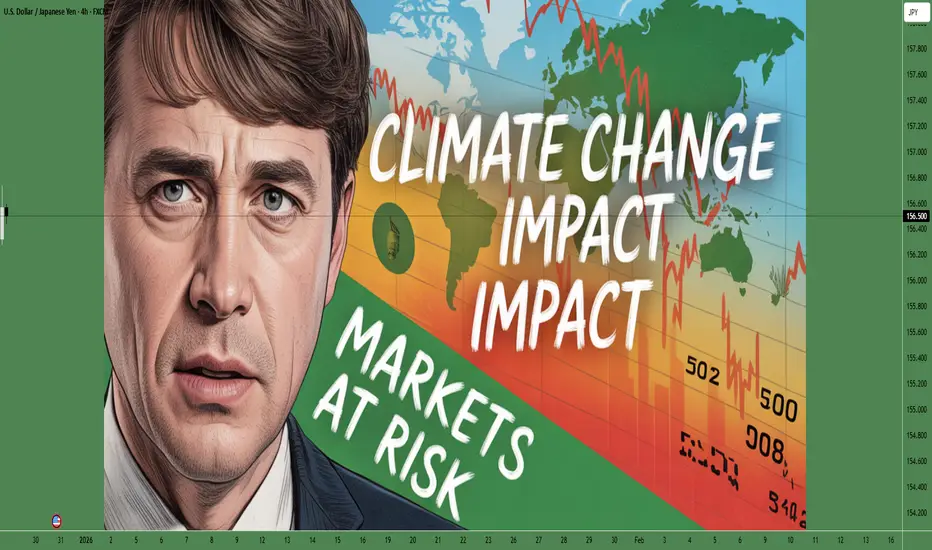
Climate Change: Market at Risk Understanding the Economic Implications
Climate change has evolved from being a purely environmental concern to a pressing economic and financial risk that impacts markets globally. Rising temperatures, extreme weather events, sea-level rise, and shifts in precipitation patterns are no longer abstract environmental phenomena—they are tangible forces reshaping industries, influencing investment decisions, and challenging the stability of global markets. This analysis explores the multifaceted ways in which climate change affects markets, investors, and economies, highlighting why understanding and addressing these risks is essential for long-term financial resilience.
1. Physical Risks: Direct Threats to Assets and Supply Chains
One of the most immediate ways climate change impacts markets is through physical risks. Extreme weather events such as hurricanes, floods, wildfires, and heatwaves can cause direct damage to infrastructure, production facilities, and logistical networks. For instance, floods in industrial hubs can halt manufacturing, disrupt supply chains, and reduce output, causing sudden market shocks. Agricultural sectors are particularly vulnerable, as changing rainfall patterns, droughts, and pest infestations can destroy crops and reduce commodity supply, leading to price volatility. Investors holding assets in vulnerable regions face increased uncertainty and potential losses, compelling markets to price in these risks.
Physical risks also extend to property markets. Coastal cities facing sea-level rise may see real estate values decline, impacting banks and investment portfolios with exposure to these areas. Similarly, insurance companies bear increasing claims from climate-related damages, potentially affecting the stability of the broader financial system. These physical risks underscore that climate change is not merely a future threat—it is already shaping asset valuations and market dynamics today.
2. Transition Risks: Economic Shifts Towards a Low-Carbon Future
Markets are not only affected by direct climate events but also by the transition toward a low-carbon economy. Transition risks arise from policy changes, technological innovations, and evolving consumer preferences aimed at reducing greenhouse gas emissions. Governments worldwide are implementing carbon taxes, emissions trading schemes, and stricter environmental regulations. Companies that fail to adapt—especially in carbon-intensive sectors like energy, transportation, and heavy industry—face increased costs, regulatory penalties, and declining competitiveness.
These transition dynamics influence markets by altering sectoral valuations. Renewable energy firms, electric vehicle manufacturers, and sustainable technology providers are attracting substantial investment, reflecting a shift in market sentiment toward companies aligned with climate goals. Conversely, traditional fossil fuel companies may see their stock values decline as investors anticipate reduced demand, regulatory pressures, and potential stranded assets. Financial markets are increasingly incorporating transition risk into pricing models, reshaping capital allocation patterns globally.
3. Market Volatility and Financial Stability
Climate change contributes to heightened market volatility and systemic financial risk. Sudden extreme events or policy shocks can lead to abrupt shifts in asset prices, liquidity constraints, and investor panic. For example, a severe drought affecting agricultural output can spike food prices, triggering inflationary pressures and affecting consumer spending across economies. Similarly, unexpected regulatory changes targeting carbon emissions can create uncertainty for corporate earnings and stock valuations.
Financial institutions are particularly exposed to climate-related risks. Banks, insurers, and investment funds with portfolios concentrated in vulnerable sectors or regions may face significant losses. Central banks are increasingly recognizing climate risks as a threat to financial stability, prompting stress testing frameworks and disclosure requirements for climate-related exposures. These measures aim to enhance market resilience, but the underlying volatility caused by climate uncertainty remains a challenge for investors and policymakers alike.
4. Sectoral Impacts: Winners and Losers
The effects of climate change on markets are not uniform; different sectors experience varied levels of risk and opportunity.
Energy Sector: Fossil fuel companies face declining demand and regulatory pressures, while renewable energy and clean technology sectors are gaining investor confidence.
Agriculture: Climate variability directly affects crop yields, commodity prices, and supply chain reliability, creating high exposure for agribusinesses.
Insurance and Reinsurance: Increasing claims from climate disasters drive up premiums and can strain the capital base of insurers.
Real Estate: Properties in flood-prone or wildfire-prone regions are losing value, affecting mortgage markets and institutional real estate portfolios.
Financial Services: Banks and investment funds exposed to vulnerable sectors face credit risk, default risk, and valuation uncertainty.
Understanding sector-specific risks is crucial for investors seeking to hedge against losses and capitalize on emerging opportunities in the green economy.
5. Investor Behavior and Market Adaptation
Climate change is shaping investor behavior in profound ways. Environmental, Social, and Governance (ESG) criteria are becoming central to investment decisions. Institutional investors, including pension funds and sovereign wealth funds, increasingly incorporate climate risk analysis into their portfolio management strategies. This shift is creating new market dynamics, with capital flowing toward sustainable industries and away from carbon-intensive sectors.
Markets are also adapting through innovations such as green bonds, climate derivatives, and sustainability-linked loans. These instruments allow investors to hedge risks and finance projects aligned with climate goals, reflecting a growing intersection between financial markets and environmental stewardship. As market participants increasingly price climate risks into asset valuations, companies are incentivized to adopt sustainable practices, creating a feedback loop that links environmental responsibility with financial performance.
6. Global Implications: Unequal Risk Distribution
Climate change impacts are not evenly distributed across countries and markets. Emerging markets often face higher physical and transition risks due to geographic vulnerability, limited infrastructure resilience, and constrained financial resources. For instance, small island nations are highly susceptible to sea-level rise, while arid regions face chronic water scarcity, threatening agricultural output and food security.
Developed economies, while more resilient, are not immune. Extreme weather events, policy shifts, and changing consumer behaviors affect corporate earnings and investment flows globally. The interconnectedness of global supply chains means that climate-induced disruptions in one region can ripple through markets worldwide, creating systemic risks that require coordinated international responses.
7. Strategic Implications for Businesses and Policymakers
For businesses, recognizing climate-related risks is essential for long-term sustainability and competitiveness. Firms must integrate climate scenarios into strategic planning, assess vulnerability across operations, and invest in adaptive technologies. Transparent reporting of climate risks is increasingly mandated by regulators and demanded by investors, further linking corporate performance with climate resilience.
Policymakers play a pivotal role in shaping market outcomes. By setting clear carbon reduction targets, incentivizing sustainable investments, and supporting resilient infrastructure, governments can mitigate financial risks while driving economic transformation. International coordination, such as through climate finance and carbon border adjustment mechanisms, is crucial for reducing systemic risks and supporting markets exposed to climate vulnerabilities.
8. Conclusion: Markets at the Crossroads of Climate Risk
The impact of climate change on markets is complex, pervasive, and accelerating. Physical risks from extreme weather, transition risks from the low-carbon shift, sectoral disparities, investor behavior, and global interconnectedness collectively create a new landscape for financial markets. Market participants must recognize that climate change is not a distant threat—it is a present-day economic reality influencing valuations, investment decisions, and financial stability.
Proactive adaptation, informed risk assessment, and strategic investment in sustainability are no longer optional; they are essential for market resilience. Investors, businesses, and policymakers must collaborate to manage risks, seize opportunities, and navigate a world where climate change is a central determinant of economic outcomes. By doing so, markets can transition from vulnerability to resilience, transforming climate challenges into opportunities for innovation, growth, and sustainable prosperity.
EURCAD: Pullback First, Then Potential BreakdownSeasonality shows that EUR tends to be moderately bullish in December, especially when looking at 5–10 year horizons, while CAD typically experiences mild weakness during the same period and historically regains strength between January and February. In the short term, this means seasonality favors EUR over CAD, but as we move into the new year the balance shifts toward CAD appreciation. This creates a favorable environment for waiting on technical pullbacks first and then looking for selling opportunities at higher levels.
Retail sentiment currently shows roughly 54% short positions versus 46% long, indicating that positioning is not extreme, yet traders are slightly biased to the short side. Historically, when retail is predominantly short, price tends to remain supported for a while before eventually reversing. As a result, there may still be room for bullish retracements in the very short term, although this does not change the broader bearish context.
From a COT perspective, speculators appear to be covering CAD short exposure, which is supportive for CAD in the medium term, while EUR is attracting additional long interest but not at extreme levels. Overall, this suggests that upside in EURCAD is likely limited and the risk of a medium-term reversal remains elevated.
Technically, price is trading within a descending channel that has been respected multiple times and is currently testing a demand zone, which may generate a short-term reaction. RSI has not yet completed a full bullish divergence, indicating that one more bounce remains possible, while the daily structure continues to print lower highs and lower lows. A potential rebound toward the 1.6120–1.6150 area, where former support may now act as supply, would allow the market to retest structure before resuming the dominant downtrend.
Inverse H&S Transition Into Ascending Channel (Structure Study)Educational Market Structure Observation
This chart highlights an unusual and relatively rare structural alignment in price behavior.
At the core of this observation is an Inverse Head & Shoulders–like formation , where two heads appear within the structure , developing inside an ascending channel that continues to print higher highs and higher lows.
Rather than presenting a classic textbook pattern, this structure shows how real market behavior can blend multiple concepts at once.
What adds further significance is the location :
• Price is interacting with a strong daily support zone
• The zone has produced four clear rejections
• This support originates as far back as early July , demonstrating long-term relevance
• The most recent reaction includes a spinning bottom candle , reflecting temporary balance and hesitation between buyers and sellers
From a structural perspective, this environment illustrates how markets can remain constructive while simultaneously showing signs of compression and uncertainty.
Key Structural Elements Observed
• Ascending channel maintaining higher structure
• Inverse Head & Shoulders–like formation with atypical symmetry
• Multiple reactions from a long-standing daily support zone
• Candlestick behavior suggesting equilibrium rather than aggression
Educational Insight
This example is shared to demonstrate that:
• Market structure is rarely perfect
• Multiple patterns can coexist without invalidating each other
• Context and location matter more than pattern labels
• Candlesticks reflect participation, not guarantees
📘 Ethical & Educational Notice
This content is shared strictly for educational and analytical purposes, based on historical price data.
It does not promote or encourage trading, speculation, short selling, leverage, margin usage, interest-based activity, or any financial behavior.
The goal is to study market structure and price behavior only.
⚠️ Disclaimer
This post does not constitute financial advice, investment recommendations, or trading instructions.
No outcomes, profits, or future results are implied or guaranteed.
All decisions remain the sole responsibility of the reader and should align with their own ethical, legal, and religious principles.
EURCAD SELLIn this video I will be sharing my EURCAD analysis today, by providing my complete technical analysis by using candlesticks in order to have confidence over the market/control over your emotion no matter what the fundamentals are saying concerning the market, so you can watch it and improve your forex trading skill, Thanks.
EURUSD: Support & Resistance Analysis for Next Week 🇪🇺🇺🇸
Here is my latest structure analysis and important
supports & resistances for EURUSD for next week.
Consider these structures for pullback/breakout trading.
❤️Please, support my work with like, thank you!❤️
I am part of Trade Nation's Influencer program and receive a monthly fee for using their TradingView charts in my analysis.