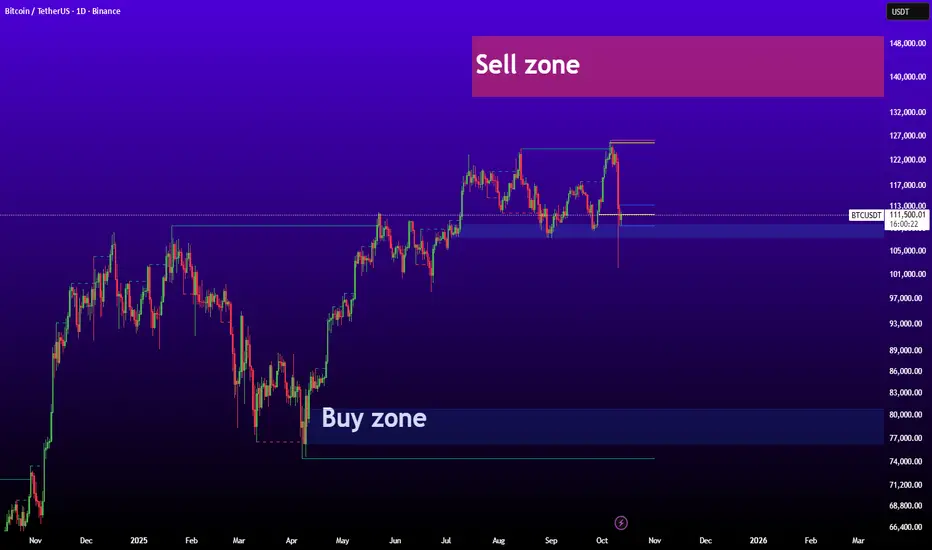
BTCUSDTBitcoin could correct to $65,000 and then resume its upward trend, potentially rising to the $700,000 range. Hassanhosseinzadeh by Hassanhosseinzadeh3
Liquidity Hunt: How Whales Move the MarketEver wonder why prices always seem to drop just below your stop loss before bouncing back? It’s not bad luck; it’s liquidity in action. The big players are prowling, hunting for stops, and if you don't understand where they’re lurking, you might just be their next target. Liquidity definition refers to how easily an asset can be bought or sold without significantly affecting its price, and in the world of crypto, this dynamic can make or break your trade. Let’s dig into how these whales work the market and how you can avoid becoming their prey. What is Liquidity? Liquidity meaning refers to how easily an asset can be bought or sold without affecting its price. In the context of crypto, it's crucial to know that high liquidity means less slippage, while low liquidity can lead to sharp price moves. Market liquidity is essential for smooth trading, but it also creates opportunities for big players to manipulate price action by targeting stop losses. Liquidity Risk and Big Players Liquidity risk arises when there's not enough liquidity to execute trades efficiently, especially during volatile periods. Big players exploit these conditions by pushing prices through key support and resistance levels, triggering stop orders and capturing liquidity. This is why it’s vital to be aware of where liquidity is concentrated — big players often target areas with many stop losses, trapping retail traders in the process. Tools to Analyze Liquidity Volume Indicators: Use tools like Accumulation/Distribution or On-Balance Volume (OBV) to spot surges in volume that may indicate manipulation or big players entering the market. Bitcoin Liquidity Heatmap: A Bitcoin liquidity heatmap shows where large buy and sell orders are placed, helping you avoid areas where liquidity is likely to be targeted by whales. Liquidity Ratio Formula: Another great tool which helps measure market depth and liquidity. You can calculate it as: A higher ratio indicates that there is more buying pressure, suggesting the market is more liquid and less prone to manipulation. On the other hand, a lower ratio signals more sell orders, which could expose you to increased liquidity risk and higher chances of price manipulation by big players. Price Action: Watch for candlestick patterns like pin bars or engulfing candles near key support or resistance levels to anticipate price reversals after stop hunts. Conclusion While tools like volume indicators and Bitcoin liquidity heatmaps can help, always stay vigilant. Use wider stop losses to avoid getting trapped at key levels, and stay cautious during periods of low liquidity when whales are most active. This article isn’t trading advice — always DYOR and trade responsibly.Educationby WhiteBIT32
i don't know what i am doing i don't know what i am doing but looks very bullish by mid 2025 to late 2025 in shaa allahLongby Crypto_hakiUpdated 554
BTC(based on NEo wave)everything is ok with flat. time of wave B is more than wave A and wave C is making a beautiful impulse wave. bitcoin price under 74500$ is a bear trap!by NEowave19980
Will this date come true?This is not fundamentally unbelievable, especially with the manipulation of governments in the crypto market What is completely clear to us activists is the manipulation of absurd markets with great temptation by the yellow-haired doll and the child politicians and child killers around him. Although I am not active in this market, I feel sorry for you, despite this cesspool soaked in the blood and hearts of the people of the world! These numbers may not be realized, but the much blood that has been spilled on the ground will rise and the consequences will drown it. The freedmen will definitely win. And I must say, this analysis may expire after a while: Good luck MJ.REZAEIby MJ2REZAEI3
So What now ??Hey everyone, let's cut the noise and talk seriously about where Bitcoin (BTC) is at right now. For months, I've been saying what a lot of people didn't want to hear: the ideal trading range for BTC has to be somewhere in the $40,000 to $60,000 zone. I got mocked, ignored, and even straight-up cursed out for saying that when the price was flying high. Everyone was chanting "$100k, $200k!" and acting like gravity didn't exist. Well, look where we are now. BTC is roaming around $80-85k, a significant drop from those all-time highs. The future feels... well, unknowable to those who only looked up. But for those of us who kept one foot on the ground, this pullback isn't a shock; it's a return to a healthier balance. 🧐 Why the Fall Happened: No Magic Money Tree The drop didn't come out of nowhere. It's a combination of simple market mechanics and shifting sentiment. Let's break down the three big reasons why the party ended: 1-The $100k+ Support Just Wasn't There: Let's face it, sustained price action above $100k requires an insane amount of new, constant capital. The demand just couldn't keep pace with the towering valuation. When the buying dried up, the price had to correct to a level where new investors saw value again, or where old holders decided to take profits. The market ran out of steam, and the volume needed to hold those upper levels simply wasn't there. 2-Long-Term Holders Got Tired of Waiting: You call them "Diamond Hands," but even the most dedicated long-term holders (LTHs) have a breaking point. After a massive run-up and then an extended period of stagnation at the top, many LTHs started thinking, "This is good enough." Taking profit after a multi-year hold is a natural part of the market cycle, and when enough big wallets decide to cash out, it creates a powerful selling pressure that crushes the price floor. 3-The Altcoin Allure: The ETH Factor: As BTC got super expensive, the percentage return on a $1,000 price move started to feel insignificant. At $100k, a $1k move is just 1%. Meanwhile, competitors like Ethereum (ETH) offered a more appealing risk-to-reward ratio. When $1,000 means a 3-5% gain on a mid-level price, traders and even institutions start to migrate to where the potential for profit is mathematically greater. Traders are profit-driven, and ETH offered a more "profitable range" for active players. 🔮 What Now? The Balance of Waves So, what's next? More brutal crashes? Unlikely. What we are likely entering is a period of choppy, sideways consolidation—a return to that healthy $40k–$60k range over time, or at least a deep, volatile consolidation between $60k and $85k as the dust settles. This is the cycle: Euphoria leads to Correction, which leads to Consolidation. The fall won't be a straight line. It will continue in waves—sometimes up, sometimes down. We'll see dead-cat bounces that trick new money into buying, followed by more downside. The goal for the market now is to find a new balance between risk and profitability. This balance isn't found at the peak; it's found in the middle ground. Why? Because the standard profitable range for retail and even whales is when smaller price differences still mean meaningful percentage gains. Remember the Math: At $100,000, a $1,000 move is 1%. At $50,000, a $1,000 move is 2%. At $30,000, a $1,000 move is ~3.3%. The lower range offers a higher percentage return for the same absolute dollar change, making it a much more attractive area for accumulating or trading. The price needs to drop to where the perceived risk of a further fall is balanced by the reward of those higher percentage gains. 🧭 So What now ??: Trade the Range, Ignore the Noise The days of easy 10x returns might be on pause, but the opportunity for smart, methodical trading is back. We are entering a trader's market, not a HODLer's dreamland. Stick to your charts, define your support and resistance, and trade the range, not the rumor. The market is giving us a second chance to accumulate at realistic prices. Don't waste it by listening to the ghosts of "$200k." Good luck , Good hunt and Trade safe guys !by Oracle_Systems114
BTCUSDTHi CRYPTOCAP:BTC is correction from ATH but if couldn't keep level (110.000$) we see more downtrend and I think deep bear-trend to 80.000$.by ahmadarzUpdated 4
Bitcoin’s Drop From $125K: A Healthy Correction?The recent decline is largely a correction after BTC’s massive rally from $17K (Oct 2023). Based on Fibonacci levels, the next key supports sit at $85K, $70K, and $60K — with $70K looking especially strong to me. And yes… Bitcoin is officially 4-digit again. #Bitcoin #BTC #CryptoAnalysis #Fibonacci #CryptoMarketShortby Ario_pinelabUpdated 2
BTC Bitcoin Bear Market If you haven`t bought BTC before the recent rally: Historically, Bitcoin has shown a tendency to retrace in December before starting a recovery around March. This pattern could repeat this season, with BTC facing selling pressure as year-end portfolio rebalancing and macro uncertainties weigh on the market. While a brief Santa Claus rally might provide temporary relief, the bearish trend is expected to dominate until March. By then, BTC could trade below $84K before regaining momentum, aligning with its historical recovery trend as market conditions stabilize in spring.Shortby TopgOptionsUpdated 9
BTC Monthly IdeaBTC Monthly trend This was a last uptrend direction for BTC . If this was broken then condition must be worst. But according to this trend , i am still bullish keep buying after and after 15% to 20% below. DYOR NFAby DawoodAliKhan19950
Symmetrical Triangle incoming Avoid trading during a symmetrical triangle formation Market Indecision & Uncertainty: Symmetrical triangles represent periods where buying and selling pressures are almost equal, causing price to consolidate with lower highs and higher lows converging towards a point. There's no clear directional bias until a breakout occurs, making trade direction and timing highly uncertain during the formation phase. Risk Management Challenges: Stop-loss placement inside the triangle is unreliable, as price often touches both trendlines without a breakout, increasing the probability of being stopped out repeatedlyby Blayno_MTOPS4
What to expect from BTC?BTC took liquidity from April, tested the lower boundary of the ascending channel, and immediately bounced. Historically, such touchdowns have triggered growth cycles. A head and shoulders formation is more likely. A triple top is less likely. These structures allow shorts to accumulate liquidity at the $100,000 and $110,000 levels. Wave theory also fits: a rebound from the lower boundary could form an A-B wave into the right shoulder area, which coincides with the length of the bullish flag pole.Longby c_views3
If I hadn’t second-guessed the forecast, my risk-to-reward 1:5As mentioned before, the y-axis of the AI output is fixed. If the price action goes beyond the forecast image, it simply means the forecast can’t cover the full range. In those cases, we rely on market shape and timing instead. This is a great reminder to trust in the new era of AI accuracy and really let it guide us! If I hadn’t second-guessed the forecast, my risk-to-reward (R:R) would have been 1:5 🤩by Blayno_MTOPS1
BTC LongOur last two trades gave insane calls and you all witness it. This time we are seeing that BTC is going up with a strong 30 min candle reversal. Targets on the charts. DYORShortby SevenStarBuySell5
BTCUSDT – Blue Box Reversal IncomingHi fellow traders, On the 1D BTCUSDT chart, I am applying Elliott Wave principles to outline a potential long setup. Price has tapped into the blue box after completing a ZIGZAG correction, and this region may provide the foundation for the next impulsive leg within the higher-degree structure. I am entering at the current price, with a Stop Loss at 73,900.00. My Take Profit is set at 132,366.25, based on the projected continuation of the larger impulsive count. If price breaks below the structural low around the stop level, this trade is no longer valid. Good luck and trade safe!Longby OGwavetraderUpdated 1112