Position Sizing and Risk ManagementThere are multiple ways to approach position sizing. The most suitable method depends on the trader’s objectives, timeframe, and account structure. For example, a long-term investor managing a portfolio will operate differently than a short-term trader running a high-frequency system. This chapter will not attempt to cover all possible methods, but will focus on the framework most relevant to the active trader.
Equalized Risk
The most practical method for position sizing is known as equalized risk per trade. This model ensures that each trade risks the same monetary amount, regardless of the stop loss distance. The position size will be calculated based on the distance between the entry price and the stop loss, which means a closer stop equals more size, where a wider stop equals less size. This allows for a more structured and consistent risk control across various events.
Position Size = Dollar Risk / (Entry Price − Stop Price)
Position Size = Dollar Risk / (Entry Price × Stop in %)
For example, an account size of $100,000 and risk amount of 1% will be equivalent to $1,000. In the scenario of a $100 stock price, the table below provides a visual representation of how the position size adapts to different stop loss placements, to maintain an equalized risk per trade. This process can be integrated into order execution on some trading platforms.
The amount risked per trade should be based on a fixed percentage of the current account size. As the account grows, the dollar amount risked increases, allowing for compounding. If the account shrinks, the dollar risk decreases, which helps reduce the impact of continued losses. This approach smooths out the effect of random sequences. A percentage-based model limits downside exposure while preserving upside potential.
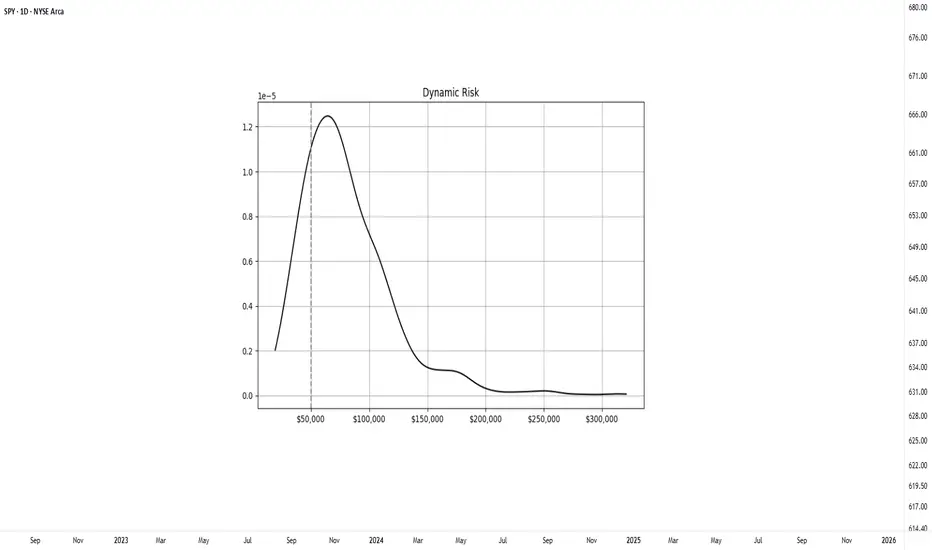
To better illustrate how position sizing affects long-term outcomes, a controlled simulation was conducted. The experiment modeled a system with a 50% win rate and a 1.1 to 1 average reward-to-risk ratio. Starting with a $50,000 account, the system executed 500 trades across 1000 separate runs. Two position sizing methods were compared: a fixed dollar risk of $1000 per trade and a dynamic model risking 2% of the current account balance.
Fixed-Risk Model
In the fixed-risk model, position size remained constant throughout the simulation. The final outcomes formed a relatively tight, symmetrical distribution centered around the expected value, which corresponds to consistent variance.
Dynamic-Risk Model
The dynamic-risk model produced a wider and more skewed distribution. Profitable runs experienced accelerated increase through compounding, while losing runs saw smaller drawdowns due to self-limiting trade size. Although dynamic risk introduces greater dispersion in final outcomes, it allows scalable growth over time. This compounding effect is what makes a dynamic model effective for achieving exponential returns.
A common question is what percentage to use. A range between 1–3% of the account is generally considered reasonable. Too much risk per trade can quickly become destructive, consider that even profitable systems may experience a streak of losses. For instance, a series of five consecutive losses at 10% risk per trade would cut the account by roughly 41%, requiring over a 70% return to recover. In case catastrophic events occur; large position sizing makes them irreversible. However, keeping position size and risk too small can make the entire effort unproductive. There is no such thing as a free trade, meaningful reward requires exposure to risk.
Risk Definition and Stop Placement
Risk in trading represents uncertainty in both the direction and magnitude of outcomes. It can be thought of as the potential result of an event, multiplied by the likelihood of that event occurring. This concept can be formulated as:
Risk = Outcome × Probability of Outcome
This challenges a common assumption that using a closer stop placement equals reduced risk. This is a common misconception. A tighter stop increases the chance of being triggered by normal price fluctuations, which can result in a higher frequency of losses even when the trade idea is valid.
Wide stop placements reduce the likelihood of premature exit, but they also require price to travel further to reach the target, which can slow down the trade and distort the reward-to-risk profile. An effective stop should reflect the volatility of the instrument while remaining consistent with the structure of the setup. A practical guideline is to place stops within 1–3 times the ATR, which allows room for price movement without compromising the reward-risk profile.
When a stop is defined, the distance from entry to stop becomes the risk unit, commonly referred to as R. A target placed at the same distance above the entry is considered 1R, while a target twice as far is 2R, and so on. Thinking in terms of R-multiples standardizes evaluation across different instruments and account sizes. It also helps track expectancy, maintain consistency, and compare trading performance.
In summary, risk is best understood as uncertainty, where the outcome is shaped by both the possible result and the probability of it occurring. The preferred approach for the active trader is equalized risk per trade, where a consistent percentage of the account, typically 1–3%, is risked on each position regardless of the stop distance. This allows the account to develop through compounding. It also reinforces the importance of thinking in terms of sample size. Individual trades are random, but consistent risk control allows statistical edge to develop over time.
Practical Application
To simplify this process, the Risk Module has been developed. The indicator provides a visual reference for position sizing, stop placement, and target definition directly on the chart. It calculates equalized risk per trade and helps maintain consistent exposure.
Community ideas
WHEN LEVERAGE BREAKS - Anatomy of Crypto’s Biggest LiquidationsLeverage is a siren song in crypto: promises of outsized returns, but lurking beneath is the danger of forced closure. When the market moves hard against you, exchanges trigger automatic liquidations to protect themselves, and that cascade can morph into systemic shockwaves. For nerds who love charts, order-books, and structural decompression, today we unpack the biggest liquidation events in crypto history: how they happened, what the anatomy looked like, and what lessons we can extract.
1. What is a liquidation cascade (technically speaking)?
Before jumping to examples, let’s ground ourselves in the mechanics.
A leveraged position (long or short) is collateralized. If adverse movement pushes the margin balance below the maintenance threshold, the exchange forcibly closes (liquidates) the position.
In volatile moves, many positions trigger simultaneously → cascades.
Liquidations feed into the order book: long liquidations generate sell pressure, short liquidations generate buy pressure (depending on how the exchange handles auto-deleveraging or reverse positions).
Because liquidations are mechanical, they often occur at the worst possible market moment (prices already deviated).
Exchanges mitigate risk via “liquidation engines” and risk buffers, but under stress those safeguards can fray.
@TradingView recently added new crypto derivatives / liquidation volume indicators to help surface such forced flows. www.tradingview.com
1. The 2025 Tariff Shock — The $19 Billion Flush
In October 2025, crypto experienced the largest liquidation event in history — over $19.35 billion wiped out within 24 hours..
Trigger:
A surprise announcement by former U.S. President Donald Trump imposing 100% tariffs on all Chinese imports.
This policy move rattled global risk sentiment, sending equities lower and triggering a risk-off cascade that bled straight into crypto.
Impact:
Over 1.6 million traders liquidated.
Bitcoin fell from above $122,000 to near $104,000 within hours.
Over $16 billion in long positions were force-liquidated as funding rates and open interest collapsed.
The single largest forced closure: ~$203 million long BTC position.
Why it mattered:
The market was heavily long-biased after months of parabolic gains in BTC and gold. The tariff shock exposed the fragility of an over-levered environment.
Traders learned again that no chart pattern can withstand a geopolitical macro nuke.
2. 2021 AML Crackdown Rumors — Regulatory Fear & Exchange Stress
Back in APRIL 2021, rumors of a U.S. Treasury anti–money-laundering crackdown on crypto exchanges began circulating.
This caused one of the first true modern liquidation avalanches in crypto.
Facts:
Bitcoin dropped from $58,000 to $47,000 in a single weekend.
Over $10 billion worth of leveraged long positions were liquidated.
Binance and Bybit both reported record liquidation engine activity.
Lesson:
Regulatory fear is the ultimate non-technical catalyst, it triggers panic before confirmation.
This event showed that liquidity evaporates faster during regulatory uncertainty than during normal sell-offs.
3. Tesla’s Stance Reversal & Payment Halt (May 2021)
Tesla once fueled the bull run — then single-handedly flipped sentiment.
In February 2021, Tesla announced it had bought $1.5B in Bitcoin, sending BTC to new highs.
But on May 12, 2021, Elon Musk halted Bitcoin payments for Tesla cars, citing environmental concerns.
Immediate results:
BTC crashed from $55K → $45K within hours.
Over $8.6 billion in long positions were liquidated in a single day.
Ethereum and other altcoins followed suit.
Why it hit harder than usual:
This wasn’t a macro policy move, it was a corporate sentiment U-turn that shattered retail confidence and triggered cascading margin calls.
Traders learned the danger of anchoring to corporate adoption narratives.
4. Overheated Rally Correction (2021–2025 Cycles)
Every crypto bull run ends with an “everything rally” phase — leverage so extreme that even minor dips turn catastrophic.
Examples:
2021 Q4 — BTC funding rates turned sharply positive (0.15%+) on major exchanges as retail traders piled in. Within days, a 10% correction triggered ~$6B in long liquidations.
2025 pre-tariff months - perpetual open interest hit record highs.
When tariffs hit, this structural overextension acted as dry powder for the liquidation engine.
Takeaway:
Leverage magnifies both greed and gravity. The crash is always a function of how high the leverage climbs.
5. El Salvador’s Bitcoin Law Launch Dump (September 2021)
On September 7, 2021, El Salvador officially adopted Bitcoin as legal tender, a historic first for any nation.
Irony:
Instead of rallying, the market sold off sharply.
Facts:
Bitcoin plunged from $52K → $43K intraday.
Over $3.5 billion in longs were liquidated.
The drop was so fast that major exchanges (Kraken, Coinbase) experienced brief outages.
Why?
Buy the rumor, sell the fact.
By the time the law launched, markets were already euphoric and overleveraged. Smart money used the event to offload into retail euphoria.
6. U.S. Capital Gains Tax Hike Plans (April 2021)
On April 22, 2021, reports surfaced that the Biden administration planned to nearly double capital gains tax on high-income investors.
Immediate result:
Bitcoin plunged from $64,000 → $48,000 within days.
Nearly $10 billion in leveraged longs were flushed.
The fear of higher taxation prompted whales to take profit aggressively.
Mechanics:
This wasn’t a liquidation-only event at first, it started as profit-taking but quickly cascaded into forced closures as leveraged traders couldn’t sustain the drawdown.
7. Janet Yellen’s Anti-Bitcoin Remarks (February 2021)
During a Senate hearing, U.S. Treasury Secretary Janet Yellen called Bitcoin “extremely inefficient” and warned of its use in illicit finance.
Market impact:
BTC fell nearly 20% in three days.
Over $4 billion in leveraged longs were wiped.
The comments coincided with overheated retail positioning, accelerating the cascade.
Why it mattered:
Markets move less on what is said and more on who says it.
A Treasury Secretary criticizing BTC spooked institutional desks, leading to a sentiment reset.
8. Tesla’s BTC Payment Halt & Sentiment Domino
While the May 2021 halt was the visible trigger, the sentiment domino extended weeks beyond.
Tesla’s reversal triggered a loss of narrative confidence.
Retail traders deleveraged en masse.
Long liquidation totals across May–June 2021 exceeded $20 billion cumulatively.
The market learned: corporate catalysts can inflate and deflate liquidity cycles just like central banks.
Conclusion — When Fundamentals Meet Fragility
From tariffs to tax hikes, corporate U-turns to policy remarks, every major liquidation event shares one hidden similarity:
The news didn’t cause the crash.
The leverage did.
Fundamentals light the match — leverage provides the fuel.
Crypto remains the most reflexive asset class on earth: sentiment shifts instantly, margin engines enforce discipline violently, and traders must adapt structurally, not emotionally.
Key Dynamics That Cause “Big One” Events
From observing multiple blowups, a few recurring structural features emerge:
3.1 Leverage stacking and overconfidence bias
Traders often pile in too much leverage during extended rallies. As long momentum stretches, more leverage is drawn, making the system more fragile.
3.2 Imbalance in Long vs Short exposure
When the market is heavily skewed (e.g. 80% of open interest in longs), there’s little counterbalance if price turns. This asymmetry makes cascade events deeper.
3.3 Poor liquidity / thin order books at extremes
When price is moving fast, depth evaporates. Liquidation orders hit slippage, causing knock-on effects.
3.4 Macro exogenous shock alignment
Sometimes the trigger is macro (rate news, policy, trade wars). Crypto’s leverage structure acts as gas on the fire.
3.5 Feedback loops & self-reinforcing mechanics
Forced liquidations push price further, triggering more liquidations — classic positive feedback. Some exchanges use auto-deleveraging or Socialized Loss (SLP) which can introduce further weirdness.
3.6 The “air pocket” phenomenon
After extreme movement, the order book may have gaps (no resting liquidity). The next move is a “flyover” — no stops until far away — amplifying volatility. Commentators from the recent crash mentioned “long-tail air pockets.”
CoinDesk
4. Why Does This Matter for Traders & Analysts?
Risk calibration — Knowing that forced flows can swamp discretionary ones, we should size positions conservatively, especially in high-leverage contexts.
Signal detection — Watching liquidation volume (e.g. on TradingView’s new indicators) gives advance signs of structural stress.
Hedging strategy — In overleveraged regimes, hedges (option puts, macro hedges) might cushion the blow.
Survivor bias & cleanup — These episodes often reset the market: weak hands are flushed, margin debt is de-levered, clearing the field for the next move.
Exchange counterparty risk — Massive surges in liquidations stress exchange infrastructure. If exchanges lag, misprice, or fail during stress, systemic risk looms.
PUT TOGETHER BY : PAKO PHUTIETSILE as @currencynerd
Benefits of Trading Global Assets1. Diversification Across Geographies
One of the most significant advantages of trading global assets is the ability to diversify investments across multiple regions. Diversification is a core principle of risk management in finance; by spreading investments across different geographic markets, investors reduce the impact of country-specific economic shocks.
For example, an investor who holds assets only in the Indian stock market is vulnerable to domestic economic downturns, political instability, or sector-specific crises. By investing in the U.S., European, or Asian markets simultaneously, the investor spreads risk and potentially stabilizes returns. Geographic diversification ensures that poor performance in one market may be offset by stronger performance in another, thereby smoothing the overall portfolio volatility.
2. Exposure to Emerging Markets
Trading global assets allows investors to tap into emerging markets, which often offer higher growth potential than developed economies. Emerging economies such as India, Brazil, and Southeast Asian countries are characterized by rapid industrialization, growing middle-class populations, and increasing domestic consumption.
While investing in these markets involves higher risk due to political uncertainty, currency volatility, and regulatory fluctuations, it also presents the opportunity for substantial capital appreciation. Global asset trading platforms provide investors access to these markets, allowing them to balance high-growth prospects with their risk appetite.
3. Access to a Wider Range of Asset Classes
Global trading enables access to a much broader set of asset classes than would be available domestically. While domestic markets may limit investors to a few stocks, bonds, or commodities, international markets offer access to foreign equities, sovereign bonds, ETFs, REITs, commodities, and currency pairs.
For instance, commodities like crude oil, natural gas, and precious metals can be traded on international exchanges such as the New York Mercantile Exchange (NYMEX) or the London Metal Exchange (LME). Similarly, foreign exchange (forex) trading allows investors to speculate on currency movements, hedge international business exposures, or manage currency risks. This expanded universe of asset classes provides flexibility and strategic opportunities that are not achievable solely through domestic investment options.
4. Hedging Against Currency Risk
Investing globally introduces the element of currency risk, but it also provides an opportunity for effective hedging. Investors can take positions in foreign currencies to mitigate the adverse effects of domestic currency depreciation. For multinational corporations or investors with international cash flows, trading global assets is crucial for managing currency exposure.

For example, if an Indian investor holds U.S. assets, a weakening Indian Rupee against the U.S. Dollar will increase the value of returns when converted back to Rupees. Conversely, hedging strategies such as currency forwards, futures, or options can protect against unfavorable exchange rate movements. Therefore, global trading not only introduces new risks but also equips investors with tools to manage them strategically.
5. Enhanced Liquidity
Global markets offer a higher degree of liquidity compared to many domestic markets, particularly for major financial instruments. Markets like the New York Stock Exchange (NYSE), NASDAQ, and the London Stock Exchange (LSE) have substantial daily trading volumes, making it easier for investors to buy or sell assets without significantly impacting prices.
High liquidity benefits traders by reducing transaction costs, minimizing slippage, and allowing for timely execution of trades. Moreover, certain assets that are illiquid in one country may be highly liquid in another. For instance, while an Indian investor may find it challenging to trade a foreign tech stock locally, accessing it on its home exchange ensures efficient price discovery and ease of trading.
6. Opportunities for Arbitrage
Global asset trading creates avenues for arbitrage, where investors can exploit price discrepancies between markets. Arbitrage opportunities arise when the same asset is priced differently in two or more markets due to timing differences, local demand-supply factors, or currency fluctuations.
For example, a multinational investor may identify a situation where a company’s stock is undervalued in one market while being overpriced in another. By buying in the cheaper market and selling in the more expensive one, the investor can lock in risk-free profits. Arbitrage not only generates returns but also contributes to market efficiency by aligning prices across different exchanges.
7. Capitalizing on Global Economic Trends
Global asset trading allows investors to capitalize on macroeconomic trends beyond their domestic economy. For example, when the U.S. Federal Reserve adjusts interest rates, it can influence global bond yields, currency valuations, and stock market performance. Similarly, fluctuations in commodity prices, geopolitical events, or trade agreements affect international markets differently.
Investors with access to global assets can respond to these trends by reallocating capital strategically. For instance, a rise in crude oil prices may benefit oil-exporting countries’ stocks or energy sector ETFs. This ability to react to global economic shifts provides a competitive advantage over investors restricted to domestic markets.
8. Potential for Higher Returns
Investing globally can potentially enhance returns compared to domestic markets alone. While higher returns often come with higher risks, international markets offer unique growth opportunities not present domestically.
Developed markets, such as the U.S. and Japan, offer stable returns, dividend yields, and exposure to global corporations. Emerging markets, on the other hand, provide rapid growth potential driven by urbanization, technological adoption, and demographic shifts. By strategically allocating capital across these markets, investors can optimize risk-adjusted returns and achieve long-term wealth creation.
9. Risk Mitigation Through Time Zone Differences
Global markets operate across different time zones, which can be advantageous for investors and traders. For instance, price movements in Asian markets may provide early indications of trends that could affect European or U.S. markets. Traders can monitor these developments to make informed decisions, reduce overnight exposure, or implement preemptive hedging strategies.
Moreover, the staggered opening hours of global exchanges allow investors to respond to breaking news, earnings announcements, and geopolitical events promptly, reducing the impact of sudden domestic shocks. This temporal diversification is an often-overlooked benefit of global asset trading.
10. Learning and Strategic Advantage
Trading globally exposes investors to diverse financial markets, regulatory environments, and economic systems. This exposure fosters learning and strategic thinking, helping investors understand global interconnections and macroeconomic forces.
Institutional investors, for example, analyze currency policies, central bank interventions, and geopolitical risks to optimize portfolio allocation. Individual investors gain insights into international corporate governance standards, financial reporting practices, and market sentiment. This global perspective not only improves investment decision-making but also enhances one’s ability to navigate volatile or uncertain market conditions.
11. Technological Advancements and Access
The rise of online trading platforms, digital brokerages, and financial technology solutions has made trading global assets more accessible than ever. Investors no longer require physical presence in foreign markets; modern platforms provide real-time data, seamless execution, and multi-currency account management.
These technological advancements democratize global trading, enabling retail investors to participate in markets that were previously dominated by institutional players. Features like automated trading algorithms, mobile apps, and integrated research tools empower traders to implement sophisticated strategies with ease.
12. Portfolio Resilience During Domestic Downturns
Global asset trading can act as a shield during domestic economic downturns. For instance, during periods of political uncertainty, inflation spikes, or sector-specific crises, domestic equities may underperform. By holding international assets, investors can offset domestic losses, preserving capital and maintaining portfolio stability.
Additionally, exposure to counter-cyclical markets—economies that behave inversely to one’s home market—further strengthens portfolio resilience. For example, during a slowdown in the U.S. economy, emerging markets may continue growing, balancing the overall performance of a diversified global portfolio.
13. Participation in Global Innovation and Growth Sectors
Global trading allows investors to participate in innovation and growth sectors worldwide, including technology, healthcare, green energy, and biotechnology. Many pioneering companies are headquartered outside domestic borders, and investing in these companies provides exposure to global technological and industrial advancements.
For instance, early investors in U.S. technology giants or European renewable energy firms have benefited from rapid capital appreciation. Without global asset trading, access to such high-growth sectors would be significantly restricted, limiting wealth creation potential.
14. Strategic Tax and Regulatory Advantages
In some cases, global asset trading can offer strategic tax planning or regulatory advantages. Certain jurisdictions provide tax incentives, reduced capital gains taxes, or favorable dividend treatment for foreign investors. By understanding international regulations, investors can optimize after-tax returns.
Furthermore, diversified international holdings may allow investors to structure portfolios in a way that mitigates political or regulatory risks associated with domestic investments. Professional investors often leverage these advantages to maximize net returns while complying with global financial regulations.
Conclusion
Trading global assets provides investors with an array of benefits, ranging from diversification and risk management to enhanced growth opportunities and liquidity. Access to multiple markets, asset classes, and time zones enables investors to optimize portfolios, hedge against domestic and currency risks, and capitalize on global economic trends. While global trading introduces additional complexities—such as currency fluctuations, geopolitical risks, and regulatory differences—the potential rewards often outweigh the challenges.
As technology continues to advance and financial markets become more interconnected, the ability to trade global assets will increasingly become a cornerstone of modern investment strategies. For investors seeking long-term growth, resilience, and exposure to innovation, global asset trading offers unparalleled opportunities to navigate the dynamic and diverse landscape of international finance.
FIIs Impact on Investments1. Understanding Foreign Institutional Investors (FIIs)
Foreign Institutional Investors are professional investors who bring in large pools of capital from abroad into domestic financial markets. They typically invest in equities, bonds, derivatives, and sometimes real estate. Unlike retail investors, FIIs operate on a large scale, and their investment decisions are based on rigorous market analysis, macroeconomic factors, and global financial trends.
FIIs are distinct from Foreign Direct Investment (FDI). While FDI involves long-term investments in physical assets such as factories or infrastructure, FIIs primarily invest in financial instruments with a relatively shorter horizon. Their capital is highly liquid and can enter or exit markets quickly, leading to both opportunities and risks.
2. FIIs and Stock Market Performance
One of the most visible impacts of FIIs is on stock markets. When FIIs pour money into a market, they increase demand for equities, pushing stock prices higher. Conversely, massive outflows can lead to sharp declines in stock prices.
Liquidity Injection: FIIs bring substantial liquidity into domestic markets. Increased liquidity facilitates smoother trading, reduces transaction costs, and enhances market efficiency.
Market Sentiment: FIIs are considered smart money. Their investment choices often influence the confidence of domestic retail and institutional investors. A surge in FII inflows is often seen as a positive signal about the country’s growth prospects.
Volatility: While FIIs enhance liquidity, their large and often speculative movements can also increase market volatility. Markets can swing sharply on news or global economic developments that trigger FII inflows or outflows.
For example, in emerging markets like India, FIIs have historically influenced market indices such as the Sensex and Nifty. Periods of high FII inflows correspond with bullish market trends, while outflows often coincide with corrections or downturns.
3. FIIs and Bond Market Dynamics
Apart from equities, FIIs also invest in government and corporate bonds. Their presence in the debt market has multiple effects:
Interest Rates: Large FII participation in bonds can impact interest rates. High demand for government securities can lower yields, making borrowing cheaper for the government. Conversely, sudden FII withdrawal can push yields higher.
Capital Costs: Corporate bonds may also benefit from FII investment, as increased demand can reduce yields, lowering the cost of capital for businesses.
Foreign Exchange Impact: Bond market investments often involve currency conversion. When FIIs invest in domestic bonds, they buy local currency, which can strengthen it. Conversely, selling bonds and converting the proceeds back into foreign currency can weaken the domestic currency.
FIIs’ presence in the bond market adds depth and stability, but it also introduces sensitivity to global risk sentiment. For example, geopolitical tensions, rising interest rates in developed countries, or global liquidity tightening can trigger massive FII exits, affecting domestic bond yields and financing costs.
4. Impact on Currency Markets
FIIs impact not just stock and bond markets but also the foreign exchange (forex) market. Large inflows and outflows from FIIs create demand and supply pressures for domestic currencies.
Currency Appreciation: When FIIs invest heavily in equities or bonds, they need to convert foreign currency into the domestic currency. This increased demand can lead to appreciation of the local currency.
Currency Depreciation: Conversely, when FIIs withdraw capital, the selling pressure on the domestic currency can lead to depreciation. Sudden depreciation can increase import costs, affect inflation, and influence monetary policy decisions.
Hence, the central bank often monitors FII activity closely, as it directly affects currency stability, external debt repayment, and inflation management.
5. Influence on Domestic Investment Climate
FIIs influence the domestic investment climate in several ways:
Boosting Confidence: Sustained FII inflows indicate international confidence in a country’s economic and political stability. This can encourage domestic investors to participate more actively in markets.
Setting Benchmark for Corporate Governance: FIIs usually invest in companies with strong corporate governance, transparency, and performance metrics. Their focus often encourages domestic companies to adopt higher standards, enhancing market integrity.
Crowding Effects: While FII inflows are generally positive, excessive reliance on them can create “crowding effects.” Markets may become overly dependent on foreign capital, making them vulnerable to global shocks.
Countries with a robust domestic investor base are better insulated from FII volatility, while those heavily reliant on foreign inflows can experience sharp market swings.
6. Sectoral Impacts of FII Investments
FIIs do not invest uniformly across all sectors; they tend to target sectors with high growth potential, transparency, and liquidity. This selective investment creates sectoral imbalances:
Equity Concentration: Sectors like technology, finance, and consumer goods often attract more FII attention. This can drive sector-specific stock price appreciation.
Neglected Sectors: Conversely, sectors with low liquidity or higher regulatory risk may struggle to attract foreign capital, potentially affecting overall economic balance.
Capital Formation: By channeling funds into high-growth sectors, FIIs indirectly support capital formation, innovation, and expansion.
Understanding FII sectoral preferences helps policymakers and domestic investors identify investment trends and potential market opportunities.
7. Risks Associated with FII Investments
Despite their benefits, FII investments carry certain risks for domestic markets:
Market Volatility: FIIs can exit markets quickly in response to global events, triggering sharp market corrections. This volatility can affect retail investors and long-term domestic institutional investors.
Exchange Rate Risks: Sudden FII outflows can destabilize the domestic currency, impacting import-export balances, inflation, and external debt servicing.
Economic Dependence: Over-reliance on FII inflows for financing fiscal deficits or stock market growth can be risky. A sudden stop in foreign investments may lead to liquidity crises.
Policymakers often attempt to balance FII participation with measures that strengthen domestic institutional and retail investor participation to mitigate such risks.
8. Role in Portfolio Diversification
For domestic investors, FIIs contribute indirectly to portfolio diversification:
Liquidity and Trading Opportunities: FII participation increases market liquidity, making it easier for domestic investors to buy and sell assets efficiently.
Benchmarking: FIIs often invest in well-researched, high-quality assets. Their investment decisions provide a benchmark for domestic portfolio managers.
Risk Management: The inflow of foreign capital helps stabilize markets in the long term, although short-term volatility remains a concern.
9. Policy Implications and Regulatory Considerations
Governments and regulatory authorities closely monitor FII activity due to its macroeconomic impact:
Investment Caps: Many countries impose caps on FII investments in specific sectors or companies to avoid excessive foreign control.
Reporting Requirements: FII inflows and outflows are tracked meticulously to assess their impact on market stability and currency flows.
Monetary Policy Coordination: Central banks consider FII movements when designing monetary policy, interest rates, and currency interventions.
Regulators aim to attract long-term, stable FII capital while preventing speculative volatility that could destabilize domestic markets.
10. Case Study: India
India is an illustrative example of FII impact on investments:
Stock Market Influence: FIIs have historically driven major movements in the Sensex and Nifty. Periods of strong economic growth and favorable policy reforms attract high FII inflows, boosting market performance.
Bond Market Participation: FIIs actively invest in government securities, influencing yields and borrowing costs. During periods of global liquidity tightening, sudden exits have led to higher bond yields.
Currency Volatility: The Indian Rupee often experiences appreciation during FII inflows and depreciation during outflows, demonstrating the strong link between foreign investment and forex stability.
India’s regulatory framework, including SEBI guidelines, aims to encourage responsible FII participation while protecting market integrity and domestic investor interests.
11. Conclusion
Foreign Institutional Investors are both a boon and a challenge for domestic markets. Their capital inflows enhance liquidity, drive equity and bond market growth, and boost investor confidence. FIIs often bring discipline, professionalism, and global best practices to domestic markets.
However, their presence also introduces risks—short-term volatility, currency fluctuations, and dependency on foreign capital. Policymakers, regulators, and domestic investors must carefully manage these dynamics to ensure that FII participation contributes to sustainable long-term growth rather than creating vulnerabilities.
Ultimately, FIIs act as catalysts for investment and development, shaping markets, influencing policies, and connecting domestic economies with global financial trends. Understanding their impact helps investors make informed decisions, mitigates risks, and capitalizes on the opportunities presented by the interconnected world of finance.
The Future of Arbitrage OpportunitiesIntroduction
Arbitrage, the simultaneous purchase and sale of an asset across different markets to exploit price discrepancies, has been a cornerstone of financial markets for centuries. From the simple practice of buying commodities in one region and selling them in another to complex, high-frequency trading strategies, arbitrage has consistently provided risk-free or low-risk profit opportunities for investors. In today’s interconnected global markets, arbitrage not only fosters market efficiency but also drives liquidity and price convergence. However, the future of arbitrage is poised for a transformation due to technological advancements, regulatory changes, evolving market structures, and global economic shifts. Understanding these dynamics is critical for investors, traders, and policymakers alike.
Technological Innovations and Arbitrage
One of the most profound influences on the future of arbitrage will be technology. Over the past two decades, financial markets have undergone rapid digitization. High-frequency trading (HFT) and algorithmic trading have revolutionized how arbitrage opportunities are detected and exploited. Algorithms can now scan thousands of markets and instruments in milliseconds, executing trades with minimal latency.
1. Artificial Intelligence and Machine Learning:
Artificial intelligence (AI) is becoming a game-changer in identifying subtle and fleeting arbitrage opportunities that human traders may overlook. Machine learning models can analyze historical price data, trading volumes, and market sentiment to predict short-term discrepancies in asset prices. This predictive capability can enhance the precision and profitability of arbitrage strategies.
2. Blockchain and Decentralized Finance (DeFi):
The rise of blockchain technology and decentralized exchanges (DEXs) is creating new arbitrage frontiers. Price differences across multiple DEXs or between centralized and decentralized platforms can be exploited efficiently using smart contracts, which automatically execute trades based on pre-defined conditions. This automated, trustless mechanism reduces execution risk and lowers transaction costs.
3. Quantum Computing Potential:
Although still in its infancy, quantum computing promises to reshape arbitrage by solving complex optimization problems much faster than classical computers. Quantum algorithms could, in the future, analyze multi-market, multi-asset scenarios instantaneously, uncovering arbitrage opportunities that are currently invisible due to computational constraints.
Market Globalization and Arbitrage Opportunities
Globalization has increased the interconnectivity of markets, creating both challenges and opportunities for arbitrage. Cross-border trading in currencies, equities, commodities, and derivatives allows traders to exploit inefficiencies arising from differences in interest rates, inflation, and regulatory policies.
1. Currency Arbitrage in a Globalized Economy:
The proliferation of emerging markets and currency trading platforms has expanded the scope for triangular arbitrage, where discrepancies in exchange rates among three currencies are exploited. However, geopolitical tensions, trade wars, and differing monetary policies can introduce both risk and opportunity in global currency arbitrage.
2. Commodity and Energy Arbitrage:
Global trade integration allows arbitrage in commodities such as oil, gold, and agricultural products. Price differences due to regional supply-demand mismatches, transportation costs, and regulatory constraints can be leveraged for profit. The future will see more sophisticated arbitrage strategies utilizing real-time logistics data, satellite imagery for crop yield estimates, and predictive analytics for energy demand.
Regulatory Evolution and Its Impact
Regulation plays a critical role in shaping arbitrage opportunities. While arbitrage thrives on inefficiencies, excessive or inconsistent regulation can reduce market discrepancies. Regulatory bodies worldwide are increasingly monitoring high-frequency trading and algorithmic strategies to prevent market manipulation and systemic risks.
1. Stricter Compliance Requirements:
As financial markets mature, regulators are introducing stringent reporting standards, know-your-customer (KYC) rules, and anti-money laundering (AML) measures. These rules may limit certain types of arbitrage, especially in cross-border contexts, but can also create new niches where regulatory arbitrage—exploiting differences in legal frameworks—becomes possible.
2. Harmonization of Global Standards:
With initiatives like Basel III, MiFID II, and evolving Securities and Exchange Commission (SEC) rules, market standards are gradually converging. This reduces the scope for classic arbitrage between markets with vastly different regulations but encourages sophisticated strategies that adapt quickly to regulatory nuances.
The Role of Data and Analytics
Data is the new currency in modern finance. Arbitrage increasingly relies on real-time information and predictive analytics.
1. Big Data Analytics:
By leveraging big data from multiple sources, including news feeds, social media, and satellite data, traders can detect price anomalies faster and with greater accuracy. Big data tools can also simulate potential arbitrage scenarios under various market conditions, optimizing strategy execution.
2. Sentiment Analysis and Alternative Data:
Beyond traditional financial data, market sentiment derived from social media, news sentiment, and alternative data sources can be integrated into arbitrage models. For example, a sudden surge in social media activity about a stock can create short-lived mispricing between exchanges that sophisticated models can exploit.
3. Integration of IoT in Commodities and Supply Chains:
Internet of Things (IoT) devices in logistics, agriculture, and energy sectors allow real-time monitoring of supply and demand, providing actionable insights for arbitrage in physical markets. For instance, temperature sensors in agricultural storage can signal supply issues, creating short-term price deviations across regional markets.
Challenges and Risks
Despite technological and global advancements, the future of arbitrage is not without challenges.
1. Market Efficiency:
As technology improves and more traders employ arbitrage strategies, price discrepancies are quickly corrected. This heightened efficiency reduces the profitability of traditional arbitrage opportunities.
2. Competition and Overcrowding:
The proliferation of algorithmic and high-frequency trading firms has intensified competition, leading to “crowded trades” where multiple players exploit the same opportunity simultaneously, reducing profit margins.
3. Cybersecurity and Operational Risks:
With increased reliance on digital infrastructure, arbitrage is exposed to cybersecurity threats, system failures, and execution risks. A minor glitch in automated trading systems can result in significant financial losses.
4. Regulatory Risks:
Rapidly changing regulatory landscapes can render some arbitrage strategies illegal or highly risky, particularly in emerging markets with inconsistent enforcement. Traders must maintain agile compliance frameworks to mitigate these risks.
Emerging Trends in Arbitrage
The future will witness the evolution of new types of arbitrage beyond traditional financial markets.
1. Environmental and Carbon Credit Arbitrage:
With the rise of carbon markets and ESG investing, opportunities will emerge in trading carbon credits, renewable energy certificates, and green bonds. Price discrepancies between different environmental markets could become a fertile ground for arbitrage.
2. Cryptocurrency and Digital Asset Arbitrage:
Cryptocurrencies and tokenized assets offer unique opportunities for arbitrage, particularly across exchanges with varying liquidity, regulations, and operational efficiencies. Smart contract-enabled automated trading could make crypto arbitrage both scalable and efficient.
3. Statistical and AI-driven Arbitrage:
Pairs trading, index arbitrage, and other statistical strategies will evolve with AI and deep learning. These approaches can identify complex, non-linear relationships between assets that traditional models cannot capture.
The Strategic Outlook
The future of arbitrage is likely to be shaped by a combination of technology, market evolution, and regulatory oversight. Investors and institutions must adapt by:
Investing in advanced technological infrastructure to identify and execute opportunities faster.
Diversifying across markets and asset classes to exploit cross-market inefficiencies.
Incorporating ESG and alternative asset classes into arbitrage strategies to tap into emerging trends.
Adapting to regulatory changes dynamically to ensure compliance while maximizing strategic advantage.
In essence, the competitive edge in future arbitrage will lie in the ability to combine speed, intelligence, and adaptability. Traders who can integrate real-time data, AI-driven insights, and robust risk management frameworks will thrive in a world where traditional inefficiencies are increasingly rare.
Conclusion
Arbitrage will continue to be a fundamental component of financial markets, ensuring price alignment, liquidity, and market efficiency. However, the landscape is shifting rapidly due to technological advancements, globalization, and regulatory evolution. The future of arbitrage will increasingly favor those who can harness AI, blockchain, big data, and alternative markets while navigating competitive pressures and regulatory frameworks. While classic arbitrage opportunities may diminish as markets become more efficient, new opportunities will emerge in digital assets, environmental markets, and algorithmically driven strategies. Ultimately, the evolution of arbitrage reflects the broader trajectory of global finance: dynamic, technology-driven, and increasingly interconnected.
Arbitrage will remain not just a mechanism for profit but a lens through which the efficiency, resilience, and innovation of financial markets can be observed and leveraged. The future belongs to those who anticipate these shifts and adapt their strategies to an ever-changing financial ecosystem.
Inflation and Interest Rates: Global Market ImpactIntroduction
Inflation and interest rates are two of the most critical economic variables that influence global markets. Their dynamics shape investment decisions, currency valuations, corporate strategies, and overall economic stability. Understanding their interplay is essential not only for policymakers and investors but also for businesses and individuals navigating a highly interconnected global economy.
Inflation refers to the sustained rise in the general price level of goods and services in an economy over a period of time. Moderate inflation is considered healthy for economic growth, as it encourages consumption and investment. However, excessive inflation erodes purchasing power, creates uncertainty, and can destabilize economies. Conversely, deflation—a sustained decline in prices—can lead to reduced consumer spending and economic stagnation.
Interest rates, typically determined by central banks, are the cost of borrowing money. They are a primary tool used to control inflation and stimulate or restrain economic activity. Lower interest rates tend to encourage borrowing and spending, while higher rates can dampen demand but stabilize prices. The relationship between inflation and interest rates is cyclical: inflation often prompts higher interest rates, and interest rates, in turn, affect inflationary trends.
Inflation Dynamics in the Global Economy
Global inflation is influenced by a combination of domestic and international factors. Key drivers include:
Supply and Demand Imbalances: When demand outpaces supply, prices increase. Conversely, excess supply can lead to deflationary pressures. Global supply chain disruptions, such as those caused by the COVID-19 pandemic, have historically fueled inflation in multiple sectors simultaneously.
Commodity Prices: Oil, gas, metals, and agricultural commodities are highly sensitive to geopolitical tensions and global demand fluctuations. Rising commodity prices often translate into higher production costs, which are passed on to consumers, driving inflation worldwide.
Currency Fluctuations: A weaker domestic currency makes imports more expensive, contributing to imported inflation. For example, a depreciation of the US dollar against other major currencies can lead to higher prices of imported goods in the United States, affecting global trade patterns.
Fiscal and Monetary Policies: Expansionary fiscal policies, such as increased government spending and tax cuts, can boost demand and trigger inflation if not matched by supply-side measures. Similarly, central bank monetary policies, including quantitative easing, influence money supply and inflation expectations.
Global Economic Integration: International trade, foreign investment, and cross-border capital flows link economies. Inflation in one major economy, such as the US or the EU, can ripple through global markets, affecting emerging markets that rely heavily on imports or foreign capital.
Interest Rate Mechanisms and Their Global Influence
Interest rates serve as the central lever to manage inflation and maintain economic stability. Central banks adjust rates primarily through policy rates, including the federal funds rate in the United States, the repo rate in India, or the European Central Bank's main refinancing rate. The impact of interest rate changes on global markets can be profound:
Capital Flows and Exchange Rates: Higher interest rates attract foreign investment seeking higher returns, strengthening the domestic currency. Conversely, lower rates can trigger capital outflows and currency depreciation. For instance, rising US interest rates historically strengthen the dollar, creating pressure on emerging market currencies and affecting global trade balances.
Investment Decisions: Interest rates influence the cost of borrowing for businesses and consumers. High rates discourage corporate expansion and consumer credit, reducing aggregate demand and cooling inflation. Low rates encourage borrowing, stimulate spending, and can boost equity markets.
Stock and Bond Markets: Interest rate changes affect asset valuations. Bonds are particularly sensitive; higher rates decrease bond prices, while lower rates increase them. Equity markets may react to rate hikes negatively if borrowing costs rise and profit margins shrink. However, sectors like banking may benefit from higher rates due to increased lending spreads.
Debt Sustainability: Both public and private debt levels are sensitive to interest rate movements. High global interest rates can strain heavily indebted countries and corporations, especially in emerging markets, increasing the risk of defaults and financial instability.
Inflation Expectations: Central banks often adjust rates preemptively to manage inflation expectations. Market participants closely watch central bank signals, as anticipated rate hikes or cuts influence spending, investment, and speculative behavior across asset classes.
Interaction Between Inflation and Interest Rates
The relationship between inflation and interest rates is intertwined, forming a feedback loop:
High Inflation → Higher Interest Rates: When inflation rises, central banks often raise interest rates to curb spending and borrowing, stabilizing prices. This was evident in the early 1980s when the US Federal Reserve, under Paul Volcker, aggressively raised rates to combat runaway inflation.
Low Inflation → Lower Interest Rates: In periods of low inflation or deflation, central banks reduce interest rates to stimulate demand. Japan's prolonged low-interest environment is a prime example of using rates to counter deflationary pressures.
Global Spillover Effects: Rate changes in one major economy affect other countries due to global capital mobility. For instance, when the Federal Reserve hikes rates, capital often flows from emerging markets to the US, causing currency depreciation and inflationary pressures abroad.
Expectations and Market Psychology: Inflation expectations shape consumer and investor behavior. If markets anticipate higher inflation, bond yields may rise even before central banks act. This self-reinforcing loop can amplify global financial volatility.
Impact on Global Financial Markets
Inflation and interest rate dynamics have far-reaching implications for financial markets worldwide:
Equity Markets: Higher interest rates increase borrowing costs and reduce corporate profitability, often leading to equity market corrections. Growth stocks, reliant on future earnings, are particularly sensitive to rate hikes. Conversely, lower rates generally support equity valuations and risk-taking.
Fixed Income Markets: Bonds and debt instruments are inversely related to interest rates. Rising rates lead to declining bond prices and higher yields, affecting pension funds, insurance companies, and global investors heavily invested in fixed income.
Foreign Exchange Markets: Currency values fluctuate in response to rate differentials and inflation trends. Countries with stable inflation and attractive interest rates see capital inflows, strengthening their currencies, while those with high inflation or low rates experience depreciation.
Commodity Markets: Inflation often drives commodity prices higher, particularly in energy, metals, and food sectors. Conversely, rising interest rates can depress commodity demand, as borrowing costs increase and consumption slows.
Global Trade and Investment: High inflation and interest rates can make exports less competitive, affecting trade balances. Foreign investors may shift funds to economies with higher real returns, influencing capital availability and investment in emerging markets.
Emerging Market Vulnerabilities
Emerging markets are particularly sensitive to global inflation and interest rate shifts:
Debt Exposure: Many emerging economies rely on external borrowing in foreign currencies. Rising global rates increase debt servicing costs, risking fiscal instability.
Capital Outflows: Rate hikes in developed economies can trigger capital flight from emerging markets, weakening currencies and increasing inflation through imported goods.
Inflation Management Challenges: Emerging markets often face structural constraints—like supply chain inefficiencies—that make controlling inflation difficult, amplifying the impact of global rate changes.
Policy Implications
Policymakers face a delicate balancing act:
Monetary Policy Coordination: Central banks must balance domestic objectives with global realities. Sudden rate changes in major economies can destabilize smaller economies, prompting coordinated interventions.
Inflation Targeting: Many central banks adopt explicit inflation targets to anchor expectations. By clearly communicating policy intentions, they reduce uncertainty in global markets.
Fiscal Prudence: Governments must complement monetary policy with sustainable fiscal measures to avoid exacerbating inflation or creating excessive debt burdens.
Risk Management for Investors: Global investors monitor inflation and interest rate trends to adjust portfolios, hedge currency risks, and manage exposure to sensitive sectors like real estate, utilities, and commodities.
Recent Trends and Lessons
The past decade has illustrated the intertwined nature of inflation and interest rates:
Post-Pandemic Inflation Surge: COVID-19 disrupted global supply chains, leading to inflation spikes in commodities and consumer goods. Central banks responded with gradual interest rate hikes to stabilize economies.
Energy and Geopolitical Shocks: Conflicts, sanctions, and energy price volatility have heightened global inflation risks, prompting rapid monetary responses.
Global Monetary Divergence: Different economies adopt varied approaches—some raising rates aggressively, others keeping them low—creating complex capital flow patterns and currency fluctuations.
These experiences highlight the importance of anticipating inflationary trends and proactively managing interest rate policies in a globally integrated economy.
Conclusion
Inflation and interest rates are pivotal forces that shape global economic landscapes. Their influence extends across financial markets, currencies, trade, and investment flows, creating a complex web of interdependencies. Policymakers must navigate the delicate balance between stimulating growth and controlling inflation, while investors and businesses must adapt strategies to manage risk and seize opportunities.
In an increasingly interconnected world, no economy operates in isolation. Inflation in one region can ripple through global markets, prompting interest rate adjustments and influencing investment decisions worldwide. The synergy between inflation and interest rates underscores the importance of careful monitoring, timely intervention, and strategic foresight in maintaining financial stability and fostering sustainable growth.
Understanding these dynamics equips market participants to anticipate shifts, mitigate risks, and capitalize on opportunities, emphasizing the central role of inflation and interest rates in shaping the global economic narrative.
Introduction and Types of Financial MarketsIntroduction to Financial Markets
Financial markets form the backbone of any modern economy, serving as a bridge between investors seeking returns and borrowers in need of capital. Essentially, a financial market is a marketplace where buyers and sellers trade financial instruments such as stocks, bonds, currencies, and derivatives. These markets facilitate the allocation of resources efficiently, ensuring that funds flow from those who have surplus capital to those who can utilize it productively.
Financial markets are integral to economic growth. They not only provide a mechanism for raising capital but also aid in price discovery, risk management, liquidity creation, and wealth management. By providing transparency and efficiency, financial markets reduce the cost of capital for firms and promote economic stability.
Key Functions of Financial Markets
Capital Formation: Financial markets enable firms and governments to raise funds by issuing securities, which can then be used for expansion, infrastructure, or social development.
Price Discovery: They provide a platform where the prices of financial assets are determined through supply-demand interactions.
Liquidity: Investors can quickly convert their securities into cash, enhancing market confidence.
Risk Management: Derivative markets allow participants to hedge against risks like fluctuations in interest rates, commodity prices, and currencies.
Efficient Resource Allocation: By channeling funds from savers to productive investments, financial markets ensure that capital is allocated to sectors promising the highest returns.
Classification of Financial Markets
Financial markets can be classified in multiple ways depending on the instruments traded, the maturity of instruments, and the nature of participants. Broadly, they are categorized into money markets, capital markets, derivative markets, foreign exchange markets, and commodity markets.
1. Money Market
The money market deals with short-term debt instruments with maturities of one year or less. It is crucial for maintaining liquidity in the financial system. The primary participants in the money market are commercial banks, central banks, corporations, and government entities.
Key Features:
Short-term instruments (up to 1 year)
High liquidity
Low risk compared to long-term securities
Primarily used for managing working capital
Instruments in the Money Market:
Treasury Bills (T-Bills): Government-issued securities with maturities ranging from a few days to one year. They are low-risk instruments used for short-term financing.
Commercial Papers (CPs): Unsecured promissory notes issued by corporations to meet short-term funding needs.
Certificates of Deposit (CDs): Bank-issued instruments for fixed deposits with short maturities, offering liquidity and moderate returns.
Repurchase Agreements (Repos): Short-term borrowing agreements for selling and repurchasing government securities.
The money market ensures stability by providing a channel for short-term funds and helps in implementing monetary policy by regulating liquidity.
2. Capital Market
The capital market focuses on long-term financial instruments with maturities exceeding one year. It is vital for raising long-term funds for business expansion, infrastructure development, and national projects. The capital market is divided into primary markets and secondary markets.
a) Primary Market (New Issue Market):
This is where new securities are issued directly to investors. Companies raise funds by issuing equity (shares) or debt (bonds). The process of issuing new securities is commonly known as an Initial Public Offering (IPO) for equity.
b) Secondary Market (Stock Exchanges):
Here, previously issued securities are bought and sold among investors. Stock exchanges like the New York Stock Exchange (NYSE) or National Stock Exchange (NSE) in India provide a platform for liquidity, price discovery, and risk-sharing.
Instruments in the Capital Market:
Equities (Shares): Represent ownership in a company, entitling shareholders to profits in the form of dividends.
Bonds/Debentures: Long-term debt instruments issued by corporations or governments to raise capital.
Mutual Funds: Pooled investment vehicles that invest in stocks, bonds, or other securities, offering diversification to small investors.
Significance of Capital Markets:
Mobilize savings for productive use
Facilitate wealth creation for investors
Support economic growth through capital formation
3. Derivative Market
Derivatives are financial contracts whose value derives from underlying assets like stocks, bonds, currencies, or commodities. The derivative market allows participants to hedge against risks or speculate for potential gains.
Key Types of Derivatives:
Futures Contracts: Agreements to buy or sell an asset at a predetermined price on a future date.
Options Contracts: Contracts that give the buyer the right (but not obligation) to buy or sell an asset at a specified price within a certain period.
Swaps: Agreements to exchange cash flows or other financial instruments between parties, commonly used for interest rate or currency risk management.
Functions of Derivative Markets:
Hedging against price or interest rate fluctuations
Enhancing market liquidity
Enabling price discovery for underlying assets
While derivatives can be used to manage risk, excessive speculation in this market may introduce volatility.
4. Foreign Exchange (Forex) Market
The foreign exchange market is a global decentralized market for trading currencies. It determines the relative value of one currency against another and supports international trade and investment.
Key Features:
Operates 24/7 across different time zones
Facilitates currency conversion for trade and investment
Influences inflation, interest rates, and trade balances
Major Participants:
Commercial banks
Central banks
Multinational corporations
Hedge funds and retail investors
Functions:
Provides exchange rate mechanism
Manages currency risk through hedging instruments like forwards and options
Supports global liquidity and capital flows
5. Commodity Market
The commodity market deals with trading physical goods such as metals, energy products, agricultural produce, and more. Commodity markets are split into spot markets (immediate delivery) and futures markets (contracts for future delivery).
Major Commodities Traded:
Agricultural Products: Wheat, corn, coffee, sugar
Energy Commodities: Crude oil, natural gas, coal
Metals: Gold, silver, copper
Significance:
Provides a hedging mechanism for producers and consumers
Helps in price discovery and risk management
Promotes efficient allocation of resources in the economy
6. Over-the-Counter (OTC) Market
In addition to organized exchanges, many financial instruments are traded directly between parties in OTC markets. This includes derivatives, currencies, and bonds. OTC markets are less regulated than exchanges but provide flexibility in contract terms and counterparty customization.
Emerging Trends in Financial Markets
Financial markets are evolving rapidly due to technology, globalization, and regulatory reforms. Some notable trends include:
Digital Trading Platforms: Online stock brokers and mobile apps have made investing accessible to retail investors worldwide.
Algorithmic and High-Frequency Trading: Automated systems now execute trades at millisecond speeds, enhancing market efficiency.
Cryptocurrency and Blockchain: Digital currencies like Bitcoin and Ethereum are creating decentralized markets independent of traditional financial systems.
Sustainable Finance: ESG (Environmental, Social, and Governance) investing is growing, promoting socially responsible investment practices.
Global Integration: Capital flows across borders are increasing, creating interconnected markets that respond rapidly to international economic events.
Conclusion
Financial markets are the lifeblood of any economy, serving as a conduit for savings, investment, and capital formation. By facilitating efficient resource allocation, providing liquidity, enabling risk management, and supporting economic growth, these markets create opportunities for individuals, corporations, and governments alike.
From the short-term money market to the long-term capital market, from derivatives and forex trading to commodity markets, each segment serves a unique function, contributing to the stability and growth of the financial ecosystem. With technological advancements and globalization, financial markets continue to evolve, providing innovative tools and opportunities for investors while shaping the future of economic development.
Understanding the structure and function of these markets is crucial for policymakers, investors, and businesses, as it enables informed decisions, better risk management, and strategic planning in a dynamic global economy.
The Expanding Horizon of Global InvestingUnderstanding Global Investing
Global investing involves allocating capital across international markets, industries, and financial instruments. Unlike domestic investing, which confines opportunities to a single country, global investing allows investors to access equities, bonds, commodities, real estate, and other assets across borders. The rationale is straightforward: diversification reduces risk while enhancing the potential for returns. By investing globally, investors are less exposed to the economic, political, or regulatory volatility of a single nation.
Global investing takes various forms. Some investors focus on developed markets such as the United States, Europe, or Japan, attracted by stability, transparency, and established financial infrastructure. Others target emerging and frontier markets, including countries in Asia, Africa, and Latin America, drawn by high growth potential and demographic advantages. A balanced global portfolio often combines both approaches, capturing the security of developed markets while capitalizing on the growth prospects of emerging economies.
Drivers of the Global Investing Trend
Several factors have fueled the rise of global investing. These drivers encompass economic, technological, and regulatory dimensions.
Economic Globalization: The integration of global markets has expanded opportunities for investors. Companies operate internationally, supply chains span continents, and trade volumes have skyrocketed. As a result, local market performance is increasingly influenced by global economic trends. Investors who remain domestically confined may miss the growth occurring elsewhere, making global investing essential for capitalizing on worldwide opportunities.
Technological Advancements: Technology has democratized access to international markets. Digital trading platforms, online brokerage services, and real-time market data allow individual investors to participate in foreign exchanges with unprecedented ease. Additionally, financial technology innovations such as robo-advisors, algorithmic trading, and blockchain-based investment platforms have made global investing more efficient, cost-effective, and transparent.
Regulatory Harmonization: Over the past few decades, many countries have adopted policies encouraging foreign investment. Liberalization of capital accounts, improved investor protection laws, and the standardization of financial reporting have reduced barriers to entry. This regulatory support has made cross-border investing safer and more appealing, especially for institutional investors managing large portfolios.
Demographic Shifts and Wealth Accumulation: Growing middle-class populations in emerging economies and increased wealth in developed nations have created a surge in global investment capital. Investors are actively seeking diversified opportunities to preserve and grow wealth, often looking beyond their home countries for higher returns.
Benefits of Global Investing
The advantages of investing globally are multifaceted and extend beyond the traditional goal of financial returns.
Diversification: The core principle driving global investing is diversification. Different countries and regions often experience varying economic cycles. While one market may suffer a downturn, another may thrive. Global exposure reduces the impact of localized economic shocks, political instability, or currency fluctuations on an investor’s portfolio.
Access to High-Growth Markets: Emerging markets, in particular, offer compelling growth opportunities. Nations experiencing rapid industrialization, urbanization, and technological adoption often witness significant equity market expansion. Investors who strategically allocate capital to these regions can benefit from high potential returns that may not be available domestically.
Currency Diversification: Global investing introduces exposure to multiple currencies. While currency risk exists, this diversification can also be advantageous. Appreciation in foreign currencies relative to the investor’s home currency can enhance returns. Moreover, spreading investments across multiple currencies can reduce the overall volatility of a portfolio.
Broader Investment Opportunities: International markets provide access to unique sectors and companies not available domestically. For instance, investors in the United States may gain exposure to Asia’s booming technology sector, Africa’s natural resources, or Europe’s green energy initiatives. This access enables more comprehensive portfolio construction.
Inflation Hedge: Certain international assets can act as a hedge against domestic inflation. For example, investing in countries with lower inflation rates or in hard assets such as commodities can protect purchasing power when domestic inflation erodes the value of investments.
Challenges and Risks
While global investing presents substantial opportunities, it is not without challenges. Investors must navigate a complex landscape that involves various risks.
Currency Risk: Fluctuations in exchange rates can affect returns. An appreciating home currency may reduce the value of foreign investments, while a depreciating home currency can amplify gains or losses.
Political and Regulatory Risk: Political instability, changes in government policies, and regulatory uncertainties can significantly impact foreign investments. For instance, sudden restrictions on foreign capital flows or expropriation of assets can lead to losses.
Market and Economic Risk: Economic downturns, financial crises, and market volatility in a foreign country can adversely affect investments. Emerging markets, in particular, are prone to higher volatility due to less mature financial systems.
Information and Transparency Challenges: Investors may face difficulties in accessing reliable information about foreign markets. Differences in accounting standards, corporate governance practices, and financial reporting can pose challenges in evaluating investment opportunities.
Transaction Costs: Investing internationally can involve higher costs, including brokerage fees, taxes, and currency conversion charges. Although technology has reduced some of these barriers, they remain an important consideration in portfolio construction.
Instruments and Strategies for Global Investing
Global investing encompasses a variety of instruments and strategies tailored to different investor profiles.
Equities: Investing in foreign stocks allows participation in the growth of international companies. Investors can purchase individual stocks listed on foreign exchanges or invest in Exchange-Traded Funds (ETFs) that track international indices.
Bonds: Sovereign and corporate bonds issued by foreign governments and companies provide income and diversification. Investors may choose bonds from developed markets for stability or emerging markets for higher yields.
Mutual Funds and ETFs: International mutual funds and ETFs pool capital to invest in global assets. They provide diversification, professional management, and easy access to foreign markets, especially for individual investors.
Alternative Investments: Real estate, commodities, private equity, and hedge funds offer additional avenues for global exposure. These alternatives can enhance returns and provide hedges against inflation and market volatility.
Currency Hedging Strategies: To mitigate currency risk, investors may employ hedging techniques such as forward contracts, options, and currency ETFs. Hedging allows investors to stabilize returns without sacrificing exposure to foreign markets.
The Role of Institutional Investors
Institutional investors such as pension funds, insurance companies, and sovereign wealth funds play a pivotal role in global investing. These entities manage large pools of capital and often have the resources and expertise to navigate complex international markets. Their participation has increased market liquidity, enhanced price discovery, and contributed to the development of global financial markets. Institutional strategies often include a mix of equities, fixed income, and alternative investments, carefully calibrated to achieve long-term growth while managing risk.
Technology and Global Investing
Technological innovation continues to reshape global investing. Digital platforms enable seamless access to international markets, while advanced analytics, artificial intelligence, and big data allow investors to make informed decisions. Moreover, blockchain and decentralized finance (DeFi) are creating new opportunities for cross-border investments, potentially reducing reliance on traditional intermediaries and increasing transparency. Technology also facilitates global portfolio monitoring, performance tracking, and risk management, making international investing more accessible to retail investors.
Future Outlook
The horizon of global investing is expanding faster than ever. Several trends are likely to shape its future:
Sustainable and ESG Investing: Environmental, social, and governance (ESG) criteria are increasingly influencing investment decisions globally. Investors are looking for companies and countries that prioritize sustainability, ethical governance, and social responsibility. This trend is driving capital toward green technologies, renewable energy, and socially responsible enterprises worldwide.
Emerging Market Growth: Emerging markets are expected to continue driving global economic growth. Rising incomes, urbanization, and technological adoption will create new opportunities for investors seeking long-term returns.
Integration of Advanced Technologies: Artificial intelligence, machine learning, and blockchain will enhance global investing strategies, improve risk management, and provide innovative solutions for portfolio optimization.
Geopolitical Dynamics: Geopolitical shifts, trade agreements, and international policy decisions will influence global investment flows. Investors will need to adapt strategies to navigate complex global interactions while balancing risk and reward.
Conclusion
The expanding horizon of global investing represents a paradigm shift in the financial world. It is a reflection of economic globalization, technological innovation, and evolving investor preferences. While opportunities abound, global investing requires careful consideration of risks, diversification strategies, and market dynamics. Investors who embrace a global perspective are better positioned to achieve long-term growth, mitigate risk, and participate in the wealth creation unfolding across the world.
Global investing is not just a strategy—it is a mindset that recognizes the interconnectedness of economies, the power of diversification, and the limitless potential of worldwide markets. As barriers continue to diminish and opportunities proliferate, the horizon for investors is broader, more dynamic, and richer than ever before.
How Global Trade Balances Shape Exchange RatesIntroduction
In the intricate world of international finance, exchange rates act as the pulse of global trade and economic stability. They influence everything from a nation’s export competitiveness to the purchasing power of consumers and the flow of international investments. While many factors affect currency values—such as interest rates, inflation, and government policies—global trade balances remain one of the most powerful and enduring determinants of exchange rate movements. The balance between a country’s exports and imports, known as the current account balance, directly reflects the demand and supply for its currency in the global marketplace.
Understanding how trade balances shape exchange rates requires examining the interconnected mechanisms of trade flows, currency demand, investor sentiment, and macroeconomic fundamentals. This discussion will explore these dynamics in depth, analyzing the theoretical foundations, real-world examples, and long-term implications for nations and markets.
The Concept of Global Trade Balances
A trade balance represents the difference between a country’s exports and imports of goods and services over a specific period.
Trade surplus occurs when a country exports more than it imports, indicating that foreign buyers are purchasing more domestic goods and services, thus creating a net inflow of foreign currency.
Trade deficit occurs when imports exceed exports, leading to an outflow of domestic currency to pay for foreign goods and services.
This balance is a key component of the current account, which also includes net income from abroad and unilateral transfers (like remittances or foreign aid). Persistent surpluses or deficits signal structural economic patterns that can significantly influence a nation’s currency value.
The Link Between Trade Balances and Exchange Rates
The relationship between trade balances and exchange rates is primarily governed by the demand and supply for currencies.
When a country exports goods, foreign buyers must pay in the exporter’s currency. For example, when U.S. companies sell products abroad, international buyers must acquire U.S. dollars, increasing demand for the dollar.
Conversely, when a country imports goods, it must sell its own currency to buy foreign currency, increasing supply and potentially weakening its exchange rate.
Thus, a trade surplus typically strengthens a nation’s currency, while a trade deficit tends to weaken it. However, this relationship is influenced by numerous short-term and long-term factors, including monetary policy, capital flows, and investor confidence.
Theoretical Foundations
1. The Balance of Payments Model
This model integrates trade balances within the broader context of international financial transactions. The balance of payments (BoP) consists of two major accounts:
Current account: Tracks trade in goods and services, income, and transfers.
Capital and financial account: Records investment flows, such as foreign direct investment (FDI) and portfolio investments.
When a country runs a current account deficit, it must finance it through capital inflows—borrowing from abroad or attracting foreign investments. To do so, it must make its assets attractive, often by offering higher interest rates or a weaker currency. Conversely, a current account surplus allows a nation to invest abroad, strengthening its currency.
2. Purchasing Power Parity (PPP)
The PPP theory states that in the long run, exchange rates should adjust so that identical goods cost the same across countries. If one country has persistent trade surpluses, its currency may appreciate until its goods become more expensive, reducing export competitiveness and restoring equilibrium. Similarly, a deficit nation’s currency may depreciate, making its exports cheaper and correcting the imbalance.
3. Elasticities Approach and the J-Curve Effect
The elasticities approach explains that the effect of a currency depreciation on the trade balance depends on the price elasticity of exports and imports. Initially, a depreciation may worsen the trade balance—known as the J-Curve effect—because import prices rise faster than export volumes adjust. Over time, as exports become more competitive and import demand falls, the trade balance improves, strengthening the currency.
How Trade Surpluses Influence Exchange Rates
A trade surplus reflects a situation where a country exports more than it imports. This surplus leads to an inflow of foreign currency, which increases demand for the domestic currency in foreign exchange markets.
Key Effects:
Currency Appreciation: Foreign buyers purchase domestic currency to pay for exports, pushing up its value.
Stronger Economic Position: A trade surplus often reflects industrial competitiveness, high productivity, and robust demand for domestic goods.
Capital Outflows: Surplus nations often invest abroad to balance their BoP, which can stabilize appreciation pressures.
Example:
China and Germany are classic examples of surplus economies. China’s sustained trade surpluses over the past two decades supported steady demand for the yuan. However, to avoid excessive appreciation that could hurt exports, the Chinese central bank has often intervened to stabilize the currency. Similarly, Germany’s strong export-driven economy supports a robust euro, even amid economic divergence within the Eurozone.
How Trade Deficits Influence Exchange Rates
A trade deficit indicates that a country imports more than it exports, creating downward pressure on its currency.
Key Effects:
Currency Depreciation: The country sells more of its currency to purchase foreign goods, increasing supply in global markets and lowering its value.
Rising External Debt: Persistent deficits may force countries to borrow from abroad or attract foreign capital to finance their imbalance.
Vulnerability to Investor Sentiment: A large deficit can trigger fears about sustainability, leading to currency depreciation or capital flight.
Example:
The United States provides an interesting case. Despite chronic trade deficits, the U.S. dollar remains strong because of its global reserve currency status and deep financial markets. This anomaly shows that while trade balances are a major driver, other structural factors can offset the expected impact on exchange rates. In contrast, countries like Turkey or Argentina, which run high deficits without strong investor confidence, often experience rapid currency depreciation.
Capital Flows and the Balancing Mechanism
In the modern globalized economy, capital flows play an increasingly critical role in balancing trade imbalances.
A deficit nation can offset its trade imbalance through foreign investment inflows, such as FDI or portfolio investments. These inflows create demand for the local currency, temporarily supporting its value. Similarly, a surplus country may see capital outflows as it invests abroad, preventing excessive appreciation.
For instance:
The United States runs large current account deficits but attracts massive capital inflows from foreign investors who buy U.S. Treasury bonds, equities, and real estate.
Japan, with consistent trade surpluses, invests heavily in foreign assets, which partially offsets upward pressure on the yen.
Thus, the relationship between trade balances and exchange rates must always be analyzed alongside capital and financial account movements.
The Role of Central Banks and Government Policies
Governments and central banks frequently intervene to manage exchange rates, particularly when trade imbalances threaten economic stability.
Foreign Exchange Intervention:
Central banks may buy or sell their own currency in foreign exchange markets to influence its value. For example, the People’s Bank of China has often intervened to prevent excessive yuan appreciation to protect export competitiveness.
Monetary Policy Adjustments:
Changes in interest rates can attract or repel foreign capital, indirectly affecting exchange rates. A country facing a large trade deficit might raise interest rates to support its currency or encourage investment inflows.
Fiscal and Trade Policies:
Governments can also address trade imbalances through tariffs, subsidies, or import restrictions, which alter demand for foreign and domestic goods and indirectly impact currency demand.
Case Studies
1. The U.S. Dollar and the Twin Deficits
The United States has historically run both fiscal deficits (budget shortfalls) and trade deficits, known collectively as the “twin deficits.” Conventional theory suggests this should weaken the dollar, yet global demand for dollar-denominated assets keeps it strong. The dollar’s role as the world’s reserve currency and the depth of U.S. capital markets allow it to defy typical trade-driven depreciation pressures.
2. Japan’s Yen and Export Strength
Japan’s economy relies heavily on exports, creating consistent trade surpluses. As a result, the yen often appreciates in times of global uncertainty, as investors view it as a safe-haven currency backed by strong fundamentals and external surpluses.
3. Emerging Markets and Deficit Pressures
Countries like India, Brazil, and Turkey often face currency depreciation during periods of high trade deficits and rising oil import bills. When deficits widen, investor confidence can weaken, leading to capital outflows and downward pressure on their currencies.
The Global Perspective: Interconnected Currencies
In a highly interconnected world, one nation’s trade balance affects others. For example, if the U.S. dollar strengthens, emerging market currencies often weaken, making their exports more competitive but raising the cost of dollar-denominated debt. Similarly, the euro-dollar or yuan-dollar dynamics influence global trade flows, commodity prices, and financial stability.
Moreover, global supply chains blur traditional trade balance calculations. Many countries import raw materials, assemble goods, and re-export them, making it harder to measure true trade imbalances. This complexity requires policymakers to consider value-added trade measures rather than gross exports and imports.
Long-Term Implications
In the long run, persistent trade imbalances can have structural impacts:
Currency Realignment: Over time, exchange rates tend to adjust toward equilibrium levels that correct persistent imbalances.
Competitiveness Shifts: Currency appreciation can erode export competitiveness, while depreciation can stimulate domestic industries.
Global Economic Rebalancing: Trade imbalances contribute to global financial cycles—surplus nations accumulate reserves, while deficit nations accumulate debt, leading to periodic adjustments through market corrections or policy interventions.
Conclusion
The intricate relationship between global trade balances and exchange rates lies at the heart of international economics. Trade surpluses and deficits shape currency demand, influence investor flows, and determine the relative strength of national economies. While the fundamental rule holds that trade surpluses strengthen currencies and deficits weaken them, the modern world introduces layers of complexity—ranging from capital flows and central bank policies to geopolitical factors and global supply chains.
Ultimately, exchange rates serve as a reflection of a country’s overall economic health, competitiveness, and integration with the world economy. Understanding how trade balances shape currency movements not only helps policymakers design sound economic strategies but also allows investors and traders to navigate the global financial landscape with greater insight and precision.
Historical Background of Competitive DevaluationIntroduction
Competitive devaluation refers to a deliberate downward adjustment in the value of a nation’s currency, aimed at gaining a trade advantage over other countries. By making exports cheaper and imports more expensive, a country can boost domestic production and employment. However, when several nations engage in such policies simultaneously, it often leads to a “currency war,” where no country gains significantly, and global trade stability is threatened.
The phenomenon of competitive devaluation has deep historical roots, closely tied to changes in the global monetary system, major economic crises, and evolving international trade relations. Understanding its historical background provides insight into the motives behind currency manipulation and its far-reaching economic consequences.
1. Early Origins of Currency Devaluation
1.1 The Pre–Gold Standard Era
Before the establishment of formal monetary systems, many countries operated on bimetallic standards using gold and silver. Devaluation during this period often took the form of reducing the metal content in coins, known as debasement. Monarchs and governments used this strategy to finance wars or debts without raising taxes.
For example, during the 16th and 17th centuries, European powers like Spain and France frequently debased their coinage, resulting in inflation and loss of public trust in money. While these early instances were not “competitive” in the modern sense, they set a precedent for government intervention in currency values to achieve economic or fiscal goals.
1.2 The Classical Gold Standard (1870–1914)
Under the Classical Gold Standard, major economies fixed their currencies to a specific quantity of gold. This system promoted exchange rate stability and facilitated international trade.
However, maintaining a fixed gold parity required discipline: countries with trade deficits had to tighten monetary policy, while those with surpluses expanded theirs. As a result, devaluation was rare and often viewed as a sign of economic weakness.
Nevertheless, towards the end of this era, some countries began manipulating their gold parity to improve trade balances, foreshadowing the competitive devaluations that would emerge in the 20th century.
2. Competitive Devaluation During the Interwar Period (1919–1939)
2.1 The Collapse of the Gold Standard After World War I
World War I disrupted the international gold standard. Countries abandoned gold convertibility to finance military expenditures, leading to inflation and fiscal imbalances.
After the war, many nations attempted to restore the gold standard, but exchange rates were misaligned, and economies were struggling with debt and unemployment. The United Kingdom, for instance, returned to the gold standard in 1925 at its pre-war parity, overvaluing the pound and causing deflationary pressure.
The rigid adherence to gold parity prevented countries from adjusting to post-war economic realities, setting the stage for competitive devaluation during the 1930s.
2.2 The Great Depression and the Currency Wars of the 1930s
The Great Depression (1929–1939) marked the most intense period of competitive devaluation in modern history. When the U.S. stock market crashed in 1929, global trade contracted sharply. In response, countries sought to protect their economies by devaluing their currencies to make exports cheaper and stimulate growth.
The United Kingdom led the way by abandoning the gold standard in 1931, allowing the pound to depreciate by around 30%. This improved Britain’s export competitiveness but harmed trading partners still tied to gold.
Following Britain, Japan, the Scandinavian countries, and many members of the British Commonwealth also left gold and devalued their currencies. The United States followed suit in 1933, when President Franklin D. Roosevelt devalued the dollar by raising the gold price from $20.67 to $35 per ounce, effectively reducing the dollar’s value by 40%.
The countries that remained on gold, such as France and Switzerland, faced worsening trade deficits and economic stagnation. By 1936, even France was forced to devalue, effectively ending the interwar gold standard.
2.3 Consequences of 1930s Competitive Devaluation
The wave of devaluations in the 1930s led to a “beggar-thy-neighbor” spiral. Each country sought to gain at others’ expense, but the net effect was destructive.
Instead of reviving global demand, competitive devaluation disrupted trade and led to retaliation through tariffs and import quotas — notably the U.S. Smoot-Hawley Tariff Act of 1930, which worsened the depression.
The interwar experience demonstrated that uncoordinated exchange rate policies could deepen global economic instability. This lesson would strongly influence post–World War II monetary arrangements.
3. Post–World War II and the Bretton Woods Era (1944–1971)
3.1 Establishment of the Bretton Woods System
In 1944, as World War II drew to a close, representatives from 44 Allied nations met in Bretton Woods, New Hampshire, to design a new international monetary order. The resulting Bretton Woods System established the U.S. dollar as the anchor currency, convertible to gold at $35 per ounce, while other currencies were pegged to the dollar within a narrow band of ±1%.
The aim was to ensure exchange rate stability while allowing limited flexibility to adjust parities in case of “fundamental disequilibrium.” To oversee the system, the International Monetary Fund (IMF) was created to provide financial assistance and policy coordination.
3.2 Early Devaluations and Adjustments (1949–1967)
Although Bretton Woods reduced currency volatility, some countries still resorted to devaluation.
In 1949, the United Kingdom devalued the pound from $4.03 to $2.80 due to persistent trade deficits. Over 20 other countries followed with similar moves, marking one of the first coordinated postwar devaluation waves.
Throughout the 1950s and 1960s, European and Asian economies gradually recovered, and competitive pressures eased. However, France (1958) and the U.K. (1967) again devalued when their external positions deteriorated.
The United States, on the other hand, began facing balance-of-payments deficits as it financed global military commitments and foreign aid. This trend eventually eroded confidence in the dollar’s gold convertibility.
3.3 The Collapse of Bretton Woods and the Return of Floating Rates
By the late 1960s, growing U.S. inflation and foreign dollar holdings made the gold peg unsustainable. In 1971, President Richard Nixon suspended dollar convertibility into gold — the famous “Nixon Shock” — effectively ending Bretton Woods.
Following this, most major currencies adopted floating exchange rates by 1973. Under the new regime, devaluations occurred through market forces rather than government decree, but the temptation for competitive depreciation persisted, especially during recessions and oil crises.
4. Competitive Devaluation in the Late 20th Century
4.1 The 1980s: Dollar Appreciation and the Plaza Accord
During the early 1980s, U.S. monetary tightening to combat inflation caused the dollar to appreciate sharply. The strong dollar hurt American exports and led to growing trade deficits, particularly with Japan and West Germany.
In 1985, the Plaza Accord was signed by the G5 nations (U.S., Japan, West Germany, France, and the U.K.) to coordinate a controlled depreciation of the U.S. dollar. The agreement marked a rare instance of multilateral cooperation to prevent a potential currency war.
The Plaza Accord succeeded in lowering the dollar’s value but led to side effects, including asset bubbles in Japan, which eventually contributed to its 1990s stagnation.
4.2 The 1990s: Emerging Market Crises
The 1990s witnessed several exchange rate crises in emerging economies, often triggered by speculative attacks and unsustainable pegs.
Notable examples include:
The Mexican Peso Crisis (1994)
The Asian Financial Crisis (1997)
The Russian Ruble Crisis (1998)
In these cases, countries were forced to devalue their currencies sharply to restore competitiveness and stabilize capital flows. While these were not deliberate “competitive” devaluations, they nonetheless affected global trade dynamics and influenced neighboring economies’ exchange rate policies.
5. Competitive Devaluation in the 21st Century
5.1 The 2008 Global Financial Crisis and “Currency Wars”
The 2008 financial crisis reignited fears of competitive devaluation. As growth slowed, central banks in advanced economies adopted ultra-loose monetary policies, including near-zero interest rates and quantitative easing (QE).
These measures weakened their currencies, prompting accusations of “currency manipulation.”
In 2010, Brazil’s finance minister Guido Mantega famously warned of an ongoing “currency war”, as capital inflows and volatile exchange rates disrupted emerging markets. Countries like Japan and China were accused of maintaining artificially weak currencies to support exports.
The U.S. Federal Reserve’s QE programs indirectly pushed the dollar lower, while the European Central Bank (ECB) and Bank of Japan (BOJ) followed similar strategies to stimulate their economies, fueling global tensions.
5.2 China’s Role and the Modern Era of Currency Competition
China’s exchange rate policies have been central to modern competitive devaluation debates. Since the early 2000s, China has managed its yuan (renminbi) within a controlled band, often accused of keeping it undervalued to boost exports.
While China allowed gradual appreciation after 2005, it intervened again during global slowdowns, particularly in 2015–2016, when it unexpectedly devalued the yuan to support growth amid slowing demand.
These moves sparked volatility in global markets and renewed concerns about competitive currency adjustments among major trading nations.
5.3 The COVID-19 Pandemic and Global Monetary Expansion
The COVID-19 pandemic (2020–2022) led to unprecedented monetary stimulus. Central banks worldwide cut interest rates and expanded liquidity to stabilize economies. This large-scale monetary expansion weakened many currencies simultaneously.
However, since the crisis was global, no single country gained a competitive edge. Instead, the era underscored how interconnected monetary policies had become — where actions in one major economy (like the U.S.) could ripple across the world’s financial system almost instantly.
6. Lessons from History
6.1 Coordination vs. Competition
History demonstrates that coordinated monetary action, as in the Plaza Accord, can mitigate harmful effects of currency volatility, whereas unilateral devaluations, as seen in the 1930s, often worsen global instability.
6.2 Short-Term Gains, Long-Term Costs
While devaluation can temporarily improve trade balances, its effects fade as inflation rises and trading partners retaliate. Sustainable competitiveness depends on productivity and innovation, not exchange rate manipulation.
6.3 Role of International Institutions
The IMF, World Bank, and World Trade Organization (WTO) continue to monitor and discourage currency manipulation. However, enforcement remains challenging, especially with the rise of flexible exchange rates and complex capital flows.
Conclusion
The history of competitive devaluation reflects the tension between national self-interest and global economic cooperation. From the 1930s currency wars to modern-day monetary easing, the temptation to use exchange rates as a policy tool has persisted.
However, historical experience consistently reveals that competitive devaluation rarely produces lasting prosperity. Instead, it undermines confidence, destabilizes trade, and erodes the foundations of international monetary cooperation.
In the modern era, as economies become more interconnected, the path to sustainable growth lies not in depreciating currencies but in fostering innovation, improving productivity, and strengthening multilateral coordination. The lessons of the past remain clear: in a globalized economy, currency competition benefits no one — cooperation benefits all.
Understanding the Dynamics of Commodity Prices1. What Are Commodities and Why Do Their Prices Matter?
Commodities are basic raw materials or primary agricultural products that can be bought and sold, often standardized and interchangeable within the same grade. They are broadly classified into two types:
Hard Commodities – Natural resources that are mined or extracted, such as oil, gold, copper, and natural gas.
Soft Commodities – Agricultural products or livestock, such as coffee, wheat, sugar, and cotton.
Commodity prices play a pivotal role in determining the cost of goods and services. For instance, a surge in oil prices can increase transportation and manufacturing costs, leading to overall inflation. Similarly, falling food prices can influence rural incomes and consumption patterns in agricultural economies like India or Brazil. Hence, understanding commodity price dynamics is essential for policymakers, investors, and businesses alike.
2. The Law of Supply and Demand
The most fundamental principle driving commodity prices is supply and demand. When demand exceeds supply, prices rise; when supply surpasses demand, prices fall. However, in commodity markets, these shifts are rarely immediate or smooth because both supply and demand are influenced by a variety of short-term and long-term factors.
Demand Factors:
Economic Growth: Industrial expansion boosts demand for energy, metals, and agricultural commodities. For example, China’s rapid industrialization in the 2000s fueled massive demand for iron ore and copper.
Population Growth and Urbanization: As populations grow and cities expand, consumption of food, energy, and construction materials increases.
Technological Development: New technologies, such as electric vehicles, can alter demand patterns — increasing demand for lithium, nickel, and cobalt while reducing oil dependence.
Consumer Preferences: Dietary shifts (e.g., toward meat consumption) can raise demand for animal feed grains like corn and soybeans.
Supply Factors:
Production Capacity: Limited resources, mining capacity, or arable land can constrain supply.
Weather and Climate: Droughts, floods, or hurricanes can drastically affect agricultural output.
Geopolitical Stability: Wars, sanctions, and political unrest can disrupt supply chains — as seen in the Russia-Ukraine conflict’s impact on wheat and oil markets.
Technological Advancements: Improved extraction and farming techniques can enhance supply efficiency.
In the short term, commodity prices are often volatile due to mismatches between supply and demand, but over the long term, they tend to align with production costs and global consumption trends.
3. The Role of Speculation and Financialization
Commodity prices are not only determined by physical supply and demand but also by financial market participants. The rise of futures markets has enabled traders, investors, and producers to hedge risks or speculate on future price movements.
Hedgers (like farmers or oil producers) use commodity futures to lock in prices and protect against unfavorable price changes.
Speculators (like hedge funds and traders) aim to profit from price fluctuations without owning the physical commodity.
The increasing financialization of commodity markets — especially after the 2000s — has made prices more sensitive to investor sentiment, macroeconomic news, and monetary policies. When investors view commodities as a hedge against inflation or currency depreciation, inflows into commodity futures can drive prices higher, even if fundamentals remain unchanged.
For instance, during the 2008 financial crisis and the subsequent quantitative easing (QE) era, commodity prices surged due to massive liquidity inflows and the perception that commodities would protect against fiat currency debasement.
4. The Influence of Global Macroeconomic Factors
a. Inflation and Monetary Policy
Commodity prices and inflation are closely intertwined. Rising commodity prices can contribute to inflation, while inflationary environments often drive up commodity demand as investors seek real assets. Central banks’ interest rate policies also impact prices — lower interest rates tend to weaken currencies and boost commodity demand, as commodities are typically priced in U.S. dollars.
b. Exchange Rates
The U.S. dollar has a significant inverse relationship with commodity prices. A weaker dollar makes commodities cheaper for holders of other currencies, thereby increasing global demand. Conversely, a strong dollar tends to suppress commodity prices. This dynamic explains why global commodity cycles often coincide with U.S. dollar trends.
c. Economic Growth Cycles
During periods of global expansion, industries consume more energy, metals, and raw materials, leading to rising prices. Conversely, recessions dampen demand and push prices downward. For instance, the 2020 COVID-19 lockdowns led to a historic collapse in oil prices due to unprecedented demand destruction.
5. Geopolitical and Policy Influences
Geopolitics plays a critical role in shaping commodity markets. Conflicts, trade sanctions, and government interventions can create sudden disruptions in supply chains.
Oil and Energy: The Middle East remains a geopolitical hotspot. OPEC decisions, U.S. shale production policies, and conflicts in oil-producing regions significantly impact global oil prices.
Agriculture: Export restrictions, such as India’s bans on wheat or rice exports, can tighten global supplies and push prices up.
Metals and Minerals: Resource nationalism — when governments impose stricter control or taxes on mining — can influence global availability and pricing.
Government subsidies, import tariffs, and sustainability policies also play major roles. For instance, climate policies promoting renewable energy increase demand for rare earth metals used in batteries and turbines.
6. Technological and Structural Shifts
Technological evolution has always reshaped commodity markets. From mechanized agriculture to fracking and renewable energy, innovations alter both supply and demand patterns.
a. Energy Transition
The global shift toward clean energy has created new demand centers for lithium, cobalt, and nickel while threatening the long-term dominance of oil and coal. As renewable energy storage technologies mature, price dynamics will increasingly hinge on battery metals and hydrogen.
b. Agricultural Technology
Precision farming, genetically modified crops, and irrigation technologies improve crop yields and reduce volatility caused by weather. However, climate change continues to pose challenges, potentially offsetting technological gains.
c. Automation and AI in Mining
Modern mining operations use AI and automation to improve efficiency, lower costs, and predict supply bottlenecks, influencing commodity production levels and price stability.
7. Cyclical Nature of Commodity Prices
Commodity prices often move in cycles driven by investment patterns, production responses, and economic demand. These are typically referred to as commodity supercycles — extended periods of high or low prices lasting several years or decades.
During boom phases, high prices encourage producers to expand capacity. However, this expansion eventually leads to oversupply, causing prices to fall and triggering a bust. The mining and oil industries are especially prone to such cycles because of their long investment timelines and capital intensity.
Historically, commodity supercycles have coincided with major industrialization phases:
Early 1900s: U.S. and European industrial expansion.
1970s: Oil shocks and rapid inflation.
2000–2010s: Chinese industrial boom.
Currently, the world may be entering a green transition supercycle, driven by demand for renewable energy materials.
8. The Impact of Climate Change and Sustainability
Climate change has become a defining factor in commodity markets. Extreme weather events — droughts, floods, hurricanes — directly disrupt agricultural and energy production. Additionally, global efforts to reduce carbon emissions are reshaping investment flows and consumption patterns.
a. Carbon Pricing and Regulations
Carbon taxes and emission caps influence fossil fuel demand and promote renewable energy investments, altering long-term price structures.
b. ESG Investing
Environmental, Social, and Governance (ESG) considerations are pushing investors to favor sustainable commodities, leading to increased capital flow into green metals and ethically sourced materials.
c. Agricultural Vulnerability
Global warming threatens crop yields and water availability, making food prices more volatile and raising concerns about food security.
9. Role of Emerging Markets
Emerging markets play a dual role as both producers and consumers in global commodity markets. Nations like Brazil, Russia, India, China, and South Africa (BRICS) collectively dominate global production of energy and raw materials while driving consumption through industrialization and population growth.
For example:
China is the world’s largest consumer of metals.
India is one of the biggest importers of oil and gold.
Brazil and Russia are major exporters of agricultural and energy commodities.
Economic growth in these countries exerts a significant influence on global commodity demand and prices.
10. Understanding Price Volatility
Commodity prices are notoriously volatile because they are sensitive to short-term disruptions. Factors such as weather anomalies, policy announcements, or currency fluctuations can cause sharp price swings. Volatility is further amplified by speculative trading, algorithmic strategies, and investor sentiment.
To manage volatility, producers and consumers rely on hedging instruments — futures, options, and swaps — while policymakers use strategic reserves to stabilize domestic markets. Despite these tools, unforeseen events like the COVID-19 pandemic or Russia-Ukraine conflict demonstrate that commodity markets remain inherently unpredictable.
11. Future Outlook: The Evolving Commodity Landscape
The future of commodity pricing is being shaped by three powerful trends:
Energy Transition: The global shift toward clean and renewable energy will redefine demand for fossil fuels and boost prices for critical minerals.
Digitalization: Blockchain and data analytics are improving transparency, traceability, and efficiency in commodity trading.
Geopolitical Realignments: Emerging economic blocs and supply chain diversification are reshaping trade patterns, potentially reducing global dependency on a few key producers.
In the coming decade, commodity markets will likely see more structural shifts than cyclical ones, driven by sustainability imperatives and technological innovation.
Conclusion
Understanding the dynamics of commodity prices requires a holistic view that integrates economics, geopolitics, technology, and psychology. Commodity markets are not just about physical goods — they are a reflection of global growth, investor sentiment, and policy directions.
From oil shocks to green energy booms, the forces shaping commodity prices evolve continuously. As the world transitions to a more sustainable and digitally interconnected economy, commodities will remain both a foundation of global trade and a mirror of broader economic transformation.
In essence, mastering the dynamics of commodity prices means understanding the pulse of the world economy itself.
How to Stop Overcomplicating It ? Become Master of One KickHey whats up traders. Trading is not easy, but today I want to show you how it can be easier. First we need to ask questions. What is the goal of the trader ?
You probably answered - to make money. Yes I get it.
But money is the result of something which is much more important - Discipline , Following the system, Trading plan, Your routines , Risk management etc..
📌 I would lay it down this way:
The goal of the trader is to create a system with narrowed criteria for the each element of the trade and following it no matter what. Then money comes and trading is easier.
📌 Trading System
When you approach you chart differently every time, then you cant have consistent system but just overfitting what you see on chart to the patterns, that just fits in to it right now - Butterfly, Head&Shoulders, Crab, Triangle, Wedge, Channel, Cup&Handle.
Im not saying you cant make profits by trading these pattens. But how can traders who are has different pattern on each chart have consistent results and be consistently improving over time ?
Im also not saying that one of mentioned patterns is bad. None of the strategy is superior to other. Who makes it powerful is trader himself by mastering it.
📌 I would refer to the master Bruce Lee - 1 Kick - 10 000 times.
Whatever is your trading pattern stick to the one and become master. Know it upside down in every market conditions and learn market context and key levels. Know its weakness and when it is powerful. 👊One Kick 10 000 times will help you will make you confident master/b] 👇
- No more subjective decisions
- Not pattern guessing and fitting to price action
- Not overthinking - Still doing same setup, you ,know it works
- Fixed SL and TP, RR - No guesswork
- Can be practiced - Backtested
- Become Confident - Knowing your Win rate
- Eliminate - Fear, Greed, Over Trading
- Repetitiveness builds - Confidence and Clarity
- Confidence and Clarity leads to Improvements
- Improvements leads to the Mastery
🧠 I came to trading for the money. But it gave me presence, spirituality, discipline, resilience and peace in the chaos. Everything changed for me when I stopped looking for better strategy, but started to focus on my self and my daily routines and process to make everything more mechanical. And mainly journaled and described every process step by step. Strategy is 20% of success 80% is your mind.
🧪If you don't have you strategy or want inspiration here I described my mechanical Trading approach. 🔗 Click the picture below to learn more. 👇https://www.tradingview.com/chart/BTCUSDT.P/PkQJvVm4-Complete-system-for-Day-Swing-Traders/ Adapt what you find useful and reject useless what works for me is might not for you.
‼️ Pattern is trade setup. Not a strategy. You need to define the following.
- Market context - When and Where your pattern occurs
- Key Level - On what key levels you will be trying your pattern
- Trade Setup - Thats your pattern - H&S, Pinbar, Range, Butterfly ...
- Trade Plan - Describe the process, when and how
- Daily Routine - Describe how you will work day by day
- Risk Management Rules - What is your targets, Max loss
- Trading Journal - What data sets you will be collecting about trades
🧩 Market Context
you pattern can occur in a different market phases but only some will be profitable, you need to filter out the low probability conditions. So Im never looking for the setup if there is no pullback at least 50% from high of the swing. Because this can happen hence trade setup entry must always occur from a key level after the 50% pullback. How to do it I describde in the post previous trying view post. 🔗 Click the picture below to learn more. 👇 🧩 Key Level
as I described it higher , if not trading reversal. Im never buying without a 50% pullback hence Im looking for my key levels placed after a 50% pullbacksIm never buying in the premium prices. Always want a pullback to the discount. For me works best Order block. In other words SD zone. Strong areas of the institutional activity that created imbalances. Here are the key points for high probability order block key level as you see on the picture above order block must occur in the liquidity zone. I have described it in the this post. 🔗 Click the picture below to learn more. 👇https://www.tradingview.com/chart/GBPUSD/FyBT0H1q-Liquidity-in-Trading-The-Basics-
🧩Trade Setup
now this is the pattern. Whatever is your pattern it can be consistency working only if you have defined Market context and Key Levels. There you want have your pattern to occur, for me its range manipulation and then Im following these two entry methods.
📌 Bullish continuation setups
Model 1 - Entry after manipulation - 50% target
Model 2 - Entry on pullback on level between 61.8 - 80% pullback 📌 Bearish Continuation setups
Model 1 - Entry after manipulation - 50% target
Model 2 - Entry on pullback on level between 61.8 - 80% pullback 🧩 Trade Plan
in a trade plan you should describe your process how you gonna do step by step approach of the market context , key level trade setup and how you make it all working. Also knowing when not to trade is might most important. And column for your recent mistakes is vital, because by reminding your mistakes every day is a first step to eliminate them next time.
Im reading it every time before going to trade and constantly improve it.
🧩 Daily Routine
as a trader you want to trade systematically and you want to eliminate all possible distraction that comes from the online world and mainly you want to specify your times when you gonna trade and when you close charts and go back to the live. This is important otherwise trading obsession and sitting by charts 12 hours a day will destroy not only your account, but also your live. Here is my simple list:
- Don't open any social media, and turn off all notifications that could distract your focus,
- Check economic calendar for high-impact news
- Update charts, Levels, Ranges and market context as a first thing on Tradingview
- Go thru your pairs, identify HTF order flow and Liquidity and ranges
- Mark out valid higher time frame Order blocks
- Mark out valid ranges , Setup alarms
- Wait for the range manipulation and execute
- If Price action is not clear don't force a trade, skipping a trading session without hesitation is a level of maturity
As a day trader you should focus only to one trading session. London or New York. Here I described how to approach London session Click the picture below to learn more. 👇https://www.tradingview.com/chart/BTCUSDT.P/XxzXz7Ll-High-probability-strategies-for-the-London-Session/ 🧩 Risk Management Rules
now Im not talking about a risk per trade, but knowing your targets. And not having that you must reach them every month. But having them as your stop and prevention from overtrading. There is nothing more frustrating than having a great week and destroy all work at Friday. Hence:
- Daily Target - 3R - 0.5% risk = 1% // 1% = 2%
- Weekly Target - 6R - 0.5% risk = 2% // 1% = 4%
- Monthly Target - 20R - 0.5% risk = 8% // 1% = 16%
- Stop trading for the day when >3R is locked,
Stop trading for the week when >6R is locked don't stop analyzing, but take only A+ setup, backtest, and journal... 6R is amazing profit in a week you dont need more, if you not making the living with 6R weekly gain, you need more capital - use prop firms.
🧩 Journal is key to the consistent grown as a trader
decide what data sets about your strategy you will be collecting in order to improve it.
Always do screenshot when entering and add all information it will also keep you from overtrading and clicking to often. Make sure you have in your journal formula to measure your average win rate, profitability for days of the week. Also monitor your emotions and try to describe them so you know where you are whats need to be eliminated.
So to summarize trading is not easy and if thumbnail with easy way to trade catches your attention I hope you are not disappointed, because it's not about a strategy but about you. How organized and prepared you are then you can be disciplined and successful.
Hope you get some inspiration - Adapt useful , Reject useless, become master of 1 kick.
David Perk aka Dave Fx Hunter
9 Reasons to Gradually Return to BondsAfter several years marked by the dominance of equity markets and interest rate volatility, 2026 could turn out to be more favorable for bonds. Without expecting a spectacular reversal, several economic and structural factors suggest that a relative catch-up of the bond market cannot be ruled out.
First, the high valuation of U.S. equities calls for caution. Indices such as the S&P 500 are at historically stretched technical levels after a long period of growth supported by liquidity and corporate earnings. In this context, a consolidation or profit-taking phase is not unlikely, and such an environment often leads investors to rebalance their exposure toward less risky assets, including bonds.
The U.S. presidential cycle could also play a role. 2026 is the second year of the presidential cycle, which historically tends to be the weakest for the S&P 500, possibly triggering a partial rotation of capital toward bonds, perceived as more stable.
On the macroeconomic front, the prospect of lower interest rates by central banks is another factor to watch. Given high debt levels and a potential weakening of the labor market, the Federal Reserve and the European Central Bank could adopt a looser monetary policy. A decline in rates would mechanically support the value of already issued bonds.
At the same time, the gradual normalization of inflation favors a more predictable environment for bond investors. In the coming months, the impact of tariffs will fade, and more moderate inflation would stabilize real yields and strengthen the appeal of fixed income.
Relative bond yields have also become competitive again compared to equities, as the S&P 500 earnings yield now stands below the 10-year U.S. Treasury yield. For institutional investors, especially pension funds and insurance companies, these levels offer an opportunity for prudent diversification—particularly if equity markets stabilize or correct.
Added to this are fiscal constraints in several developed economies, which could limit stimulus policies and encourage greater market prudence.
In short, without predicting a bond market rally, several factors—relative valuations, monetary policy, inflation, and the economic cycle—suggest that 2026 could mark a period of stronger relative performance for bonds.
Chart showing the monthly candlesticks of the 20-year U.S. bond contract:
DISCLAIMER:
This content is intended for individuals who are familiar with financial markets and instruments and is for information purposes only. The presented idea (including market commentary, market data and observations) is not a work product of any research department of Swissquote or its affiliates. This material is intended to highlight market action and does not constitute investment, legal or tax advice. If you are a retail investor or lack experience in trading complex financial products, it is advisable to seek professional advice from licensed advisor before making any financial decisions.
This content is not intended to manipulate the market or encourage any specific financial behavior.
Swissquote makes no representation or warranty as to the quality, completeness, accuracy, comprehensiveness or non-infringement of such content. The views expressed are those of the consultant and are provided for educational purposes only. Any information provided relating to a product or market should not be construed as recommending an investment strategy or transaction. Past performance is not a guarantee of future results.
Swissquote and its employees and representatives shall in no event be held liable for any damages or losses arising directly or indirectly from decisions made on the basis of this content.
The use of any third-party brands or trademarks is for information only and does not imply endorsement by Swissquote, or that the trademark owner has authorised Swissquote to promote its products or services.
Swissquote is the marketing brand for the activities of Swissquote Bank Ltd (Switzerland) regulated by FINMA, Swissquote Capital Markets Limited regulated by CySEC (Cyprus), Swissquote Bank Europe SA (Luxembourg) regulated by the CSSF, Swissquote Ltd (UK) regulated by the FCA, Swissquote Financial Services (Malta) Ltd regulated by the Malta Financial Services Authority, Swissquote MEA Ltd. (UAE) regulated by the Dubai Financial Services Authority, Swissquote Pte Ltd (Singapore) regulated by the Monetary Authority of Singapore, Swissquote Asia Limited (Hong Kong) licensed by the Hong Kong Securities and Futures Commission (SFC) and Swissquote South Africa (Pty) Ltd supervised by the FSCA.
Products and services of Swissquote are only intended for those permitted to receive them under local law.
All investments carry a degree of risk. The risk of loss in trading or holding financial instruments can be substantial. The value of financial instruments, including but not limited to stocks, bonds, cryptocurrencies, and other assets, can fluctuate both upwards and downwards. There is a significant risk of financial loss when buying, selling, holding, staking, or investing in these instruments. SQBE makes no recommendations regarding any specific investment, transaction, or the use of any particular investment strategy.
CFDs are complex instruments and come with a high risk of losing money rapidly due to leverage. The vast majority of retail client accounts suffer capital losses when trading in CFDs. You should consider whether you understand how CFDs work and whether you can afford to take the high risk of losing your money.
Digital Assets are unregulated in most countries and consumer protection rules may not apply. As highly volatile speculative investments, Digital Assets are not suitable for investors without a high-risk tolerance. Make sure you understand each Digital Asset before you trade.
Cryptocurrencies are not considered legal tender in some jurisdictions and are subject to regulatory uncertainties.
The use of Internet-based systems can involve high risks, including, but not limited to, fraud, cyber-attacks, network and communication failures, as well as identity theft and phishing attacks related to crypto-assets.
The Chart Analysis Advice I wish I was given as a beginnerNo I am not a professional video maker, just a trader, so please excuse the terrible video quality!
When I was learning to trade, I constantly wished I´d found someone who explained to me how trades worked and also how I could reliably take them and protect them. Unfortunately, I found most professors were super vague and didn´t know what they were talking about.
With this system, while one cannot predict the future, we do have the next best thing, which is the forecast, kind of like the weather.
Thanks to the algorithms then, we can prepare accordingly and set out trades to benefit us to the max while being exposed to small risks.
In this video, I briefly talk about this morning´s trade and the logic behind this morning´s events. This for the purpose of studying the markets to improve.
As always if you have any questions, don´t hesitate to ask
Mastering the Hanging Man PatternAlright, traders, let’s talk about the Hanging Man candlestick pattern.
This one’s a classic, and if you know what you’re looking at, it can be a game changer when you’re spotting potential reversals. So, what exactly is the Hanging Man pattern, and how can you use it to your advantage? Let’s break it down.
What Is the Hanging Man Pattern?
The Hanging Man pattern appears when the market has been pushing higher, and then—bam—a sign that it could be running out of steam. It’s called the Hanging Man chart pattern because the candlestick looks like a little figure hanging by its feet, with a long lower wick. The body is small, and the lower shadow is long—typically at least twice the size of the body. This shows that while buyers were in control, sellers came in strong towards the end of the session, pushing prices lower.
Hanging Man candles can be red or green. Even though the candle is green, it still suggests the same potential reversal because the rejection of higher prices by the sellers shows weakening bullish pressure. The key point to remember is that the Hanging Man candle pattern signals potential exhaustion in an uptrend. It doesn’t guarantee that the trend is reversing, but it highlights that the bullish momentum is waning, which could be a sign that a reversal is near.
Where to Look for the Hanging Man Pattern?
Context is everything. The Hanging Man pattern is much more significant when it appears at the top of an uptrend. In this case, it suggests that buyers are losing control, and the market could soon turn bearish. If it appears after a downtrend, it’s known as an Inverted Hammer, and its interpretation is different—it could signal a potential reversal to the upside.
So, while the Hanging Man is typically seen as a bearish reversal indicator after a sustained uptrend, it is crucial to recognize that the context matters. A Hanging Man at the peak of a strong bullish trend often attracts attention from traders as a potential signal for a shift in momentum.
How to Confirm the Reversal?
The key to using the Hanging Man pattern effectively is the confirmation candle. After spotting the Hanging Man candlestick pattern, you’ll want to wait for a bearish candlestick in the next session that closes below the low of the Hanging Man candle. This confirms that sellers have taken control and that the market is likely heading lower.
It’s also important to consider the volume during the confirmation. A strong bearish Hanging Man pattern with higher-than-usual volume adds strength to the reversal signal. If the confirmation candle has low volume, it might not carry as much weight, so always consider the volume when confirming the pattern.
However, the Hanging Man candlestick pattern is not foolproof. A Hanging Man trading pattern without confirmation can sometimes lead to a false reversal, especially in markets with high volatility or when the overall trend is still strong.
False Signals and Pitfalls
One of the biggest challenges when trading the Hanging Man pattern candlestick is false signals. In choppy or sideways markets, the pattern may form but fail to lead to a true reversal. To avoid these traps, consider waiting for the confirmation candle and also use other tools to verify the signal, like:
Trendlines: Ensure the market is actually in an uptrend before considering the Hanging Man pattern.
Support/Resistance Levels: Wait for a breakdown below a significant support level to increase confidence in the reversal.
Momentum Indicators (e.g., RSI or MACD): Use momentum indicators to confirm that buying pressure is truly weakening, as suggested by the Hanging Man pattern.
These additional tools can help you filter out false signals and increase the reliability of your trades.
The Hanging Man pattern can be a valuable tool when used correctly, but it’s not a standalone signal. It works best when combined with other forms of technical analysis, such as momentum indicators, trendlines, and volume analysis. Be patient, wait for confirmation, and always manage your risk. The Hanging Man trading pattern is a great addition to your candlestick pattern toolbox, but it should be used as part of a broader strategy that includes multiple indicators and sound risk management.
The Control TrapNOTE – This is a post on mindset and emotion. It is not a trade idea or strategy designed to make you money. My intention is to help you preserve your capital, focus, and composure so you can trade your own system with clarity and confidence.
You’ve spent months - maybe years designing your system.
You know its logic.
You’ve backtested the data.
You trust the probabilities.
And yet… mid-trade, something shifts.
The candles stall.
The pullback looks deeper than usual.
You feel the muscles in your stomach tighten.
Your hand hovers over the mouse.
Maybe I’ll just move the stop a bit tighter.
Maybe I’ll exit early, just this once.
Maybe I’ll skip this signal - it doesn’t look right today.
It feels like precision.
Like prudence.
Like control.
But look closer.
Every time you interfere, you reinforce the belief that you can’t trust yourself.
And that belief quietly eats away at your confidence - trade by trade, decision by decision.
What’s really happening:
When you second-guess your own rules, it’s rarely about the system.
It’s about safety.
Your mind is trying to avoid the discomfort of uncertainty - that raw, restless sensation that comes with surrendering control to probabilities.
Your body feels it first.
The quickened pulse.
The micro-tension in your shoulders.
The eyes darting to every tick, searching for reassurance.
You’re not refining your edge - you’re soothing anxiety.
The irony is that this constant adjustment creates the very instability you’re trying to avoid.
The more you step in, the more you teach your brain that it can’t be trusted to hold steady.
And so the cycle repeats - tighter control, lower trust, higher stress.
How to shift it:
Next time you feel the urge to tweak or touch the trade - pause.
Notice the emotion under the surface.
Is it fear? Doubt? A need to be right?
Let yourself feel that pull without acting on it.
Remind yourself:
“I built this system for a reason. My job now is to execute, not interfere.”
Try sitting through one trade, fully hands-off.
Let the outcome be what it is.
And observe what happens inside you, not just on the chart.
That awareness is where emotional control begins.
Trading well isn’t just about the quality of your system
It’s about the quality of your state while running it.
If this article resonated, check out the post I’d written on System Hopping. Link below:
The best thing you can do as a crypto traderLike many who trade crypto, I’ve got a bitter taste in my mouth after Friday night’s chash.
But with years in the market, I know it’ll pass.
Still, I wanted to give one honest piece of advice to anyone new to this space:
The best thing you can do is stay away from social media.
Everything you see there is fake.
The Lambos.
The “next 100x.”
The guys screaming into the mic about how to become a millionaire, how this coin will make you rich, or how “Trump will print millionaires again.”
You’ll hear about one whale wallet buying — next hour/day, another one selling — and you’ll ask yourself: why?
You’ll see the same people saying for over two years that the mythical altcoin season is just around the corner.
The same people who call for a “100x” no matter what the market does.
The same people who promise that XRP will hit $10,000 on November 21, and when that date passes, it magically becomes “by Christmas, by Summer, by Horses Easter (Romanian expression :) )”
And when one person says something ridiculous and it gets views, a hundred others copy it.
Then a thousand more come and make it even louder, more dramatic, more viral — because attention is currency, not accuracy.
Social media isn’t a place for trading.
It’s a place for noise.
For emotional manipulation.
For dopamine hits disguised as “alpha.”
If you want to survive in this market, learn to think independently.
The moment you stop looking for answers in influencers’ voices (of course, there are exceptions, but...), you’ll start hearing your own.
And that’s when you actually begin to grow as a trader.
P.S. And by the way — instead of scrolling on TikTok or whatever, pick up a real trading book.
At least there, you’ll find something concrete — not another fairytale about how to become a millionaire with the next meme coin.
The Shift from Traditional to Digital-First Strategies1. Understanding Traditional Business Strategies
Traditional business strategies are grounded in methods and frameworks that predate the digital era. They rely heavily on physical presence, manual processes, and linear communication channels. Marketing, for example, depended on print media, radio, and television campaigns, often with limited ability to measure effectiveness in real time. Sales relied on in-person interactions and regional reach, while customer service depended largely on call centers and face-to-face interactions.
Operationally, traditional strategies emphasized hierarchical decision-making, siloed departments, and slow adoption of new technology. Businesses focused on economies of scale and long-term brand-building through offline channels. While effective in an industrial and pre-digital economy, these strategies often lacked agility, personalization, and responsiveness—traits that modern consumers now demand.
2. Drivers of the Digital Shift
Several factors have accelerated the move toward digital-first strategies:
a. Technological Advancements
The proliferation of internet connectivity, cloud computing, mobile devices, and artificial intelligence has drastically reduced barriers to entry for digital transformation. Businesses can now scale globally with minimal physical infrastructure, automate processes, and leverage data-driven insights to optimize operations. Technologies such as AI, machine learning, and advanced analytics have enabled businesses to predict consumer behavior and personalize experiences at an unprecedented level.
b. Changing Consumer Behavior
Modern consumers are increasingly digital natives. They expect seamless, omnichannel experiences, instant access to information, and personalized offerings. Platforms like Amazon, Netflix, and Alibaba have set new benchmarks for convenience, speed, and customer engagement. This shift in expectations has pressured businesses to move beyond traditional channels and embrace digital-first models that cater to these demands.
c. Competitive Pressure
Digital-first companies often enjoy first-mover advantages and operational efficiency. Startups leveraging digital strategies can disrupt established industries with lower costs, faster processes, and innovative business models. Traditional firms that fail to adapt risk losing market share to agile digital competitors.
d. Data and Analytics
Digital-first strategies allow organizations to harness data for decision-making. Customer insights, operational metrics, and market trends can be analyzed in real time, enabling businesses to be proactive rather than reactive. This data-driven approach supports targeted marketing, dynamic pricing, inventory optimization, and predictive maintenance, all of which are difficult to achieve with traditional strategies.
3. Components of a Digital-First Strategy
A successful digital-first strategy is multifaceted, encompassing technology, organizational culture, processes, and customer engagement. Key components include:
a. Digital Customer Experience
The cornerstone of digital-first strategies is delivering superior customer experiences. This involves creating intuitive websites, mobile apps, chatbots, personalized recommendations, and seamless omnichannel interactions. Digital-first organizations focus on understanding the customer journey at every touchpoint, using data to predict needs and proactively solve problems.
b. Agile Operations
Digital-first strategies demand operational agility. Companies adopt cloud-based platforms, automation, and real-time analytics to streamline processes. Agile methodologies, such as Scrum and Kanban, enable rapid development, testing, and deployment of products and services. This flexibility allows organizations to respond quickly to market changes, competitor moves, and evolving consumer expectations.
c. Data-Driven Decision Making
Digital-first companies rely heavily on data to guide their strategies. From marketing campaigns to supply chain management, every decision is informed by data analytics. Machine learning models predict consumer preferences, optimize inventory, and identify emerging market opportunities. This shift from intuition-based to evidence-based decision-making is a hallmark of digital-first strategies.
d. Digital Marketing and Social Engagement
Traditional marketing campaigns are being replaced by digital strategies that leverage search engines, social media, email, and influencer marketing. Digital-first organizations use sophisticated targeting and retargeting techniques, social listening tools, and performance metrics to maximize return on investment. Engagement is no longer one-way; brands now interact with consumers in real time, building trust and loyalty through personalized communication.
e. Integration of Technology in Core Business
Digital-first strategies involve integrating technology into the core business model. This can include e-commerce platforms, digital payment systems, enterprise resource planning (ERP) tools, Internet of Things (IoT) devices, and AI-powered customer support. The goal is to make technology an enabler of growth, efficiency, and innovation, rather than an afterthought.
4. Benefits of Digital-First Strategies
Transitioning to digital-first strategies offers multiple benefits:
a. Enhanced Customer Engagement
By leveraging digital channels and personalized experiences, companies can build stronger relationships with customers, increasing retention and lifetime value.
b. Operational Efficiency
Automation, cloud computing, and real-time analytics reduce manual work, minimize errors, and streamline processes, ultimately lowering costs and improving productivity.
c. Data-Driven Insights
Access to granular data allows companies to identify trends, optimize pricing, forecast demand, and refine marketing strategies, leading to more informed decisions.
d. Global Reach
Digital platforms enable businesses to reach global audiences without significant physical presence, creating new revenue streams and market opportunities.
e. Competitive Advantage
Organizations that embrace digital-first strategies can respond faster to market changes, launch innovative products, and stay ahead of competitors in a rapidly evolving landscape.
5. Challenges in Adopting Digital-First Strategies
Despite the clear benefits, the transition to digital-first strategies is not without challenges:
a. Organizational Resistance
Shifting to digital-first requires cultural change. Employees accustomed to traditional methods may resist new processes, technologies, or roles.
b. Skill Gaps
Digital strategies demand expertise in data analytics, AI, cloud computing, and digital marketing. Organizations must invest in training and talent acquisition to build these capabilities.
c. Cybersecurity Risks
Digital transformation increases exposure to cyber threats. Companies must implement robust security measures, data protection policies, and regulatory compliance frameworks.
d. Integration Complexity
Integrating digital tools with legacy systems can be complex, costly, and time-consuming. Poor integration may hinder operations rather than enhance them.
e. Continuous Innovation Requirement
Digital-first strategies require ongoing innovation. Companies cannot become complacent; they must continuously evaluate technology trends, customer expectations, and competitive dynamics.
6. Case Studies of Successful Digital-First Transitions
a. Amazon
Amazon exemplifies digital-first strategy. From its inception as an online bookstore to becoming a global e-commerce and cloud computing giant, Amazon leveraged technology to streamline operations, personalize experiences, and scale globally. Its use of AI for recommendations, automated warehouses, and dynamic pricing has redefined customer expectations across industries.
b. Starbucks
Starbucks has embraced a digital-first approach through its mobile app, loyalty programs, and online ordering systems. By integrating digital channels into the core customer experience, Starbucks has enhanced convenience, increased engagement, and boosted sales.
c. Nike
Nike transformed its retail strategy by investing in e-commerce platforms, mobile apps, and data analytics. By directly connecting with consumers and leveraging digital marketing, Nike increased customer loyalty and gained actionable insights into buying behavior.
7. Steps to Transition from Traditional to Digital-First Strategies
a. Assess Current Capabilities
Organizations must begin by evaluating existing processes, technologies, and customer engagement models to identify gaps and opportunities for digital transformation.
b. Develop a Clear Vision
A digital-first strategy should be aligned with business objectives, outlining how technology will enhance customer experience, operational efficiency, and revenue growth.
c. Invest in Technology and Talent
Organizations need the right tools, platforms, and skilled workforce to execute digital initiatives effectively.
d. Foster a Digital Culture
Change management is crucial. Leadership must promote digital literacy, collaboration, agility, and innovation across the organization.
e. Measure and Optimize
Continuous monitoring of key performance indicators (KPIs), customer feedback, and operational metrics ensures that digital initiatives deliver desired outcomes and adapt to evolving market conditions.
8. Future of Digital-First Strategies
The trend toward digital-first strategies will continue to accelerate. Emerging technologies like artificial intelligence, blockchain, extended reality, and quantum computing will further redefine business models and customer experiences. Companies that embed digital at the core of their strategy will not only survive but thrive, while those that cling to traditional methods risk obsolescence.
Conclusion
The shift from traditional to digital-first strategies represents a paradigm change in how businesses operate, engage customers, and compete. Driven by technological advancements, changing consumer expectations, and competitive pressures, digital-first approaches offer greater agility, efficiency, and customer-centricity. While the journey is challenging and requires investment in technology, talent, and cultural transformation, the benefits—enhanced customer engagement, operational efficiency, data-driven insights, global reach, and sustained competitive advantage—far outweigh the risks. In an increasingly digital world, businesses that embrace digital-first strategies position themselves for long-term growth, innovation, and resilience.
Why Global Markets Matter for GrowthGlobal markets play a central role in the development and growth of economies around the world. In an increasingly interconnected world, no economy operates in isolation. Trade, investment, technology, and financial flows cross borders at an unprecedented scale, shaping the pace and quality of economic growth. Understanding why global markets matter for growth requires examining their multifaceted influence on investment, productivity, innovation, employment, and resilience.
1. Access to Larger Markets
One of the most immediate benefits of global markets is access to a larger pool of consumers. Domestic markets are often limited in size, particularly for smaller or developing economies. By participating in global markets, firms can scale their operations, sell to international consumers, and achieve higher revenue.
For example, companies in countries like South Korea or Germany have leveraged global demand for electronics and automobiles to grow rapidly. Access to foreign markets allows businesses to produce at larger scales, reduce per-unit costs, and benefit from economies of scale. These efficiencies, in turn, contribute to higher profitability and reinvestment in growth initiatives, such as research, infrastructure, and human capital.
2. Attraction of Foreign Investment
Global markets are also crucial for attracting foreign direct investment (FDI) and portfolio investment. FDI provides not just capital but also advanced technology, managerial expertise, and global best practices. Countries that are well integrated into global markets become attractive destinations for multinational corporations seeking efficiency, skilled labor, or strategic locations.
Foreign investment can accelerate growth by funding new projects, improving infrastructure, and creating jobs. For instance, the inflow of FDI into India’s technology and manufacturing sectors has fueled innovation, increased employment, and enhanced productivity. Beyond direct capital, foreign investment signals confidence to other investors, creating a virtuous cycle of growth and integration into global economic systems.
3. Enhanced Competition and Productivity
Integration into global markets exposes domestic firms to international competition. While this can be challenging, it encourages businesses to improve efficiency, innovate, and adopt better management practices. Competition ensures that resources are allocated more effectively, firms focus on core competencies, and consumers benefit from higher quality products at competitive prices.
Research shows that countries more integrated into global trade networks experience higher productivity growth. For example, Vietnam’s integration into global supply chains for electronics and apparel has forced domestic firms to adopt advanced technologies and production methods, improving overall productivity and growth.
4. Technology Transfer and Innovation
Global markets facilitate the exchange of ideas, technology, and innovation. Firms that operate internationally gain access to the latest technological advancements and can adopt them faster than purely domestic firms. This process—often referred to as technology transfer—enhances productivity and encourages the development of new products and services.
Innovation is further stimulated through collaboration with foreign partners, exposure to international best practices, and learning from global competitors. Countries that embrace global markets tend to have stronger innovation ecosystems, which can drive long-term economic growth. For instance, the rise of China’s high-tech manufacturing sector was fueled by its engagement with global markets, allowing it to adopt and eventually innovate on advanced technologies from abroad.
5. Diversification and Risk Management
Global markets allow countries and businesses to diversify their economic activities, reducing dependence on a single sector or market. Diversification helps stabilize economic growth by mitigating the impact of domestic shocks or downturns in specific industries.
For example, countries reliant solely on commodity exports may face volatility when global commodity prices fluctuate. Engaging in global markets—through trade, investment, or financial integration—enables economies to spread risk and maintain more stable growth. Access to global financial markets also provides avenues for risk hedging, such as currency and commodity derivatives, which help businesses plan and invest with confidence.
6. Employment Generation and Human Capital Development
Participation in global markets often leads to higher employment opportunities. Export-oriented industries, multinational operations, and global supply chains require labor, often leading to job creation in manufacturing, services, and technology sectors.
Beyond job creation, global engagement improves human capital. Exposure to international standards, training, and work culture elevates skills and productivity. Workers in globally connected industries often receive better training and experience, which contributes to overall economic growth and competitiveness. For example, countries like Ireland and Singapore have leveraged global market access to develop highly skilled labor forces, fueling sustained growth in technology, finance, and services.
7. Capital Market Development
Global markets are not limited to trade and investment in goods; they also include financial markets. Countries with integrated capital markets can attract international investors, diversify funding sources, and lower the cost of capital.
Access to global capital allows governments and firms to finance large-scale infrastructure projects, research and development, and business expansion. Moreover, global financial integration promotes transparency, efficiency, and the adoption of international best practices in governance and regulation, further supporting sustainable growth.
8. Strengthening Macroeconomic Resilience
Global market participation helps economies become more resilient to domestic economic shocks. By having access to multiple trade partners, diversified investment sources, and integrated financial networks, countries can buffer themselves against downturns in any single market.
For example, during global recessions, countries with strong trade and investment links may still maintain growth by leveraging alternative markets or attracting counter-cyclical investment. In contrast, economies isolated from global markets often face deeper and longer recessions due to a lack of external support.
9. Driving Policy Reforms and Institutional Development
Engagement with global markets often necessitates reforms in policy, regulation, and institutions. To attract investment and participate effectively in international trade, countries adopt policies that improve transparency, ease of doing business, property rights, and financial regulation.
These reforms, spurred by global market participation, create a more conducive environment for growth. For instance, reforms in trade policies, taxation, and investment protection in countries like India and Vietnam have been directly linked to their successful integration into global markets and sustained economic growth.
10. Promoting Sustainable and Inclusive Growth
Finally, global markets have the potential to promote more sustainable and inclusive growth. Trade and investment can encourage the adoption of environmentally friendly technologies, higher labor standards, and corporate social responsibility practices.
International engagement also provides opportunities for developing economies to integrate into high-value supply chains, generating employment and reducing poverty. While globalization has its challenges, responsible participation in global markets can align economic growth with social and environmental objectives, contributing to broader development goals.
Conclusion
Global markets matter for growth because they provide access to larger consumer bases, attract foreign investment, stimulate competition and productivity, facilitate technology transfer, and enhance employment and human capital development. They also promote diversification, strengthen financial markets, and drive institutional reforms, contributing to more resilient, sustainable, and inclusive economic growth.
In an interconnected world, the countries that engage effectively with global markets are better positioned to harness resources, innovation, and opportunities that drive long-term prosperity. Conversely, isolation from global markets can limit growth potential, reduce efficiency, and slow the pace of modernization. For policymakers, businesses, and investors, understanding the dynamics of global markets is crucial for crafting strategies that leverage international opportunities while managing risks.
Understanding Exchange Rate Systems: Floating, Fixed, and Pegged1. Introduction to Exchange Rate Systems
An exchange rate reflects the value of a country’s currency relative to another. For instance, if 1 USD = 83 INR, the exchange rate defines how much Indian rupees are required to buy one US dollar. Changes in exchange rates influence the cost of international goods, investment returns, and economic competitiveness.
Exchange rate systems determine how flexible or stable a currency’s value is. The main systems are:
Floating exchange rate
Fixed exchange rate
Pegged (or managed) exchange rate
Each system interacts differently with market forces, government policies, and international trade.
2. Floating Exchange Rates
Definition
A floating exchange rate is determined primarily by the forces of supply and demand in the foreign exchange market. Governments or central banks do not actively intervene to maintain a specific value. The currency’s value fluctuates freely based on international trade, investment flows, speculation, and economic indicators.
Mechanism
Market-driven valuation: The currency price adjusts constantly based on market sentiment. For example, if foreign investors demand more euros than dollars, the euro strengthens, and the dollar weakens.
No official target: Central banks might intervene occasionally to prevent excessive volatility, but there is no fixed reference rate.
Automatic adjustment: Economic imbalances such as trade deficits or surpluses automatically influence currency value. A trade deficit can cause currency depreciation, making exports cheaper and imports more expensive, restoring balance over time.
Advantages
Market Efficiency: Floating rates reflect real-time economic conditions, resource allocation, and competitiveness.
Automatic Adjustment: Helps correct trade imbalances without requiring drastic policy measures.
Monetary Policy Independence: Governments can focus on domestic goals, like controlling inflation or stimulating growth, without maintaining a fixed rate.
Shock Absorption: Sudden external shocks (e.g., oil price spikes) are absorbed through exchange rate adjustments.
Disadvantages
Volatility: Fluctuations can create uncertainty for businesses and investors. Companies may face risks in pricing goods and services internationally.
Speculation Risk: Traders can exploit currency movements, which may destabilize smaller economies.
Inflation Risk: Rapid depreciation can lead to imported inflation, increasing the cost of imported goods.
Examples
United States (USD): Largely floating, with occasional Federal Reserve interventions.
Eurozone (EUR): Floats freely against other major currencies.
Japan (JPY): Floating, though the Bank of Japan sometimes intervenes to curb volatility.
3. Fixed Exchange Rates
Definition
A fixed exchange rate is a system where a country’s currency value is pegged to another currency or a basket of currencies. The central bank intervenes actively to maintain the fixed rate, buying or selling foreign currency reserves as needed.
Mechanism
Government Intervention: The central bank adjusts the currency supply to maintain the target rate. For example, if the currency depreciates below the target, the central bank sells foreign currency to buy domestic currency.
Anchor Currency: The peg is usually linked to a major stable currency like the US dollar or the euro.
Foreign Reserves Requirement: Maintaining a fixed rate requires significant reserves of the anchor currency to defend the peg.
Advantages
Stability: Provides certainty in international trade, pricing, and investment decisions.
Inflation Control: Helps countries with historically high inflation by anchoring to a stable currency.
Investor Confidence: Attracts foreign investment due to predictable exchange rates.
Disadvantages
Loss of Monetary Policy Autonomy: Domestic monetary policy must prioritize maintaining the peg rather than addressing local economic conditions.
Vulnerability to Speculative Attacks: Traders may bet against the currency if the peg is perceived as unsustainable.
Reserve Dependence: Maintaining a fixed rate requires large reserves; a shortage can lead to crises.
Examples
Hong Kong Dollar (HKD): Pegged to USD within a narrow band.
Denmark (DKK): Pegged to the euro under the European Exchange Rate Mechanism.
Saudi Riyal (SAR): Fixed against the USD to stabilize oil trade revenues.
4. Pegged (Managed) Exchange Rates
Definition
A pegged exchange rate, also called a managed float, is a hybrid system. The currency primarily floats in the market but the central bank intervenes periodically to stabilize the rate within a target range.
Mechanism
Target Bands: Authorities set an upper and lower limit for exchange rate fluctuations.
Intervention: Central banks buy or sell currencies to prevent excessive appreciation or depreciation.
Flexibility: Unlike fully fixed systems, pegged rates allow gradual adjustments to reflect market trends.
Advantages
Controlled Stability: Reduces excessive volatility while allowing some market-driven adjustments.
Policy Flexibility: Countries can partially control exchange rates without losing all monetary autonomy.
Buffer Against Shocks: Allows gradual adjustment to economic or financial shocks.
Disadvantages
Partial Exposure to Volatility: The currency can still fluctuate, creating some uncertainty.
Management Challenges: Requires careful monitoring of reserves and market conditions.
Potential Misalignment: If the peg does not reflect economic fundamentals, it may lead to long-term instability.
Examples
China (CNY): Managed float against a basket of currencies; central bank intervenes frequently.
Singapore Dollar (SGD): Managed using a trade-weighted basket, allowing gradual adjustment.
India (INR): Operates under a managed float, with the Reserve Bank of India occasionally intervening.
5. Implications for Global Trade and Finance
Trade Competitiveness:
Floating currencies adjust automatically to trade imbalances.
Fixed and pegged systems provide predictable pricing, encouraging cross-border investment.
Investment Flows:
Investors prefer stable currencies to minimize exchange rate risk, favoring fixed or pegged systems.
Floating currencies attract speculative capital due to profit opportunities from fluctuations.
Economic Stability:
Fixed rates reduce inflation and exchange rate risk but may strain monetary policy.
Floating rates can absorb shocks but may increase volatility.
Pegged systems provide a balance but require careful management.
Crisis Management:
Fixed rates are vulnerable to speculative attacks, e.g., the 1997 Asian financial crisis.
Floating systems are more flexible in absorbing shocks.
Managed floats help countries navigate crises gradually without abrupt devaluations.
6. Choosing an Exchange Rate System
The choice depends on several factors:
Economic Size: Large, diversified economies often prefer floating systems to absorb shocks.
Inflation History: Countries with chronic inflation may peg to a stable currency to restore credibility.
Trade Exposure: Open economies with high foreign trade may prefer stability through fixed or pegged rates.
Foreign Reserves: Maintaining a fixed or pegged system requires significant reserves to defend the rate.
Financial Market Development: Advanced markets can tolerate floating rates; developing economies may struggle with volatility.
Conclusion
Exchange rate systems are crucial for shaping a country’s international economic relations, domestic monetary policy, and financial stability.
Floating rates provide flexibility, automatic adjustment, and monetary independence but introduce volatility.
Fixed rates ensure stability and investor confidence but limit policy autonomy and require substantial reserves.
Pegged or managed floats strike a balance, offering controlled stability while allowing market-driven adjustments.
Countries must weigh trade-offs, economic conditions, and long-term goals when choosing a system. In an increasingly interconnected global economy, understanding these exchange rate mechanisms is essential for policymakers, investors, and businesses alike.
Introduction to Currency Adventures: Players in Currency MarketsUnderstanding Currency Markets
Currency markets are unique in the global financial ecosystem. Unlike stock markets that operate within specific exchanges, Forex is a decentralized market, operating 24 hours a day, five days a week, across multiple time zones. Major financial centers include London, New York, Tokyo, and Sydney, creating a continuous flow of trading activity.
Key Features of Currency Markets:
Liquidity: The FX market is highly liquid. Currencies like the US Dollar (USD), Euro (EUR), and Japanese Yen (JPY) are traded in enormous volumes, allowing traders to enter and exit positions efficiently.
Volatility: Currency prices fluctuate based on multiple factors including interest rates, political developments, trade balances, and market sentiment. High volatility creates opportunities for profit but also increases risk.
Leverage: Forex trading allows traders to control large positions with relatively small amounts of capital. While leverage magnifies profits, it also increases potential losses.
Global Influences: Unlike equities, currency markets are influenced not just by individual companies but by macroeconomic indicators, central bank policies, and global geopolitical events.
The combination of liquidity, volatility, and global influences makes currency trading an adventurous field where knowledge and strategy often dictate success.
The Concept of Currency Adventures
A currency adventure is not merely about trading for profit; it’s about understanding the dynamics that drive currency movements and making informed decisions. Every currency pair represents a relationship between two economies. For example, trading EUR/USD involves monitoring the Eurozone and US economies simultaneously.
Types of Currency Adventures:
Speculative Trading: Traders attempt to profit from short-term price movements. This could involve day trading, swing trading, or scalping.
Hedging: Businesses and investors use currency markets to protect themselves against adverse movements. For instance, an importer in India might hedge against USD appreciation to manage costs.
Arbitrage Opportunities: Some sophisticated traders exploit small discrepancies in currency pricing across different markets to earn risk-free profits.
Long-Term Investments: Currency investors may take positions based on long-term macroeconomic trends, interest rate differentials, or expected geopolitical shifts.
A currency adventure involves a continuous learning process — observing market patterns, analyzing news, and adapting strategies in real-time. It requires discipline, analytical skills, and emotional control, as the market’s rapid pace can lead to impulsive decisions.
Major Currency Pairs and Their Significance
Currency markets revolve around pairs, representing one currency relative to another. Understanding these pairs is critical for anyone embarking on a currency adventure.
Major Pairs:
EUR/USD: Represents the Euro against the US Dollar. It is the most traded pair, reflecting the health of the Eurozone and US economies.
USD/JPY: Indicates the strength of the US Dollar against the Japanese Yen. Often influenced by interest rate differentials and geopolitical stability in Asia.
GBP/USD: Known as “Cable,” it shows the performance of the British Pound versus the US Dollar, influenced by Brexit developments and UK economic indicators.
USD/CHF: Often considered a safe haven pair, influenced by global risk sentiment.
AUD/USD and NZD/USD: Represent commodity currencies, sensitive to global commodity prices, particularly metals and agricultural products.
Exotic Pairs:
These involve currencies from emerging markets, like USD/TRY (US Dollar/Turkish Lira) or USD/ZAR (US Dollar/South African Rand). While offering high profit potential, these pairs are highly volatile and carry significant risk.
Understanding the dynamics of these pairs — from macroeconomic trends to central bank interventions — forms the foundation of any currency adventure.
Key Players in Currency Markets
The Forex market is not a playground for the faint-hearted. Its complexity is amplified by the diverse participants, each with unique objectives and strategies.
1. Central Banks
Central banks are perhaps the most influential players in currency markets. They manage national monetary policies, control interest rates, and intervene directly in currency markets to stabilize their economy.
Example: The US Federal Reserve (Fed) adjusts interest rates to control inflation, which directly impacts the USD’s strength.
Central banks can also engage in quantitative easing, affecting currency supply and valuation.
2. Commercial Banks
Commercial banks act as intermediaries for currency transactions, offering services to businesses and institutional clients. They also trade for proprietary profits.
Banks often hold large inventories of currencies, allowing them to influence short-term market movements.
3. Hedge Funds and Speculators
These players actively seek profit from currency fluctuations. Hedge funds often employ sophisticated strategies, including algorithmic trading, arbitrage, and leveraged positions.
Speculators increase market liquidity but can also amplify volatility.
4. Corporations
Businesses engaged in international trade are critical participants. They buy or sell currencies to pay for imports and exports or to hedge against adverse movements.
Example: An American company importing electronics from Japan will need to buy JPY, impacting the USD/JPY pair.
5. Retail Traders
Individual investors, or retail traders, have grown significantly in influence due to online trading platforms. Though smaller in size compared to institutional players, retail traders contribute to market liquidity and reflect public sentiment.
6. Brokers and Market Makers
Brokers facilitate access for retail and institutional clients. Market makers quote buy and sell prices, profiting from the spread. They play a crucial role in maintaining market liquidity.
Factors Influencing Currency Markets
Currency movements are driven by a mix of economic, political, and psychological factors. Understanding these forces is essential for navigating currency adventures.
1. Economic Indicators
Gross Domestic Product (GDP): A strong GDP indicates economic growth, attracting foreign investment and strengthening the currency.
Inflation Rates: Higher inflation may weaken a currency unless matched by higher interest rates.
Employment Data: Job creation and unemployment rates signal economic health, influencing currency demand.
2. Interest Rates
Interest rate differentials between countries create opportunities for carry trades, where investors borrow in a low-interest currency to invest in a high-interest currency.
3. Political Stability
Geopolitical events — elections, conflicts, or policy changes — can create sharp movements in currency markets. Safe-haven currencies like USD, CHF, and JPY often benefit during times of uncertainty.
4. Market Sentiment
Currencies are also influenced by perception. Positive news about a country’s economy can strengthen its currency, while rumors or fears can trigger sell-offs.
5. Global Events
Natural disasters, pandemics, or technological disruptions can also have far-reaching impacts on currency valuation.
The Adventure of Currency Trading
Engaging in currency markets requires more than knowledge; it demands strategy and discipline. Traders often use a combination of technical analysis, fundamental analysis, and risk management to navigate the market.
Technical Analysis
Chart patterns, trend lines, and indicators like Moving Averages or RSI help identify entry and exit points.
Technical analysis assumes historical price patterns may repeat due to human psychology and market dynamics.
Fundamental Analysis
Focuses on economic indicators, interest rate decisions, and geopolitical events.
Helps traders anticipate long-term trends beyond short-term price movements.
Risk Management
Tools like stop-loss orders, position sizing, and diversification are essential.
Emotional control is critical; impulsive decisions can lead to significant losses.
Technology in Currency Adventures
Modern currency trading is powered by advanced technologies. Automated trading systems, AI-driven algorithms, and real-time news feeds have transformed the landscape, allowing traders to react faster and more efficiently than ever before.
Conclusion
Currency adventures are a journey into the complex, fast-paced world of global finance. They involve understanding the dynamics of currency pairs, the motivations of key players, and the multiple factors that influence markets. From central banks orchestrating monetary policy to retail traders executing speculative trades, every participant contributes to the global flow of currencies.
Success in currency markets requires knowledge, strategy, and discipline. It is a continuous learning process where traders must analyze, adapt, and execute with precision. While the risks are real and sometimes significant, the opportunities are equally vast for those willing to navigate the intricacies of global markets.
Ultimately, a currency adventure is not just about trading; it is an exploration of global economics, international relations, and human psychology, all converging in the vibrant, ever-changing world of currency markets. Those who master this adventure gain not just potential financial rewards but a deeper understanding of how interconnected the modern world truly is.
Traders, Investors, and PolicymakersTheir Role in Global Trading.
Introduction
Global trading forms the backbone of the world economy. It connects nations through the exchange of goods, services, capital, and ideas, driving economic growth and innovation. Behind the seamless flow of trade, three critical groups shape its structure and direction — traders, investors, and policymakers. Each group plays a distinct but interconnected role in ensuring that global markets function efficiently, fairly, and sustainably.
Traders facilitate transactions and price discovery; investors allocate capital and influence long-term market trends; policymakers design the legal and institutional framework that governs trade and investment. Together, they create a dynamic balance between market forces and regulations, driving global economic progress.
1. The Role of Traders in Global Trading
1.1 Market Intermediaries and Price Discovery
Traders are the front-line participants in global markets. Their primary function is to buy and sell goods, commodities, currencies, and financial instruments across borders. Through their actions, traders facilitate price discovery — the process by which the value of an asset is determined based on supply and demand.
In global markets, traders operate in multiple forms:
Commodity traders, dealing in oil, metals, agricultural products, etc.
Currency traders (forex traders), influencing exchange rates and liquidity.
Equity and derivatives traders, focusing on stocks, bonds, and financial contracts.
By responding quickly to changing market conditions — such as geopolitical tensions, inflation data, or production shifts — traders ensure that prices reflect real-time global realities. This continuous activity keeps markets liquid and efficient.
1.2 Risk Management and Hedging
Global trade is inherently risky. Prices of commodities and currencies fluctuate constantly due to factors like weather, politics, and global demand. Traders play a critical role in risk management by using derivatives instruments such as futures, options, and swaps.
For example:
An oil producer may hedge future prices by selling crude oil futures contracts.
An importer may buy currency futures to protect against exchange rate volatility.
Such hedging activities stabilize revenues and costs, making international trade more predictable. Traders thus act not merely as profit seekers but also as risk absorbers, helping firms and economies manage uncertainty.
1.3 Liquidity Creation and Market Efficiency
One of the most important functions traders perform is liquidity creation. By continuously buying and selling, they ensure that there is always a counterparty for market participants wanting to enter or exit a trade. Liquidity enhances market efficiency, reducing transaction costs and narrowing bid-ask spreads.
In global markets, high-frequency trading firms, market makers, and institutional traders provide the bulk of this liquidity. Their algorithms process information in microseconds, reacting to changes across global exchanges — from New York to London to Tokyo — creating an interconnected trading ecosystem.
1.4 Speculation and Price Stabilization
While speculation is often criticized, it plays a vital role in price stability. Speculators take positions based on their forecasts of market movements, which often correct price distortions caused by temporary imbalances in supply and demand.
For instance, if a drought threatens wheat production, speculators may buy wheat futures, pushing prices up early. This incentivizes farmers to produce more and consumers to conserve, helping balance the market over time. Thus, traders indirectly contribute to long-term equilibrium through their speculative actions.
2. The Role of Investors in Global Trading
2.1 Capital Allocation and Global Growth
Investors — including individuals, institutions, and sovereign wealth funds — play a foundational role by providing the capital that fuels global trade and development. Their investment decisions determine which countries, industries, and companies receive funding to expand production, improve infrastructure, and innovate.
Foreign Direct Investment (FDI), portfolio investment, and venture capital flows are all forms of global investment that bridge financial gaps between nations. For developing economies, such inflows bring not just capital but also technology, expertise, and access to international markets.
For example, investors in emerging markets like India or Vietnam help create factories, logistics hubs, and export-oriented industries that become integral parts of the global supply chain.
2.2 Long-Term Stability and Confidence
While traders focus on short-term movements, investors typically adopt a long-term outlook. Their steady commitment provides stability and confidence to global markets. Institutional investors like pension funds, mutual funds, and insurance companies deploy capital over years or decades, allowing businesses to plan for sustainable growth.
Moreover, investors’ willingness to hold assets across economic cycles smooths out market volatility and helps economies recover from downturns. For instance, during global recessions, sovereign and institutional investors often continue to fund key projects, preventing total collapse in economic activity.
2.3 Portfolio Diversification and Global Integration
Global investors diversify across countries and asset classes to spread risk and enhance returns. This diversification links markets together — a movement in one region can now affect investment sentiment worldwide.
For example:
A slowdown in China can influence global commodity prices and stock markets.
A rise in U.S. interest rates can trigger capital outflows from emerging markets.
Thus, global investors not only connect financial systems but also transmit economic signals, influencing policymaking and business strategies worldwide.
2.4 Corporate Governance and Ethical Standards
Investors today increasingly focus on Environmental, Social, and Governance (ESG) principles. By choosing where to allocate capital, they exert influence over corporate behavior, encouraging transparency, sustainability, and ethical conduct.
Large institutional investors such as BlackRock or Norway’s sovereign wealth fund use their ownership stakes to push companies toward sustainable practices. In this way, investors act as guardians of global corporate responsibility, ensuring that profits are balanced with long-term social and environmental well-being.
3. The Role of Policymakers in Global Trading
3.1 Creating a Legal and Regulatory Framework
Policymakers — including governments, central banks, and international organizations — set the rules of the global trading system. Their policies determine tariffs, taxes, capital controls, interest rates, and trade agreements.
Without effective policymaking, global markets could descend into chaos. Laws governing intellectual property, labor rights, dispute resolution, and customs procedures ensure fairness and predictability. Institutions such as the World Trade Organization (WTO), International Monetary Fund (IMF), and World Bank coordinate policies among nations to maintain a level playing field.
3.2 Trade Agreements and Economic Diplomacy
One of the key policymaking roles is negotiating trade agreements that define how countries exchange goods and services. Bilateral and multilateral pacts such as the European Union (EU), North American Free Trade Agreement (NAFTA), or Regional Comprehensive Economic Partnership (RCEP) facilitate cross-border commerce.
Through diplomacy, policymakers open new markets, remove barriers, and harmonize standards. These agreements also provide dispute-resolution mechanisms that reduce uncertainty for traders and investors, making global trade smoother and more predictable.
3.3 Monetary and Fiscal Policies
Global trading is deeply influenced by monetary and fiscal policies. Central banks manage interest rates, currency supply, and inflation — all of which affect exchange rates and investment flows. For example:
When the U.S. Federal Reserve raises interest rates, the U.S. dollar strengthens, making imports cheaper and exports less competitive.
Fiscal policies like tax incentives or export subsidies can promote certain industries, shaping trade patterns.
Policymakers must balance domestic goals (such as employment and inflation control) with global competitiveness, ensuring their economies remain resilient in a fluctuating global environment.
3.4 Crisis Management and Market Stabilization
During periods of global crisis — such as financial collapses, pandemics, or wars — policymakers play a stabilizing role. They coordinate interventions like stimulus packages, bailouts, and monetary easing to restore confidence and liquidity in markets.
For instance, during the 2008 global financial crisis, coordinated actions by central banks and governments prevented a deeper economic collapse. Similarly, during the COVID-19 pandemic, massive fiscal and monetary responses helped maintain global trade flows and investment levels despite severe disruptions.
4. Interconnection Between Traders, Investors, and Policymakers
4.1 A Symbiotic Relationship
While their roles differ, traders, investors, and policymakers form a mutually dependent ecosystem.
Traders provide liquidity and efficiency that attract investors.
Investors supply the capital that drives global growth and trade volume.
Policymakers set the structure within which both can operate securely.
For example, a trader may profit from short-term movements created by new policy announcements, while investors adjust long-term strategies based on those same signals. Policymakers, in turn, analyze market reactions to gauge the effectiveness of their decisions.
4.2 Feedback Loops and Global Impact
The actions of one group often influence the others in a feedback loop:
If policymakers tighten monetary policy, investors may withdraw funds, leading traders to adjust their positions.
If traders detect currency instability, policymakers may intervene to stabilize exchange rates.
Investor confidence, reflected in capital inflows or outflows, often guides future policy decisions.
This constant interplay ensures that global trade remains dynamic and adaptive, capable of responding to new challenges and opportunities.
5. Challenges and Future Outlook
5.1 Technological Disruption
The rise of AI-driven trading, blockchain, and digital currencies is reshaping the roles of traders and investors. Algorithms now execute billions of trades daily, while decentralized finance (DeFi) is bypassing traditional intermediaries. Policymakers are challenged to keep pace with this rapid innovation while ensuring transparency and stability.
5.2 Geopolitical Tensions and Protectionism
Trade wars, sanctions, and regional conflicts can disrupt global supply chains. Policymakers must balance national interests with global cooperation. Traders and investors, in turn, must adapt to shifting regulations, tariffs, and political risks — making flexibility and diversification more critical than ever.
5.3 Sustainable and Inclusive Growth
The global trading system is under pressure to become more sustainable and inclusive. Investors are pushing for green finance; policymakers are designing carbon-neutral trade policies; and traders are exploring ethical sourcing. The collaboration between these three groups will determine whether global trade can evolve into a system that benefits both people and the planet.
Conclusion
The story of global trading is not just about goods, currencies, or capital — it’s about the interaction of human decisions across borders and markets. Traders bring liquidity and efficiency; investors provide capital and confidence; and policymakers ensure order and fairness.
Together, they form the three pillars of the global economic structure. Their coordinated actions determine how wealth is created, distributed, and sustained across nations. In an era of technological transformation and geopolitical complexity, their collaboration will be essential for building a resilient, equitable, and sustainable global trading system.
The Central Role of Oil in the Global Economy1. Historical Context: Oil as a Catalyst of Industrial Growth
Oil’s journey as a central economic commodity began in the late 19th and early 20th centuries. Before the industrial revolution, economies relied heavily on coal, wood, and human or animal labor. However, the discovery and commercialization of oil transformed industries.
Industrial Expansion: Oil provided a high-density energy source that powered machinery, ships, and eventually automobiles, creating unprecedented economic productivity.
Global Trade Networks: The discovery of oil in the Middle East, the Americas, and later Africa led to new trade routes and foreign investments. Multinational oil companies emerged, laying the groundwork for global economic interdependence.
Economic Crises and Oil: Events like the 1973 oil embargo demonstrated oil’s ability to influence global inflation, unemployment, and economic stagnation. The embargo highlighted the dependence of industrialized economies on stable oil supplies.
Thus, oil became more than a fuel—it evolved into an economic strategic asset.
2. Oil and Energy Dependence in the Global Economy
Oil is crucial because modern economies are heavily energy-dependent. Almost every sector, from agriculture to services, indirectly relies on oil.
Transportation: Over 90% of global transportation—including road, air, and maritime travel—relies on petroleum products like gasoline, diesel, and jet fuel. The movement of goods and people is inseparable from oil, which links production to consumption on a global scale.
Industrial Production: Oil derivatives serve as feedstock for petrochemicals, plastics, fertilizers, and synthetic materials. Industries such as chemicals, textiles, and pharmaceuticals depend on stable oil supplies to function efficiently.
Electricity and Heating: Although renewable energy is rising, oil remains essential in power generation in several regions and for heating in colder climates.
Energy security—ensuring uninterrupted access to oil—thus becomes synonymous with economic stability. Countries lacking domestic oil reserves must navigate global markets, often exposing themselves to price shocks and geopolitical tensions.
3. Economic Implications of Oil Prices
Oil prices are among the most influential factors in global economic performance. Fluctuations in oil prices affect inflation, trade balances, and national budgets, making oil a core economic variable.
Inflationary Pressures: Rising oil prices increase production costs for almost every good, from food to electronics, resulting in inflation. Conversely, falling oil prices can reduce inflation but may hurt oil-exporting economies.
Trade Balances: Countries that import large volumes of oil face trade deficits when prices rise, whereas oil-exporting nations can experience windfalls. For example, Middle Eastern economies are heavily dependent on oil revenues for public spending.
Economic Growth: Stable and moderate oil prices support consistent industrial and transport costs, enabling steady economic growth. Volatile oil prices, however, can disrupt investment, employment, and consumption patterns globally.
The interconnectedness of oil with economic indicators highlights its role as both a commodity and an economic lever.
4. Oil in Global Financial Markets
Oil is not just a physical commodity; it is also a financial asset traded in global markets, affecting investment flows and monetary policy.
Futures and Derivatives: Crude oil futures and options contracts allow investors and producers to hedge against price volatility, impacting global finance. Major benchmarks like Brent and WTI guide pricing and investment decisions worldwide.
Currency Impacts: Oil-exporting countries often peg their currencies to oil revenue fluctuations, affecting global currency markets. For instance, the U.S. dollar is closely linked to oil trade due to the petrodollar system.
Investor Behavior: Global investors monitor oil price trends to assess risks and returns in sectors like energy, transportation, and manufacturing. Sharp price movements can trigger stock market volatility and influence central bank policies.
Financial markets thus transform oil into a global economic barometer, influencing decisions far beyond the energy sector.
5. Geopolitical Influence of Oil
Oil is a central driver of international politics and diplomacy. Control over oil resources often translates into economic power and political leverage.
Resource-Rich Economies: Countries with abundant oil reserves, such as Saudi Arabia, Russia, and the United States, wield significant geopolitical influence. Their oil policies can shape alliances, trade agreements, and regional stability.
Conflict and Competition: Oil-rich regions have historically experienced conflicts over resource control, including wars, territorial disputes, and sanctions. Access to oil can determine strategic priorities for both state and non-state actors.
Energy Diplomacy: Nations negotiate energy partnerships, pipelines, and trade agreements to secure reliable oil supplies. For example, China’s Belt and Road Initiative includes energy infrastructure to ensure access to critical oil resources.
Oil’s geopolitical dimension underscores its dual role as both an economic and strategic asset.
6. Oil’s Role in National Development
For many economies, oil is a foundation for development. Revenues from oil exports fund infrastructure, healthcare, education, and social programs.
Economic Diversification Challenges: While oil wealth provides immediate revenue, overreliance on oil can hinder diversification. Countries like Venezuela have struggled with economic instability due to dependence on oil exports.
Investment in Technology and Infrastructure: Nations often reinvest oil revenues into modernization projects, energy exploration, and industrialization. This creates employment, stimulates domestic industries, and enhances global competitiveness.
Social and Political Stability: In oil-rich countries, oil revenue can fund welfare programs and subsidies, maintaining political stability. Conversely, declining oil revenues can lead to unrest and economic contraction.
Thus, oil is not just a commodity; it is a development tool with both economic and social ramifications.
7. Oil, Innovation, and Technological Advancements
Oil has been a catalyst for technological innovation in extraction, refining, and energy efficiency.
Extraction Technology: Innovations such as hydraulic fracturing, deepwater drilling, and enhanced oil recovery techniques have expanded supply and reduced production costs.
Refining and Petrochemicals: Advances in refining processes allow the production of higher-value products and alternative fuels. Petrochemical innovations contribute to plastics, synthetic fibers, and industrial chemicals.
Energy Transition: Oil revenue funds research into renewable energy, hybrid fuels, and carbon capture technologies, highlighting its paradoxical role in both dependence and the transition toward sustainability.
Oil’s contribution to technological progress demonstrates its multifaceted influence on global economies.
8. Environmental and Economic Trade-offs
While oil drives economic growth, it also poses environmental and long-term economic challenges.
Climate Change and Pollution: Burning fossil fuels contributes to greenhouse gas emissions, air pollution, and climate-related economic risks. Governments face the dual challenge of promoting growth while reducing carbon footprints.
Stranded Assets: Transitioning to renewable energy may render oil reserves unprofitable, creating financial losses for companies and governments.
Economic Externalities: Oil-dependent economies face exposure to price shocks, geopolitical instability, and environmental liabilities, emphasizing the need for strategic diversification.
Balancing economic growth with environmental sustainability is a central challenge of oil’s role in the 21st century.
9. Future Outlook: Oil in a Changing Global Economy
Despite renewable energy growth, oil remains central to the global economy due to its high energy density, infrastructure, and entrenched usage.
Transition to Renewables: Electric vehicles, solar, and wind energy will reduce oil demand in transportation and power generation over time. However, petrochemicals and industrial applications will continue to rely on oil.
Geopolitical Shifts: New oil producers, technological advances, and changing alliances will reshape the global oil market. Countries that adapt to these changes can leverage oil as a strategic economic tool.
Economic Resilience: Oil-exporting countries will need to diversify economies to mitigate price volatility, while oil-importing nations must invest in energy efficiency and alternative energy to reduce dependency.
The future of oil is one of adaptation, where its role will evolve but remain influential for decades.
10. Conclusion
Oil occupies a central and multifaceted role in the global economy. Its historical significance, influence on energy systems, integration into financial markets, and geopolitical impact make it indispensable to modern economic life. While environmental concerns and technological shifts may reduce reliance on oil in some sectors, its contribution to industrial production, transport, and global trade remains profound.
Policymakers, investors, and businesses must understand oil not merely as a commodity, but as a strategic resource that shapes economic stability, technological advancement, and international relations. Managing oil’s influence, balancing sustainability, and navigating geopolitical dynamics will remain central challenges for global economic governance.
Ultimately, oil is more than a fuel—it is an economic lifeline, a political tool, and a catalyst for development, making it one of the most critical resources in human history.